
How to Cook a Turkey perfectly with an easy, no-fail recipe that’s makes juicy, moist turkey meat and crispy, flavorful skin every time!
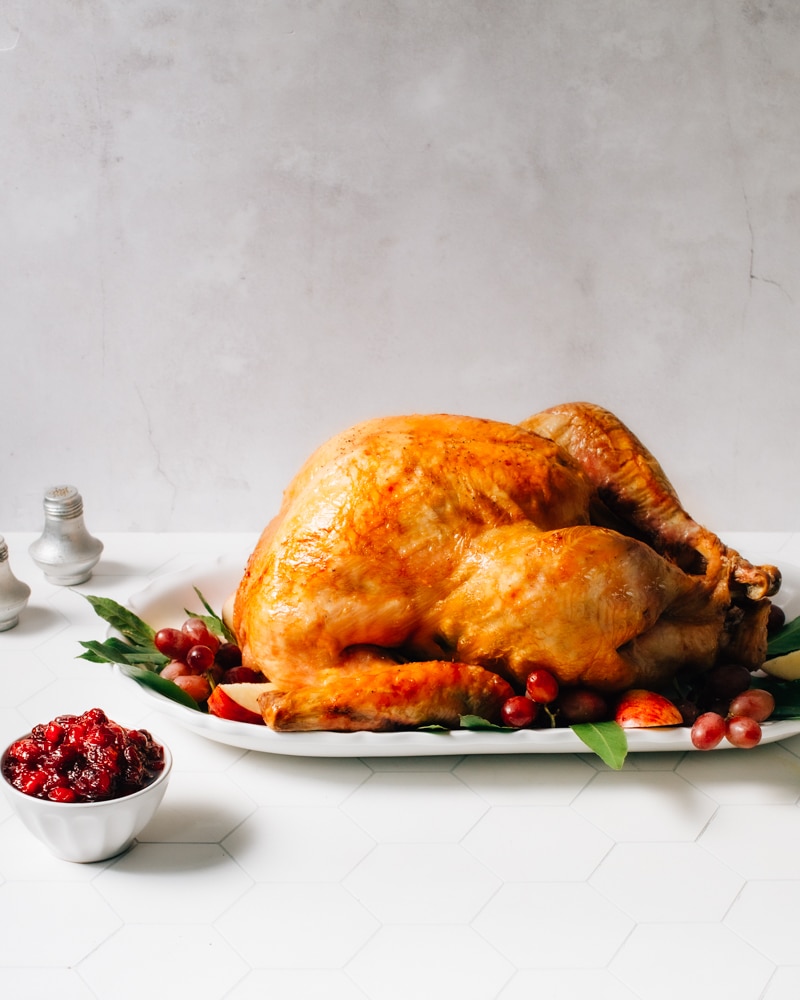
With tips from my food science background, this simple guide for how to cook a turkey is no brine, no stuffing, no baste, and no stress!
How to Cook a Turkey: First Tips
I’m a food scientist and was a Butterball ambassador for YEARS. I can make turkey with my eyes closed, and am so excited to pass on the knowledge.
- Grab a cooking thermometer. (That one is ten bucks and has lasted me for years.) I can’t stress enough the importance of this tool.
- Buy fresh turkey. I find it juicier in the end, and easier to manage planning-wise. Consider placing an order with your butcher or grocery store (as they often sell out).
- If you do buy frozen, make sure your turkey is thawed completely before cooking – this can take several days in the fridge, so plan accordingly. Nothing like a semi-frozen thigh to ensure an over-cooked breast.
- Cook at a low oven temperature. There are methods I’ve tried that involve starting at 400ºF or hotter and then lowering the heat. Although this allows a turkey to cook faster, it also gives more opportunity to dry out the parts that are more exposed to direct heat (like the lean breast meat).
Cooking Turkey: Simplified
Honestly, extra steps are not necessary and often make things WORSE.
- Simple seasoning: softened butter, kosher salt and freshly cracked pepper all over the bird. Dried herbs and garlic/onion powders usually scorch before the turkey is done.
- No basting: repeatedly opening the oven ultimately increases cooking time, so what you gain in flavoured skin, you lose in moistness of the white meat.
- No stuffing: don’t stuff the turkey, because it’s a food safety issue – in order for stuffing to reach a safe internal temperature, the breast will almost certainly be dried out. Stuffing cooked outside of the turkey is also much lower in fat and calories so you can eat MORE.
- Don’t bother brining. As long as you pay attention to the internal temperature and don’t overcook the turkey, this cumbersome extra step is unnecessary.
- Rest the turkey. This step is as important as not overcooking it. It allows the juices to redistribute throughout the meat rather than running out all over your cutting board and being lost forever.
If you want your turkey to be done in half the time, try making my Spatchcock Turkey instead!
Easy Roast Turkey Ingredients
Here’s what you need for a perfectly roasted turkey.
For the Turkey
- Fresh or fully thawed turkey: Any size works with this method.
- Unsalted butter: Softened to room temperature for easy spreading.
- Fresh sage: Minced fresh sage adds earthy flavor. Dried works too.
- Salt: Coarse kosher salt seasons the skin beautifully. Use 1/2 to 3/4 tsp kosher salt per lb of turkey.
- Black pepper: Freshly cracked is best.
Full recipe quantities listed in the recipe card at the bottom of the article.
Planning your Thanksgiving meal? Check out my complete turkey dinner schedule for stress-free prep.
Grab These Tools
Having the right equipment makes roasting turkey easier.
- Roasting pan: A shallow roasting pan with at least 2-inch sides.
- Roasting rack: Oiled rack elevates the turkey for even cooking.
- Instant-read thermometer: Essential for checking doneness accurately.
- Aluminum foil: To tent wings and neck if they brown too quickly.
- Large cutting board: For carving the turkey safely.
- Sharp carving knife: Makes slicing clean and easy.
How to Cook a Turkey: An Easy Guide
This step-by-step guide walks you through roasting a perfect turkey. No fancy techniques required.
Prep the Turkey and Oven
Preheat oven to 325ºF. Remove neck and giblets from turkey cavity.
- Position turkey breast-side up on an oiled rack placed inside a shallow roasting pan or baking dish. Pat turkey dry if needed.
Pour a cup of water into the bottom of the roasting pan. This prevents drippings from burning.
Season the Turkey
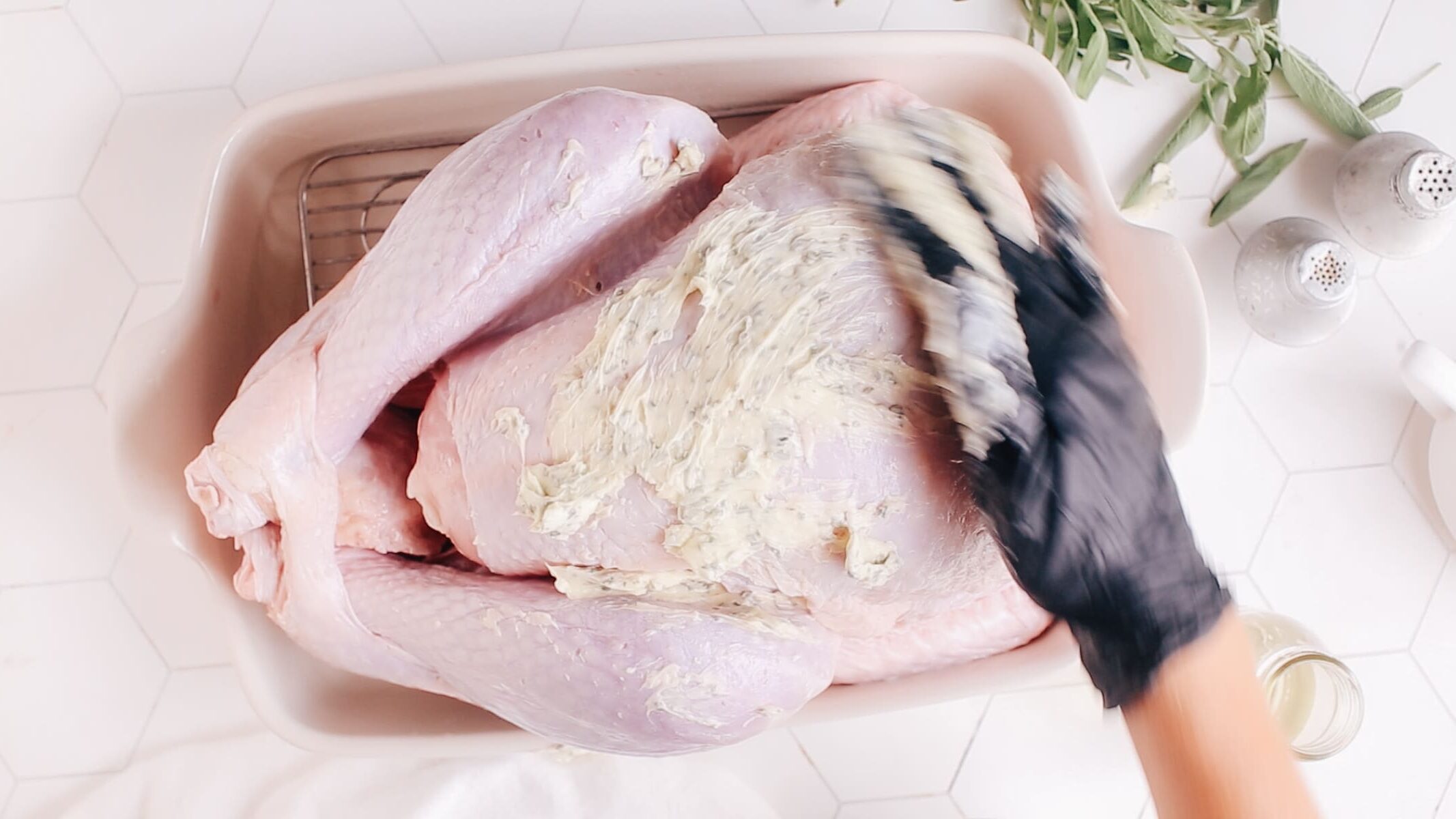
Gently use your fingers to lift the skin of the turkey breast. Mash the sage into the softened butter.
- Smear butter evenly over the entire turkey. Gently push it under the skin of the breast for extra moisture and flavor.
Sprinkle turkey all over with salt and black pepper. Season generously for the best flavor.
Roast the Turkey
Roast turkey for approximately 11 minutes per pound. Plan about 3 hours and 20 minutes for a 12 to 14 pound bird.
- Cover the neck and wings with foil about halfway through cooking to prevent over-browning. Leave the rest uncovered for crispy skin.
Begin checking temperature 45 minutes before you expect it to be done. Don’t wait until the timer goes off.
Check Doneness and Rest
When turkey is done, let it rest at room temperature for one hour to redistribute the juices. Don’t skip this step.
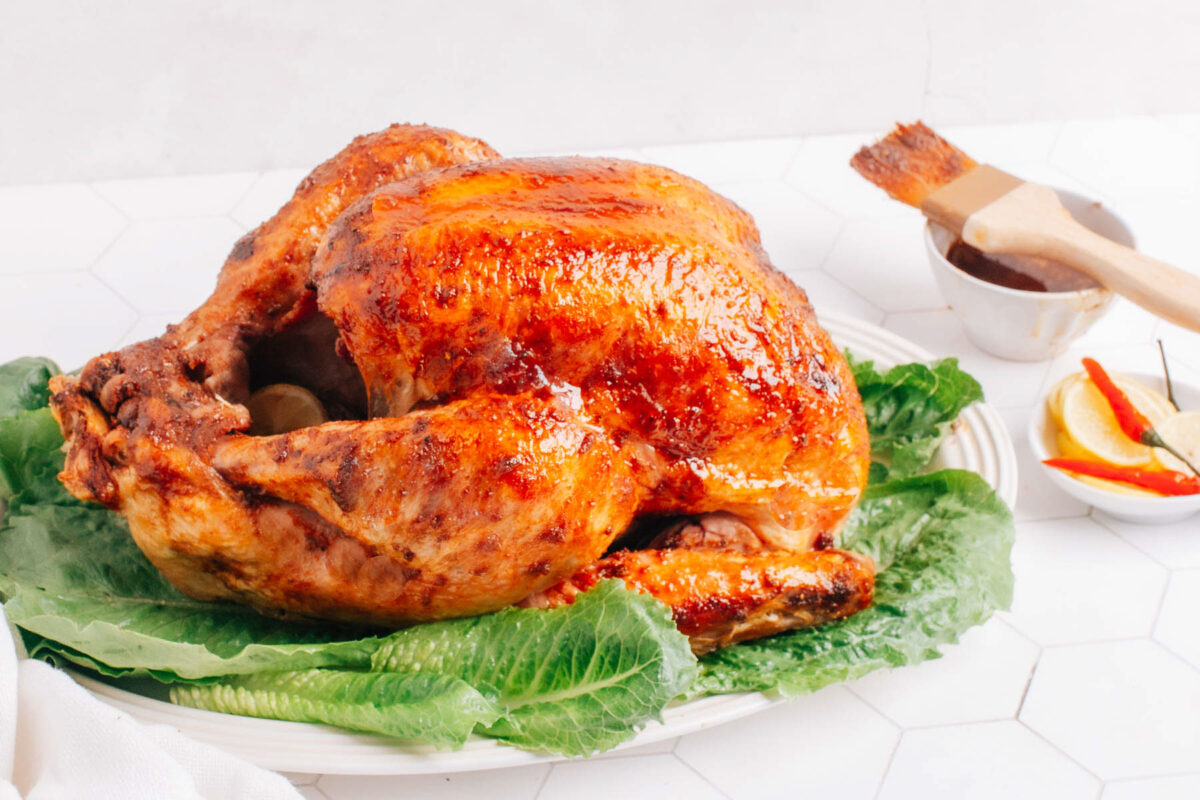
How to Tell When Turkey is Done
For most roasts, I recommend removing it from the oven at a lower temperature than the final internal temperature goal. This is because of carryover cooking, which means the temperature continues to rise as the meat sits.
I don’t do this for turkey, however.
A turkey roast is so large that there are inevitably parts that are higher and lower in temperature. I prefer to stay on the safe side and reach the 165ºF necessary to ensure nobody gets turkey with a side of salmonella.
Insert your cooking thermometer into many parts of the bird. That’s how to cook a turkey fully without concern for food safety. I test the temperature of:
- The thickest part of the thigh
- In the bottom of the bird under the leg
- In the thickest part of the breast
- In around the wing and a few more spots for good measure
Make Ahead and Storage
Plan ahead to make your holiday cooking easier.
Storing Leftovers
- Refrigerate promptly: Store carved turkey in airtight containers within 2 hours of cooking. It keeps for up to 4 days (according to the USDA).
- Keep meat moist: Store turkey with a bit of gravy or broth to prevent drying out.
- Separate dark and white meat: They reheat at different rates, so storing them separately helps.
Freezing
- Freeze in portions: Wrap sliced turkey tightly in plastic wrap, then aluminum foil. Freeze up to 3 months.
- Label and date: Write the date on packages so you use older turkey first.
- Freeze with liquid: Add gravy or broth to freezer bags with turkey for better texture after thawing.
Reheating Roast Turkey
- Oven method: Place turkey in a baking dish with a splash of broth. Cover with foil and reheat at 325°F until warmed through.
- Microwave: Add a damp paper towel over turkey slices to keep them moist. Heat in 30-second intervals.
- Don’t overheat: Turkey is already cooked. You’re just warming it, not cooking it again.
4 Common Mistakes When Making Roast Turkey
Here are the most frequent mix-ups to avoid when making roast turkey:
- Not thawing completely: A partially frozen turkey cooks unevenly. The outside overcooks while the inside stays raw. Plan ahead and allow proper thawing time in the sink or refrigerator.
- Stuffing the bird: I love the flavor of stuffing as much as anyone else, but it is IMPOSSIBLE to get the middle of the stuffing to a safe internal temperature without over-cooking the breast meat. Not possible.
- Skipping the thermometer: Guessing doneness leads to dry or undercooked meat. Always use an instant-read thermometer and check multiple spots.
- Cooking at too high a temperature: Blasting turkey at 400°F or higher dries out the breast before the thighs finish. Stick to 325°F for even, gentle cooking.
- Not letting it rest: Cutting into turkey right away releases all the juices onto the cutting board. Rest for an hour if you want the juiciest turkey you’ve ever had!
How to Serve This Roast Turkey Recipe
Roast turkey is the centerpiece of any holiday meal. Serve it with classic sides and plenty of gravy.
Side Dishes for Roast Turkey
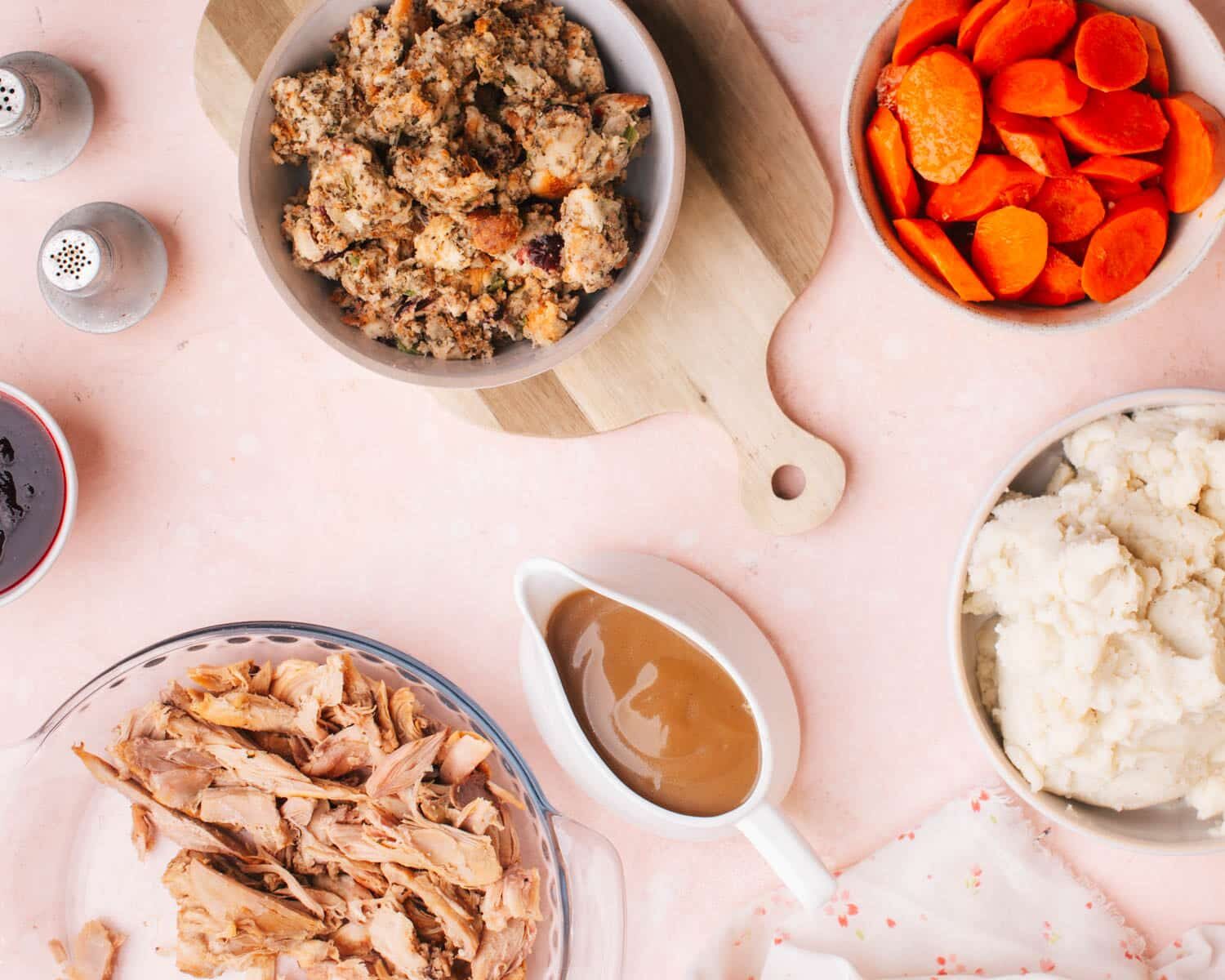
These sides complete your turkey dinner:
- The Best Mashed Potatoes You’ll Ever Try
- Unstuffed Herbed Apple Stuffing
- Turkey Giblet Gravy (Without Drippings)
- Crispiest Roasted Brussels Sprouts with Maple and Bacon
- Maple Five Spice Roasted Butternut Squash
- Glazed Carrots
- Pumpkin Dinner Rolls
And for Dessert
How to Make the Best Roast Turkey: Final Notes + Secrets
These tips guarantee a perfect turkey every time.
- Temperature is everything: Invest in a good instant-read thermometer. It’s the only way to know when turkey is truly done.
- Don’t peek too often: Every time you open the oven door, you lose heat and extend cooking time. Trust the process.
- Butter under the skin: Pushing butter under the breast skin keeps the meat incredibly moist and adds flavor from the inside out.
- Water in the pan: That cup of water in the bottom of the pan prevents smoking and keeps the oven environment moist.
- Foil the wings: Wings and the neck area brown fastest. Covering them partway through prevents burning while the rest cooks.
- Resting is non-negotiable: A full hour of rest time seems long but makes all the difference. The turkey stays hot and juices redistribute perfectly.
- Convection option: If you have a convection oven, cook at 325°F on convection for faster cooking, up to an hour sooner.
- Breast-side-down method: For extra juicy breast meat, start roasting breast-side down for the first 40 minutes, then flip. This may slightly flatten appearance but maximizes moisture.
FAQs About Roast Turkey
Just skimming through? Here are some quick answers to the commonly-asked questions.
What is the best method to cook turkey?
The best method to cook turkey is roasting at 325°F with simple seasoning and a reliable thermometer. This gentle temperature cooks the bird evenly without drying out the breast meat. Skip basting and brining for a simpler approach that still delivers juicy, flavorful results every time.
Is it better to cook a turkey at 325 or 350?
It is better to cook a turkey at 325°F. This lower temperature allows the meat to cook through evenly without the exterior drying out or burning. Cooking at 350°F works but increases the risk of dry breast meat before the thighs reach safe temperature.
How many hours does it take to cook a turkey?
It takes approximately 11 minutes per pound to cook a turkey at 325°F. A 12-pound turkey needs about 2 to 2.5 hours, while a 20-pound turkey requires around 3.5 to 4 hours. Always use a thermometer rather than relying solely on time to determine doneness.
What is the secret to a moist turkey?
The secret to a moist turkey is not overcooking it and letting it rest properly. Use an instant-read thermometer to check that the thickest part of the thigh reaches exactly 165°F, then tent loosely with foil and rest for one hour before carving. This allows juices to redistribute throughout the meat.
What temperature makes the juiciest turkey?
The temperature that makes the juiciest turkey is 325°F for roasting and an internal temperature of 165°F when done. Cooking at this moderate oven temperature prevents the outside from drying out while the inside finishes cooking. Pull the turkey as soon as it hits 165°F in the thickest parts.
What is the best way to cook a turkey without drying it out?
The best way to cook a turkey without drying it out is to roast at 325°F and use a thermometer to avoid overcooking. Spread butter under the breast skin, don’t stuff the cavity, skip constant basting, and rest the turkey for a full hour after cooking. These steps ensure maximum moisture retention.
How do I make sure my turkey isn’t dry?
Make sure your turkey isn’t dry by using a thermometer and pulling it from the oven as soon as it reaches 165°F in the thigh. Let it rest a full hour before carving so juices redistribute. Cook at 325°F, spread butter under the skin, and avoid opening the oven repeatedly during roasting.
Is it better to cook a turkey covered or uncovered?
It is better to cook a turkey uncovered for crispy, golden skin. If the wings or neck brown too quickly before the meat is done, tent those areas loosely with foil partway through cooking. Starting uncovered and adding foil only where needed gives you crispy skin and properly cooked meat.
What to add to turkey for moisture?
Add butter under the turkey skin, especially the breast area, for maximum moisture. Pour water in the bottom of the roasting pan to prevent drippings from burning and create steam. You can also add aromatics like onion, carrots, celery, and fresh herbs to the pan for flavorful moisture.
Do you put water in the bottom of a roasting pan for turkey?
You should put water in the bottom of a roasting pan for turkey. About one cup of water prevents drippings from burning and smoking. It also creates moisture in the oven environment. This simple step helps keep the turkey moist and makes cleanup easier by preventing stuck-on drippings.
What to Do with Turkey Dinner Leftovers
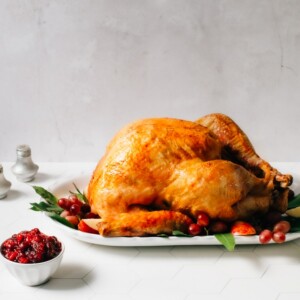
How to Cook a Turkey (Perfectly Juicy Every Time!)
Video
Ingredients
For Turkey
- 11 to 13 lb turkey thawed if frozen
- ½ cup unsalted butter softened to room temperature
- 3 tbsp kosher salt
- ½ tsp black pepper
Instructions
- Preheat oven to 325ºF. Position turkey breast-side up on an oiled rack placed inside a shallow roasting pan or baking dish. Remove neck and giblets from turkey cavity.
- Gently use your fingers to lift the skin of the turkey breast. Smear butter evenly over the entire turkey, gently pushing it under the skin of the breast. Season turkey all over (and under the skin) with salt and pepper.
- Pour a cup of water into the bottom of the roasting pan. Roast turkey for approximately 3 hours and 20 minutes, covering the neck area and wings with foil about halfway through to prevent over-browning. A meat thermometer inserted in the thickest part of the thigh, away from the bone, should register 165ºF. Check in several places to be sure. Let turkey rest at room temperature for one hour to redistribute the juices.
Notes
- Total Time: Plan about 11 minutes of cooking time per pound of turkey and begin checking the temperature 45 minutes before you expect it to be done.
- Convection (forced fan): If you have a convection oven, you can cook it at 325ºF on convection and it will be done up to an hour sooner.
- Breast-Side-Down Option: For extra juicy breast meat, you can start roasting the turkey breast-side down. After the first 40 minutes, carefully flip it breast-side up using silicone oven mitts and continue cooking. This method helps the breast retain more juices but may slightly flatten its appearance.
- No Basting: This recipe skips basting because it doesn’t actually keep the meat moist and prevents the skin from crisping.
- Safe Temperature: Ensure turkey is cooked fully to 165ºF in multiple spots to ensure food safety, as its large size means uneven cooking temperatures.
- Resting is Key: I know it sounds like a long time but resting for an hour is non-negotiable to retain juiciness.
Nutrition
Nutrition information is automatically calculated, so should only be used as an approximation.









Jenn
What do you think about using the roasting bag in which to cook the turkey?
You can use a roasting bag if you like, but it’s not something I recommend for this method. The bag traps steam, which softens the skin instead of letting it crisp up. Roasting the turkey uncovered at 325°F gives you that juicy meat and crisp skin without any extra steps.