Egg Substitute Baking Guide (11 Options that WORK!)

Oct 12, 2024
Egg Substitute Baking 101: A food scientist shares everything you need to know when substituting eggs in baking and what you need to avoid!
Egg Substitute Baking At a Glance
Every now and then, you need an egg substitute for a recipe, whether because of an egg allergy, another special diet, or simply an empty carton in the fridge.
Here are four egg-cellent egg substitutes to keep in your back pocket. Whether the egg’s purpose is to bind, add moisture, leaven, or whip, I have you covered.

I’ve included 11 of my go-to egg alternative ingredients, plus how and when to use them.
Egg Substitute 1: Apple Sauce
Applesauce was one of the earliest substitutes for eggs. Our moms used applesauce in muffins when their cartons were empty, didn’t they?
This allergy-free, vegan, high-fiber alternative provides moisture and sweetness to baked goods. A quarter cup of applesauce will replace one large egg.
Other flavors will mask the taste, making this substitution unnoticeable. However, be sure to find the unsweetened option at your grocery store, as an extra ten grams of sugar could add an overwhelming sweetness.
Where to use this egg swap: Use applesauce in your muffin, cake, soft cookies. It works well in sugar or spice cookies. It adds moisture and sweetness, giving cookies a soft texture, but it can also make them puffier and less crisp.
Egg Substitute 2: Flax Seeds and Water
Flaxseeds took over the superfood aisles by storm a decade ago when omega 3s were on everyone’s lips. From crackers to oatmeal, these fiber-rich seeds are everywhere.
Using one tablespoon of these seeds combined with three tablespoons of water will serve you a phenomenal binding agent that can replace one egg.
My top tip is to use ground flaxseed flour in your egg swap!
Where to use this egg swap: They are great for heavier baked textures like muffins, scones, and cakes. Use ground flax seed when you want crisper cookies. They don’t do a good job of whipping up.
Pro Tip
Keep in mind a large egg yields about 1/4 cup. Make sure you add that much egg replacer into your recipe, for most substitutes.

Egg Substitute 3: Tofu
Tofu is not only a significant protein source but also a binding agent. Whether savory or sweet, the neutral taste of soft tofu allows for much versatility.
Tofu is an excellent egg substitute in baking recipes, but it can also be used as a substitute for eggs in dishes such as a Sunday morning scramble alternative.
Use puréed 1/4 cup of soft tofu for baked goods to replace one egg. I recommend silken tofu for the smoothest “egg” swap.
Where to use this egg swap: Use it for French toast, baked quiches, muffins, waffles and pancakes.
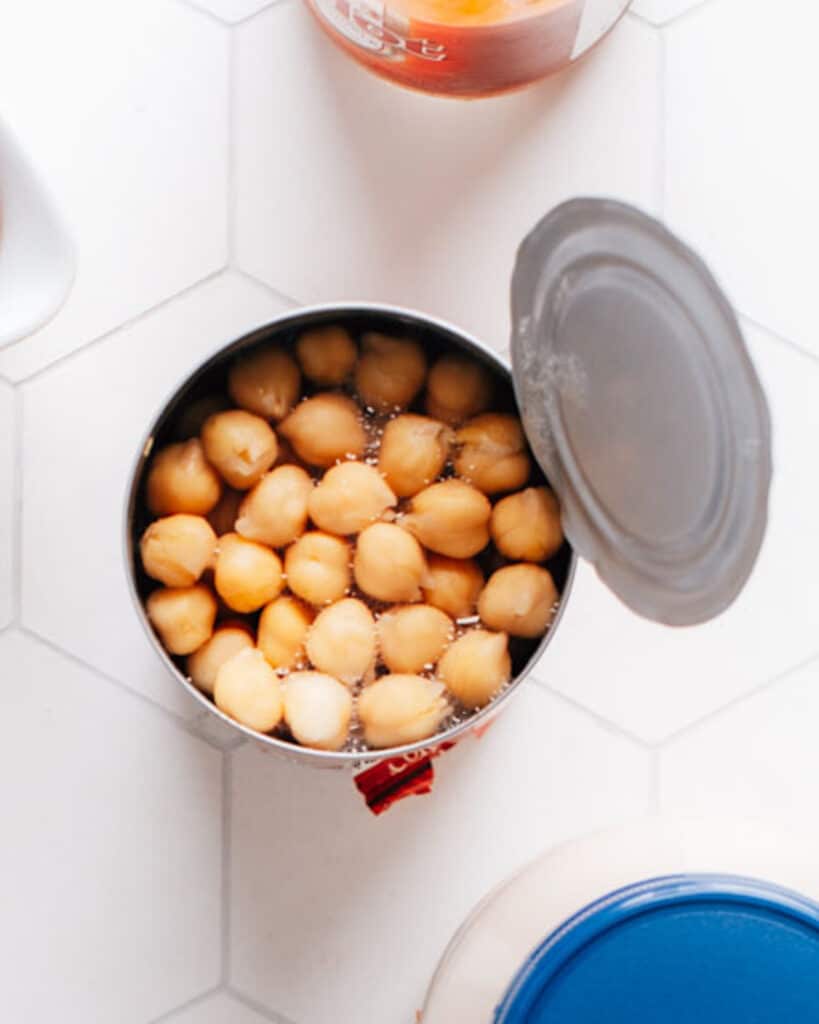
Egg Substitute 4: Aquafaba
Aquafaba is a super popular egg replacement these days. It’s essentially the chickpea water from the can (garbanzo beans). It’s one of the most popular vegan egg substitutes.
This ingredient is simply the liquid you normally drain from canned chickpeas. It whips up to beautiful meringue just like egg whites do. How the first person discovered that is beyond me 🤷♀️
Four tablespoons of chickpea liquid can replace 1 large egg, or two tablespoons can replace a large egg white. It’s perfect for replacing eggs in applications where you’re asked to whip the whites to peaks or start by beating the eggs (as incorporating air is an important step in leavening the final product).
YOU CAN EVEN USE IT IN A WHISKY SOUR. (I feel that warranted all caps.)
It can be frozen and stored in ice cube trays to make the most of that slippery bean juice (um, doesn’t that sound yummy?).
Note that this isn’t a great option for recipes where egg yolks are featured on their own.
Where to use this egg swap: This is the number 1 egg substitute for making meringues, sponge fingers, or anytime a recipe calls for whipped egg white.
See also: Aquafaba vs. Egg White.

Egg Substitute 5: Mashed Banana
Mashed bananas and avocados can also be used to moisten treats, smoothen the consistency of the batter, and add an extra hint of flavor.
They can be used in the same way as apple sauce. 1/4 cup = 1 egg. Keep in mind the banana taste when selecting it to use in a baked recipe.
Where to use this egg swap: This alternative works well when you want dense, moist cookies – great for peanut butter or oatmeal cookies. Mashed bananas can be used successfully in muffins, brownies, and quick breads where moisture is important.
Egg Substitute 6: Chia Seeds
Chia seeds are another excellent vegan alternative to eggs in baking. Like flaxseeds, they form a gel-like texture when mixed with water, making them ideal for recipes needing binding and moisture.
Chia eggs are especially great for gluten-free or whole-grain baking, as they help improve texture and boost fiber, protein, and omega-3 fatty acids.
Use 1 tablespoon chia seeds to 3 tablespoons of water to make a chia egg. I let this mixture stand for up to 10 minutes before using it.
Where to use this egg swap: This easy egg swap is great for your carrot or blueberry muffins and yummy in quick breads, too. You can also use a chia egg in pancake or waffle batter.
Egg Substitute 7: Oil, Water, and baking powder
This simple mixture combines 2 tablespoons water + 2 teaspoons baking powder + 1 teaspoon vegetable oil = 1 large egg
This simple combination leans on pantry staples you probably have on hand. Muffins baked with this egg replacement are light and airy, and there is almost no difference in taste or structure.
The tops of muffins come out crisp and slightly darker, so take note of them while baking.
Where to use this egg swap: Works in a pinch for quick bread, cakes, cupcakes, and muffins.
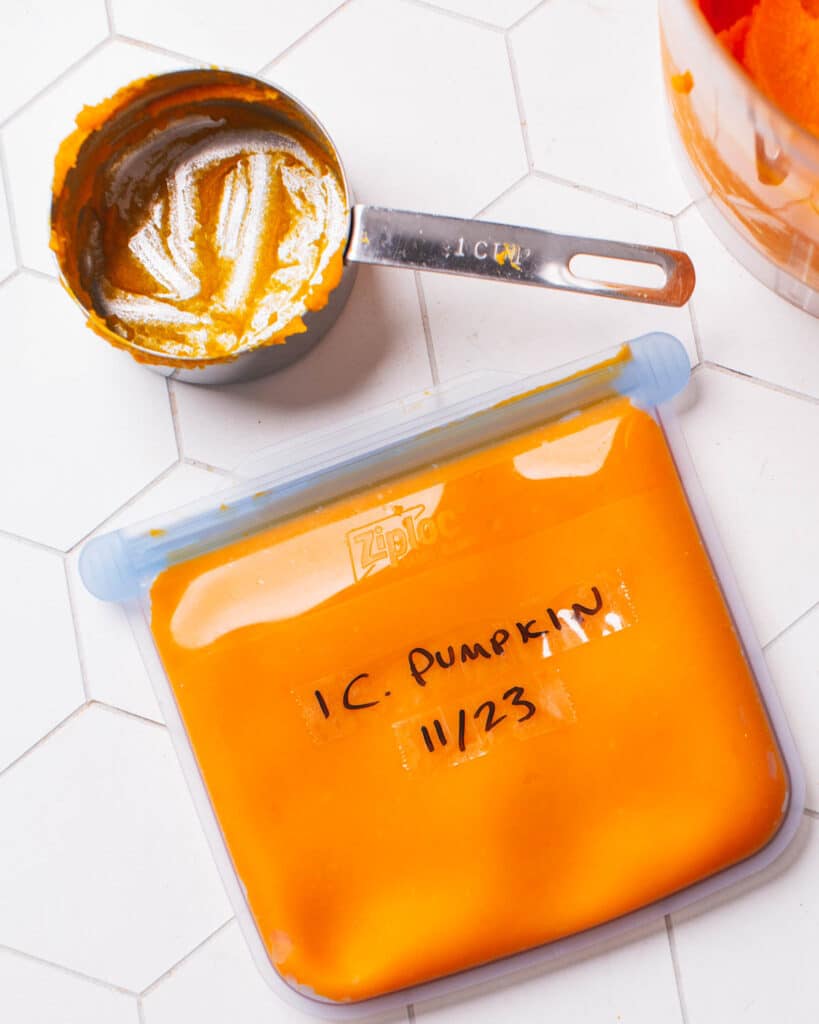
Egg Substitute 8: Pumpkin Puree
Use unsweetened pumpkin puree in your fall bakes to replace eggs! Use 1/4 cup pumpkin puree for 1 large egg. It acts as a binding agent and adds moisture and richness.
Since it’s high in water content, it works best in recipes where added moisture is welcome.
This swap works much like apple sauce or mashed banana. It lends itself to autumnal yumminess, so use it with cinnamon, raisins, nutmeg, etc. Keep in mind that it has an earthy, veggie taste when selecting it.
You could also use pureed sweet potatoes!
Where to use this egg swap: Pumpkin purée works when you want a soft texture for baked goods. It’s best for recipes where a moist and tender crumb is desired. It works in loads of muffins, cakes, bread, and brownie recipes.

Egg Substitute 9: Greek Yogurt
Thick Greek yogurt is a great alternative, as it is 1/4 cup of yogurt per large egg.
It works well in recipes where eggs are primarily used for moisture and binding rather than for leavening or structure. Its tangy flavor can also add a nice depth to certain baked goods.
Where to use this egg swap: I use plain Greek yogurt often in cakes, quick breads, cookies, and muffins. It helps prevent dryness, keeping baked goodies tender.
Read More: Plain Greek Yogurt vs. Sour Cream
Egg Substitute 10: Arrowroot Powder
You can use arrowroot powder as an egg substitute in baking, particularly in recipes where eggs serve as a binder or for thickening. Arrowroot powder is a starch extracted from the roots of the arrowroot plant and is often used in vegan and gluten-free baking.
To make it, mix 2 tablespoons of arrowroot powder + 3 tablespoons of water = 1 egg.
Where to use this egg swap: Use it in cookies, cakes, muffins, and simple bread recipes.
Egg Substitute 11: Vinegar and Baking Soda
Using vinegar as an egg alternative is a workable option, especially in recipes where eggs are needed for leavening.
When combined with baking soda, vinegar helps create carbon dioxide bubbles, giving baked goods a light and fluffy texture.
Mix 1 tablespoon of vinegar (white or apple cider vinegar) + 1 teaspoon of baking soda.
Where to use this egg swap: Use it in cookies, cakes, pancakes, muffins, and bread recipes.
More Helpful Baking Substitutes
Check out more of my articles about different substitutions:
Egg Substitute Baking FAQs
Just skimming this article? You might be looking for these bits of info:
No, you can’t use oil instead of eggs. Oil can add moisture but does not provide the binding or leavening properties needed in baked goods. If you have to use it, it’s better to combine oil with a leavening agent like baking powder to maintain the cake’s rise. Your baking will be more delicate.
Instead of eggs in box cake mix, you can use applesauce, flax egg,chia seed, chia seed, mashed banana or yogurt.
The best egg alternatives for cookies like chocolate chip, oatmeal, or sugar cookies are flaxseed eggs or aquafaba.
Some egg substitutes, like mashed bananas or applesauce, can add a mild flavor to your baked goods. Others, like flaxseed eggs or chia eggs, have a neutral taste and won’t affect the flavor. Always choose a substitute based on the flavor profile you want for your recipe.
Cornstarch (alone), white potato starch, gelatin, coconut flour and nut butters are not good egg alternatives, despite floating around the internet as options.









Hi. Just wanted to say that when my son was starting solids (48 yrs ago), my motherinlaw said to feed him chickpea water and old bread. We are all italian but my mother never heard of that in her village. I didn’t feed him that as of course “i knew better” and fed him “canned baby food” how awful but we didn’t know what we know now. I imagine my son would have been nutionally better off. There you go…bean water..full of protein. Silvana