Over Easy Vs Medium Eggs

Aug 22, 2024
Over Easy Vs Medium Eggs: I’m a dietitian and food scientist sharing the key differences in over easy vs medium eggs (from cooking to nutritional value and food safety!).
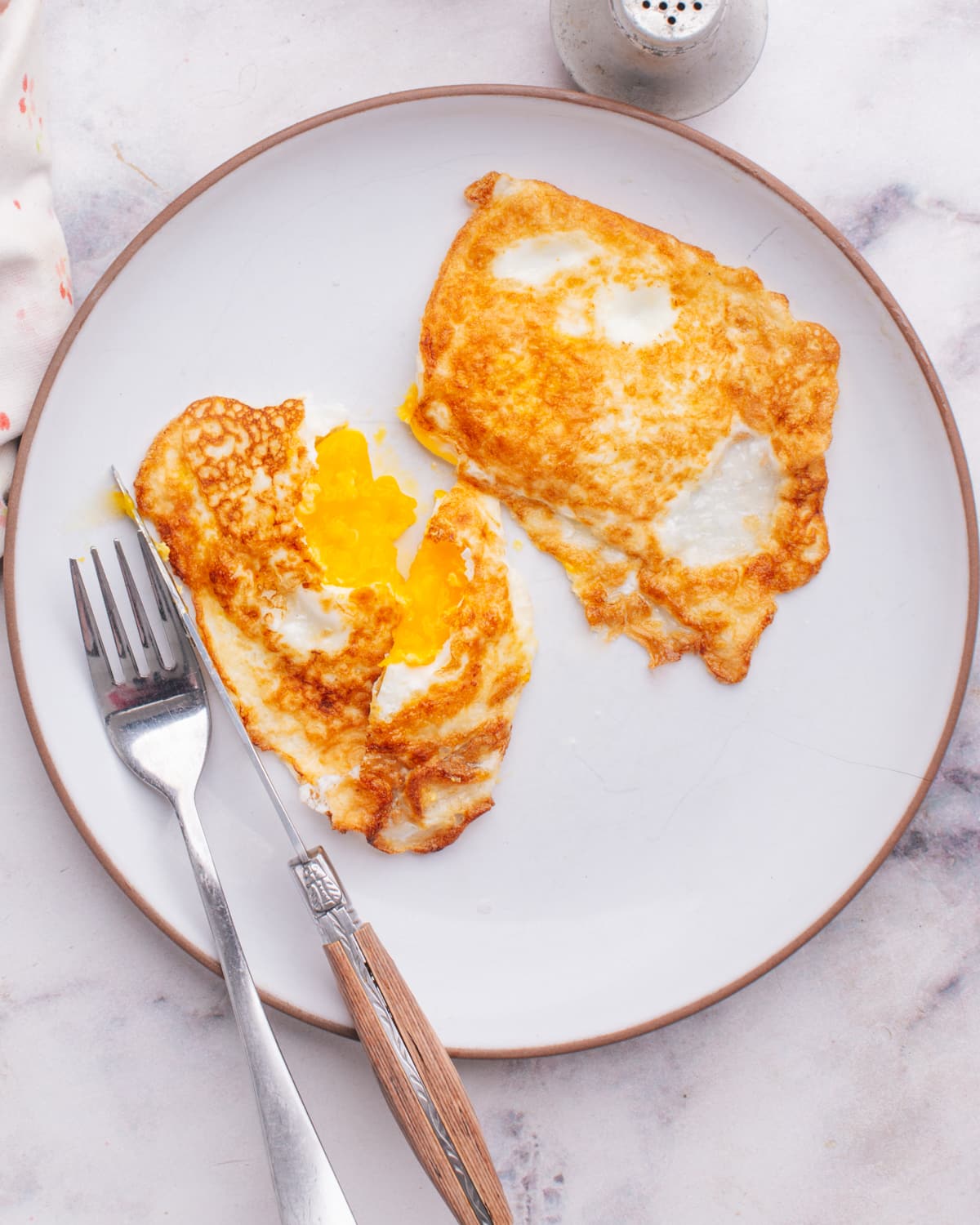
Here’s a quick snapshot of over easy vs medium eggs, in case you’re here for a short answer.
Over Easy Vs Medium Eggs: A Quick Glance
- Over easy eggs are cooked on both sides with a runny yolk and a set white.
- Medium eggs have a partially-cooked yolk with fully cooked whites.
- There’s no difference in nutritional value.
- There might be a difference in food safety.
Let’s dive deeper into the differences and more about how to make and enjoy these egg styles.

Over Easy Vs Medium Eggs: What’s The Difference?
Both over easy and medium (sometimes called “over medium) are variations of fried eggs.
The “over” part of the name in “over easy” and “over medium” refers to the action of flipping the egg over in the pan as it’s fried.
An egg is fried on one side and then flipped to cook on the other side. The “easy” or “medium” (or even “hard”) part tells us how dense the egg yolk should be after cooking it.
Here’s a little summary of the differences:
- Over Easy Eggs:
- Cooked on both sides, but the yolk remains runny.
- Typically flipped only once during cooking.
- Yolk is still liquid and flows when broken.
- Whites are fully cooked but yolks are runny.
- Often preferred by those who enjoy a runny yolk but want some firmness in the whites.
- Medium Eggs:
- Cooked longer than over easy eggs.
- Yolk is partially cooked, with a slightly runny center – a jammy yolk.
- Whites are fully cooked and firm.
- Yolk has begun to thicken but still retains some liquid.
- It is preferred by those who enjoy a slightly runny yolk but want it thicker than in over-easy eggs.
What are Over Easy Eggs?
Over easy eggs are cooked on both sides, resulting in fully cooked whites with a runny yolk.
I love to serve over easy eggs on a slice of buttered toast with salt and black pepper, as a salad topper or in a toasted breakfast sandwich.

How to Make Over Easy Eggs
To make them, start by heating a non-stick pan over medium heat and adding a small amount of butter or oil. I recommend a neutral-tasting oil like avocado or sunflower oil rather than pungent olive oil. For an ultra-rich fried egg, use a combination of vegetable oil and melted butter.
Crack the eggs into the non-stick skillet and let them cook until the whites are set but the yolks are still runny, then carefully flip them with a spatula. Cook them for a few more seconds until the whites are fully cooked but the yolks remain runny.
A medium low heat is best for frying over easy eggs.
Tip: The right pan makes ALL the difference; I recommend a nonstick pan if you’re new to frying eggs. Stainless steel pans and ceramic pans are fine for a more advanced home cook. A well-seasoned cast-iron pan is another good option to fry eggs in.
What are Medium Eggs?
Medium eggs are cooked longer than over easy eggs, resulting in whites that are fully cooked and a yolk that is partially set but still slightly runny in the center.
I like to wedge medium eggs in a burger or pop them over a bowl of steaming rice.

How to Make Medium Eggs?
To make the perfect over-medium egg, start by heating a non-stick cast iron skillet over medium heat and adding a small amount of butter or oil.
Crack the eggs into the skillet and cook until the whites are fully set and the yolks are partially cooked, with a slightly runny center. Serve immediately.
Here is my full recipe post for how to cook eggs over medium.
Tip: Add a little bacon grease to your oil or butter for extra flavor.
What are Over Hard Eggs?
Over hard eggs are completely cooked through. They have a yolk that resembles a hardboiled egg.
What are Sunny Side Up Eggs?
Sunny side-up eggs are a style of fried egg where the egg is cooked only on one side. The yolk is left intact and runny, while the whites are fully set.
They are usually cooked without flipping. The result is a sunny, golden appearance on the uncooked side.
Over Easy Vs Medium Eggs: Are there Nutritional Differences?
There is really no difference between over easy vs medium eggs in terms of their nutritional value. If they are cooked with the same type and amount of fat, they are equal in value. This includes their cholesterol level and content.
Here is what they are made up of, regardless of the easy or medium cooking, according to Harvard Medical School:
- Calories: Higher (about 70 calories per egg).
- Fat: Contains fats (about 5 grams per egg)
- Protein: Moderate (about 6 grams per yolk).

Over Easy Vs Medium Eggs: Salmonella (What to Know + Safety Tips)
The Centers for Disease Control and Prevention (CDC) and the Food and Drug Administration (FDA) both point out the risks and dangers associated with Salmonella.
This bacteria is a common cause of food poisoning that can be found in eggs not cooked thoroughly.
Salmonella infection can lead to diarrhea, fever, abdominal cramps, and vomiting, appearing 12 to 72 hours after eating contaminated food.
The FDA stresses the importance of buying, storing, preparing, and serving eggs correctly to lower the chances of illness.
According to the CDC, if you don’t cook eggs to a safe internal temperature of 160ºF, it increases risk of foodborne illness from salmonella.
The food safety guideline is to cook eggs until both the yolk and the white are firm.
In terms of over easy vs medium eggs – medium eggs are the safer choice as the yolk is denser.

Next Reading on Eggs
Looking to learn more about eggs? Here’s a basic guide to Cooking Eggs + a bank of articles to help you upskill:
- Aquafaba vs Egg White
- Can you boil eggs in the microwave?
- Poached Egg in Microwave
- How to Bring Eggs Quickly to Room Temperature
- Soft Boiled vs Hard Boiled Egg: The Truths and the Myths
Favorite Egg Recipes to Try
FAQs : Over Easy Vs Medium Eggs
Just skimming through this article? Here are the top takeaways to check out:
Over easy eggs are fried on both sides briefly, with the yolk still runny, while medium eggs are fried longer on both sides until the yolk is partially cooked with a slightly runny center.
Over easy eggs will have a visibly runny yolk, whereas medium eggs will have a partially cooked yolk with a thicker consistency closer to the center.
Both over easy and medium eggs are similar in terms of nutrition.
Yes, you can adjust the cooking time to achieve your desired yolk consistency. For over easy eggs, cook briefly on both sides, while for medium eggs, cook longer on each side until the yolk is partially set.
Over easy eggs are popular for breakfast dishes like toast, sandwiches, or salads, where the runny yolk can act as a sauce. Medium eggs may be preferred for dishes where a slightly thicker yolk consistency is desired, such as on burgers or in fried rice.