Halloumi Vs Paneer

Updated Jul 10, 2025
Halloumi vs. paneer: What is the difference, and can you use one in place of the other? As a food scientist, I’ll answer this question plus all the details about which is the healthier cheese choice.

Halloumi Vs Paneer: A Quick Glance
Paneer and halloumi are two totally delicious cheese ingredients. Each has distinct qualities and nutritional values.
Halloumi is a salty and firm cheese originally from the Mediterranean region.
Paneer is a a creamy cheese, often made at home as a staple in Indian cooking.
While both are firm cheeses, halloumi has a saltier taste and retains its shape when heated, making it great for grilling or frying.
On the other hand, paneer has a milder flavor and doesn’t melt when heated, making it suitable for curries and other dishes where maintaining texture is key.
Related: Here’s my easy Homemade Paneer Recipe!
Halloumi Vs Paneer: Can They Be Used Interchangeably?
Can you substitute halloumi for paneer or vice versa? First, it’s important to consider their distinct characteristics.
Here are a couple of important things to note:
- Halloumi is significantly saltier than paneer. If you’d like to use halloumi instead of paneer, you’ll want to cut the recipe’s salt in half to start.
You can always add more salt but you can’t take it away!
- Halloumi’s rubbery texture might not provide the same creamy consistency as paneer.
Can you use halloumi in place of paneer in curry?
Yes, you can use halloumi instead of paneer in curry, and I actually really love it!
Check out my articles on tofu vs paneer and Cottage Cheese Vs Paneer to learn more about other swaps and substitutes!
Can you fry paneer like halloumi?
Yes, you can fry paneer similarly to halloumi. Paneer holds its shape well when fried and develops a crispy exterior while maintaining a soft interior.
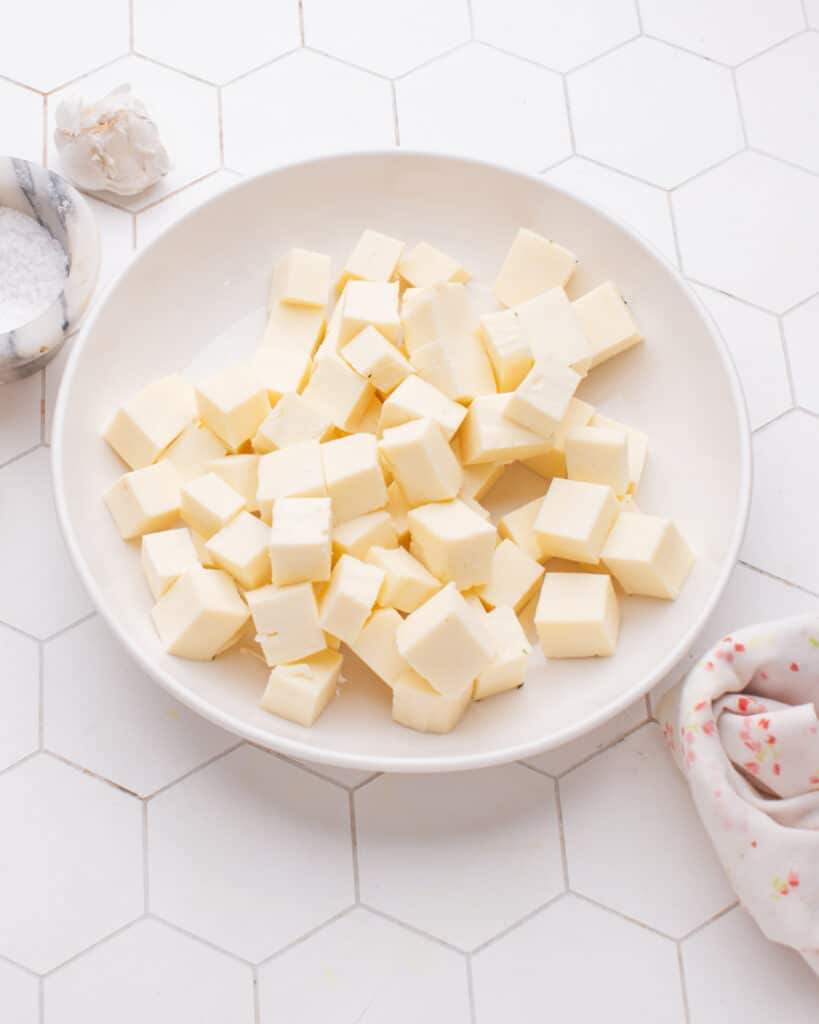
Slice the paneer into cubes, heat oil in a pan, and fry until golden brown on both sides.
One of my favorite ways to use halloumi is in my sheet pan halloumi and sweet potato tacos.

What are the melting points of paneer vs halloumi?
Paneer cheese does not have a precise melting point because it does not melt like many other cheeses when exposed to heat. Paneer keeps its shape as a cube and firm texture even when subjected to high temperatures. In terms of high melting points, this is your cheese!
This makes it suitable for cooking methods such as frying, grilling, or simmering in curries.
The melting point of halloumi cheese typically ranges between 170°C to 190°C (338°F to 374°F).
Note that halloumi does melt faster than paneer, but is slower to melt, than say, mozzarella cheese, for example.

Halloumi Vs Paneer: Which Is Healthier?
Comparing the healthiness of paneer and halloumi depends on various factors.
Both paneer and halloumi are good sources of protein, calcium, and healthy fats, according to Harvard School of Public Health.
The USDA states that paneer is has significantly less sodium, is lower in cholesterol, higher in calcium than halloumi. You can see the comparison by USDA here for halloumi.
These facts indicate that, in general, paneer cheese is healthier than halloumi.
Protein in Paneer Vs Halloumi
Per 100gs, paneer contains 21.43g of protein and halloumi 21.4g.
They are pretty much equal when it comes to delivering protein to the body.
Calories in Paneer Vs Halloumi
Paneer and halloumi cheese both contain 321 Kcal per 100gs!
To compare these cheeses in terms of calories vs other proteins – consider that lean beef contains 254 Kcal per 100gs and chicken breast has 158 Kcal per 100g serving.
As you can see, halloumi and paneer cheeses are pretty calorie-rich!
Cholesterol in Paneer Vs Halloumi
So, which is higher in cholesterol?
Per 100gs, USDA states that halloumi has 93mg of cholesterol, and paneer has 89mg (data here). Paneer has less cholesterol than halloumi.
Vitamins and Minerals in Paneer Vs Halloumi
Here are the vitamins and minerals to take note of in these two cheeses:
Paneer
Here’s how paneer nourishes with vitamins and minerals, according to USDA, per 100g:
- Vitamin A 714 IU
- Calcium 714mg
Halloumi
Halloumi offers the following vitamin and mineral contributors, per 100g, as per USDA data:
- Potassium (Vitamin K) `100mg
- Calcium 789mg
Note that halloumi cheese has a significantly higher volume of sodium at 1210mg per 100g (slightly ahead of feta cheese) states USDA Vs paneer at 18mg per 100g (data here).
What is Halloumi?
Halloumi is crafted from a mixture of goat’s and sheep’s milk. The result is a unique taste and texture.
- It holds its shape when grilled or fried, making it a favorite in Mediterranean dishes. Halloumi has great body, texture, and color as a cheese ingredient and is TOTALLY delicious. Salty, savory, and deliciously cheesy—IYKYK!
- When preparing halloumi, it’s important to slice it thinly and cook it in a shimmering hot frying pan. This is what gives it a crispy exterior while maintaining a soft, gooey center.
Give halloumi a try in dishes like halloumi fries, in sandwiches, or in a salad – check out my squash and halloumi salad. It’s a total stunner and the soft squash with the spongy halloumi is a must try!

What is Paneer?
Paneer is a staple cheese and ingredient from India. It is a versatile fresh cheese that adds richness and texture to various dishes like curries, stews, soups etc
- Also known as Indian cottage cheese, paneer can be found on the menus of countless Indian restaurants.
- Crafted through a simple process of curdling cow’s milk with acidic agents like lemon juice, vinegar, or yogurt, paneer has a unique non-aged and non-melting quality.
- Its firm texture and subtle milky taste make it an ideal ingredient for dishes requiring cheese to maintain its form during cooking.
- Paneer absorbs the vibrant flavors of Indian spices, including cumin, coriander, turmeric, and garam masala, as well as garlic, ginger, and onion flavors.
In savory dishes, paneer takes on various forms, from being sautéed, grilled, or fried to complementing curries, vegetables, or rice dishes.
Favorite Paneer Recipes:
Here are some favs:
- Palak paneer + saag paneer (paneer and spinach)
- Butter Paneer
- How to marinate paneer for the grill or air fryer
- Malai Kofta
Check out my collection of best Paneer Recipes for more easy paneer curry recipes that will have you HOOKED on this creamy, totally dreamy cheese.
FAQs: Halloumi Vs Paneer
Just skimming through? Here are some key takeouts:
The healthiness of paneer and halloumi depends on various factors. Paneer is a good source of protein and calcium but can be high in saturated fat and cholesterol. Halloumi also provides protein and calcium but tends to be higher in sodium.
Paneer should be stored in the refrigerator and used within a few days or frozen for longer shelf life. It can be cooked in various ways, such as sautéing, grilling, or frying.
Halloumi should also be refrigerated and consumed within a few days. It is typically enjoyed grilled or fried to achieve a crispy exterior while maintaining a soft, gooey center.
Paneer is suitable for vegetarians as it is made from dairy milk. However, it is not suitable for vegans due to its animal-derived ingredients.
Halloumi, although a cheese, is not suitable for vegetarians as it contains rennet, an enzyme derived from the stomach lining of animals. However, there are some vegetarian-friendly versions of halloumi available in the market.