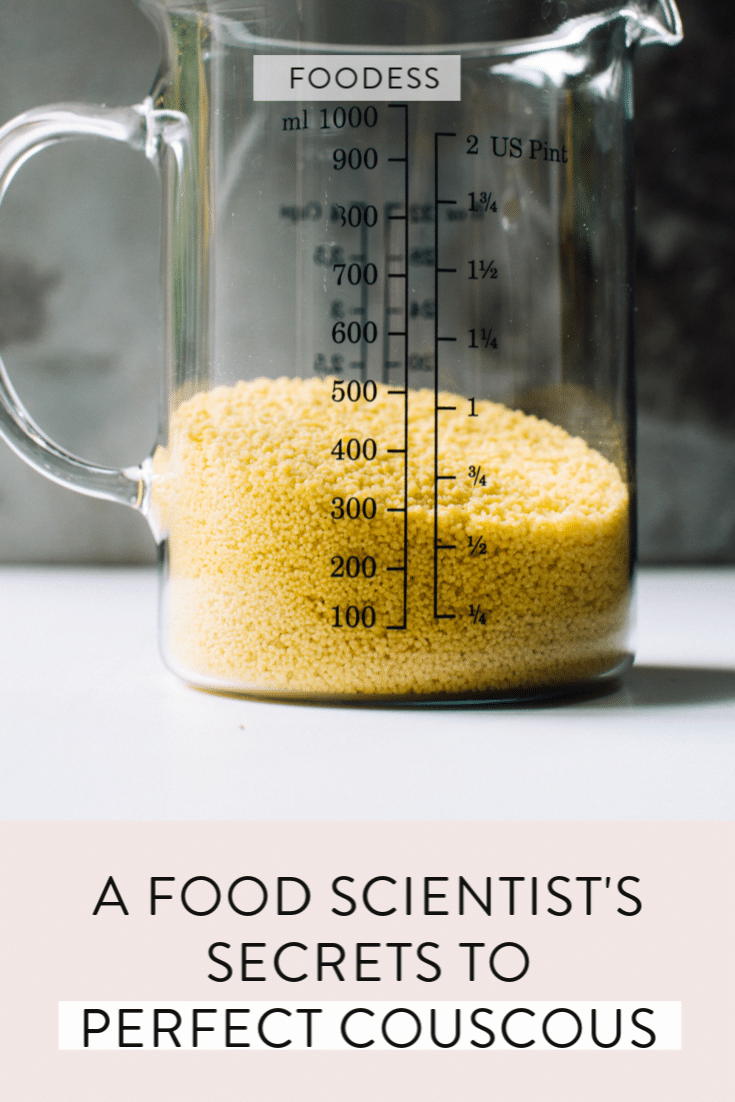
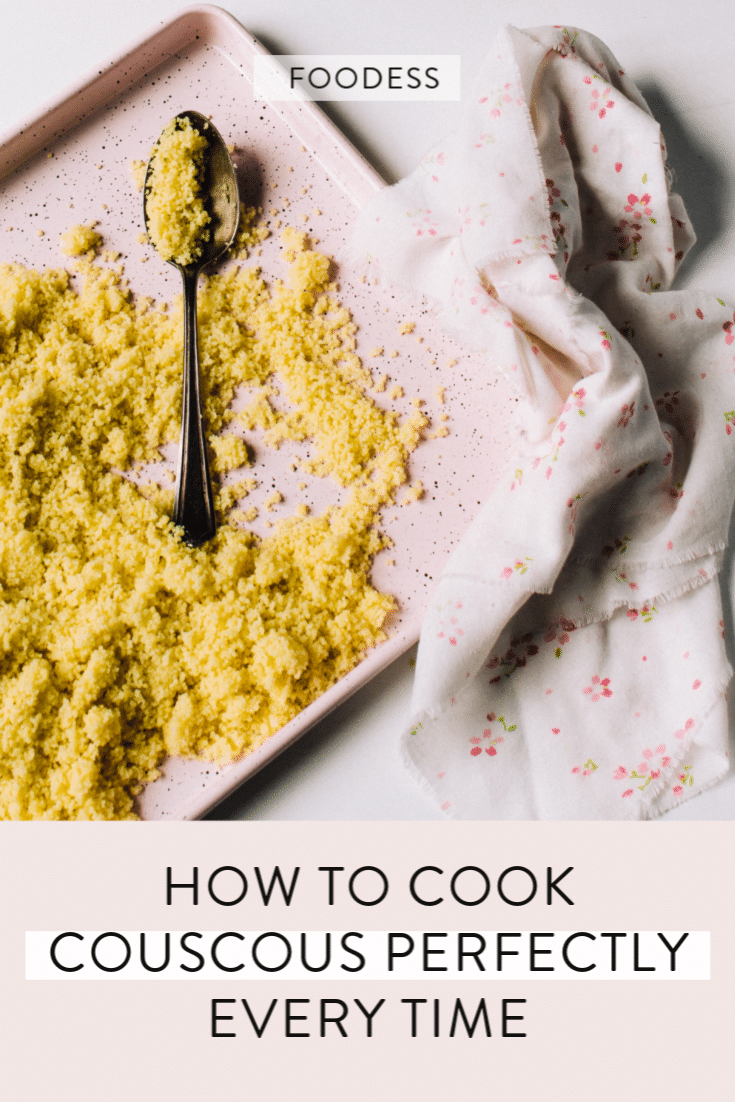
How to Cook Perfectly Fluffy Couscous

Updated Jul 14, 2026
Everything you need to know to cook perfect, fluffy couscous every time, from the ideal amount of water to the easiest cooking method, with a bonus trick for speedy cooling. Don’t try to make couscous any other way!
Couscous cooks in 5 minutes, and it barely counts as cooking. You pour boiling liquid over the dry couscous, cover it, and fluff with a fork. The two things people get wrong are the liquid ratio and how much to make, so here are the quick answers up front.
- Ratio: 1 1/2 cups liquid to 1 cup dry couscous.
- Per person: about 1/2 cup dry couscous for a side dish, or 3/4 to 1 cup for a main.
- Method: boil the liquid, stir in the couscous, cover, rest 5 minutes off the heat, then fluff.
Below you will find the full method, a per-person chart, and the fix for mushy or clumpy couscous. Once you have it down, put it to work in my easy couscous salad or one of these Israeli couscous recipes.
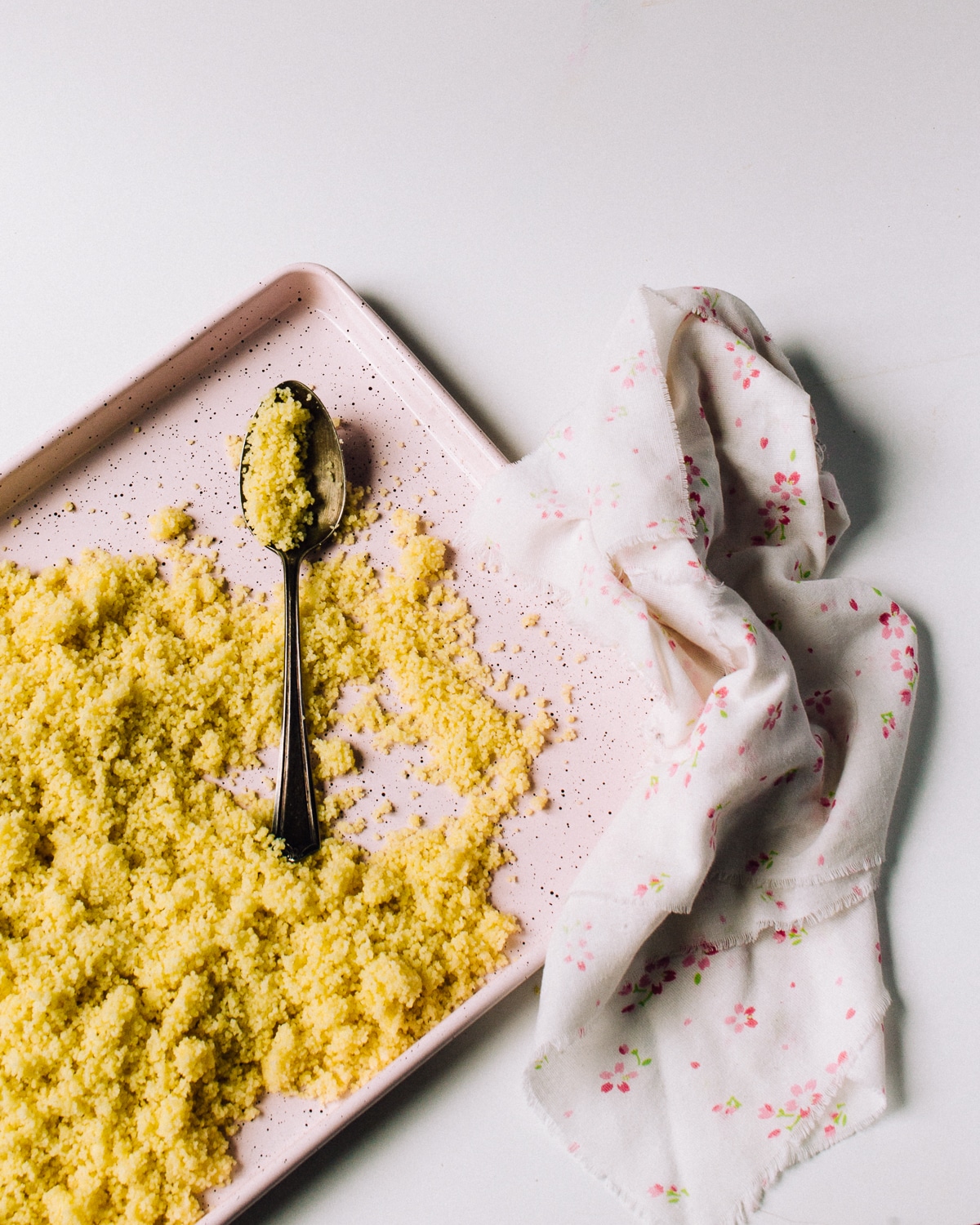
Couscous, yum. Those deliciously fluffy little bits soak up the flavors of whatever they’re in the company of, whether served hot or cold.
A mainstay of North African cuisine, couscous is most traditionally served with warm spiced stews or vegetables.
In North America we more commonly eat it as a salad . Either way, couscous is a wonderfully simple, almost-instant, easy weeknight staple.

Couscous-to-Water Ratio
The couscous-to-water ratio is 1 1/2 cups of liquid for every 1 cup of dry couscous. That 1:1.5 ratio works for most fine and medium couscous. Pearl or Israeli couscous is the exception: simmer it in plenty of water like pasta, then drain.
If you’ve ever made couscous, you know that getting the texture right can be a bit tricky. Couscous can turn out mushy, clumpy, or dry if you don’t get the ratio of water to couscous just right.
This article is here to help you get that fluffy, perfectly-cooked couscous every time, starting with the ideal couscous-to-water ratio.
For the perfect couscous water ratio, you’ll need 1 1/2 cups of water for every 1 cup of dry couscous.
The important trick with couscous is to avoid adding too much liquid, as you’ll end up with a soggy lump of just about inedible mush.
This couscous water ratio applies to most types of couscous, including Moroccan and Israeli varieties. And note that it doesn’t have to be actual water. Use chicken or vegetable broth for more flavour in your cooking liquid.
You can even start with a little extra virgin olive oil in the pot and saute some garlic and onions before adding your couscous and water or chicken broth.
What the Ratio Does
- Couscous: Forms the base of the dish, absorbing liquid to become fluffy and tender.
- Water: Adds moisture to the couscous, helping it expand and cook.
Hand-picked How-To: How To Boil, Poach, Fry and Scramble Eggs Perfectly, Every Time
How to Cook Couscous: The Easiest Method
Grab these Tools
- A heatproof bowl or medium saucepan
- Measuring cup
- Fork
Starting with dry couscous, here’s how to cook it up fluffy and delicious:
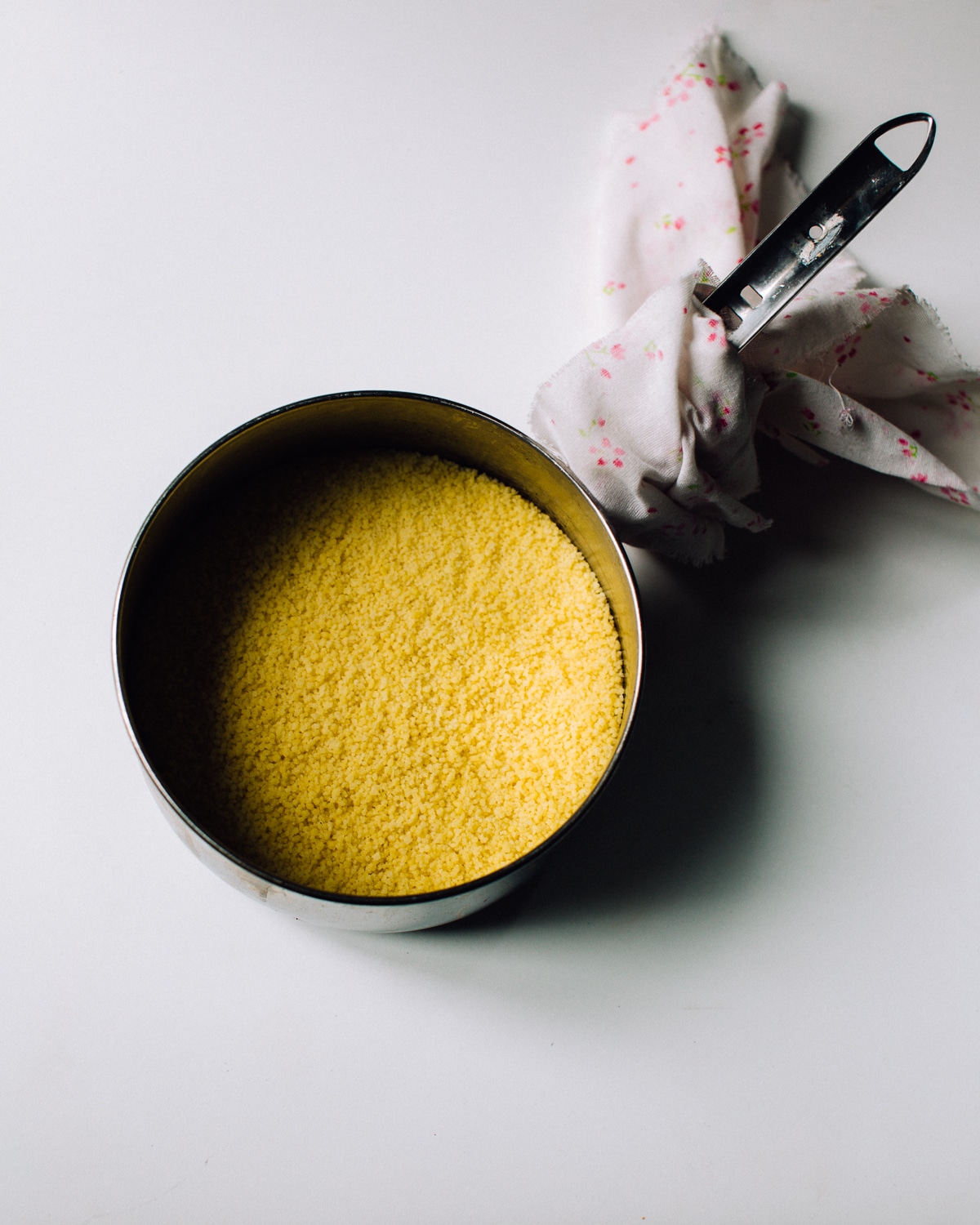
- To start, measure out your dry couscous.
- Boil water in the 1 to 1.5 ratio.
- Pour dry couscous into the boiled water and turn off heat.
- Cover the pot with a lid or plate and allow the couscous to steam for 5 minutes.
- When the water has been absorbed, lift the lid and toss the couscous with a fork until fluffy.
- Serve, or add to other ingredients to create delicious meals.
Variations and Substitutions
Want to switch things up? You can easily personalize your couscous with delicious results. Here are some ideas:
- Chicken or Vegetable Broth: Instead of water, use chicken or vegetable broth to cook the couscous. This adds depth and richness to the flavor.
- Butter or Oil: A tablespoon of butter or oil in the boiling water will give your couscous a richer texture.
- Tomatoes: Dice fresh tomatoes and stir them in after the couscous has cooked, or use a can of diced tomatoes in place of some of the liquid for a tomato-flavored twist.
- Lemon Zest: Add the zest of a lemon to the boiling water or stir it in afterward for a citrusy kick.
- Fresh Herbs: Stir in chopped herbs like parsley, cilantro, or mint after the couscous is cooked for extra color and flavor.
- Toasting: Before adding water or broth, toast the couscous in a dry pan for 2-3 minutes. This will bring out a nutty flavor.
- Nuts and Seeds: Sprinkle some toasted almonds, pistachios, pine nuts, walnuts or pumpkin seeds on top for crunch.
- Dried Fruit: Add some raisins, dried apricots, or dried cranberries for a touch of sweetness and texture.
- Spices: A dash of cumin, coriander, or even a pinch of cinnamon can add a whole new dimension of flavor.
- Cheese: Grated Parmesan or crumbled feta cheese can add a salty, tangy element that pairs well with other flavors.
I love to use tomatoes, bell peppers, cucumbers, olives and feta for a mediterranean couscous.
How Long Couscous Takes to Cook
Couscous itself cooks in 5 minutes, off the heat. Counting the time it takes to bring your liquid to a boil, the whole thing runs about 12 minutes start to finish. Pour the hot liquid over the dry couscous, cover the pot, and let it steam. Then fluff it with a fork.
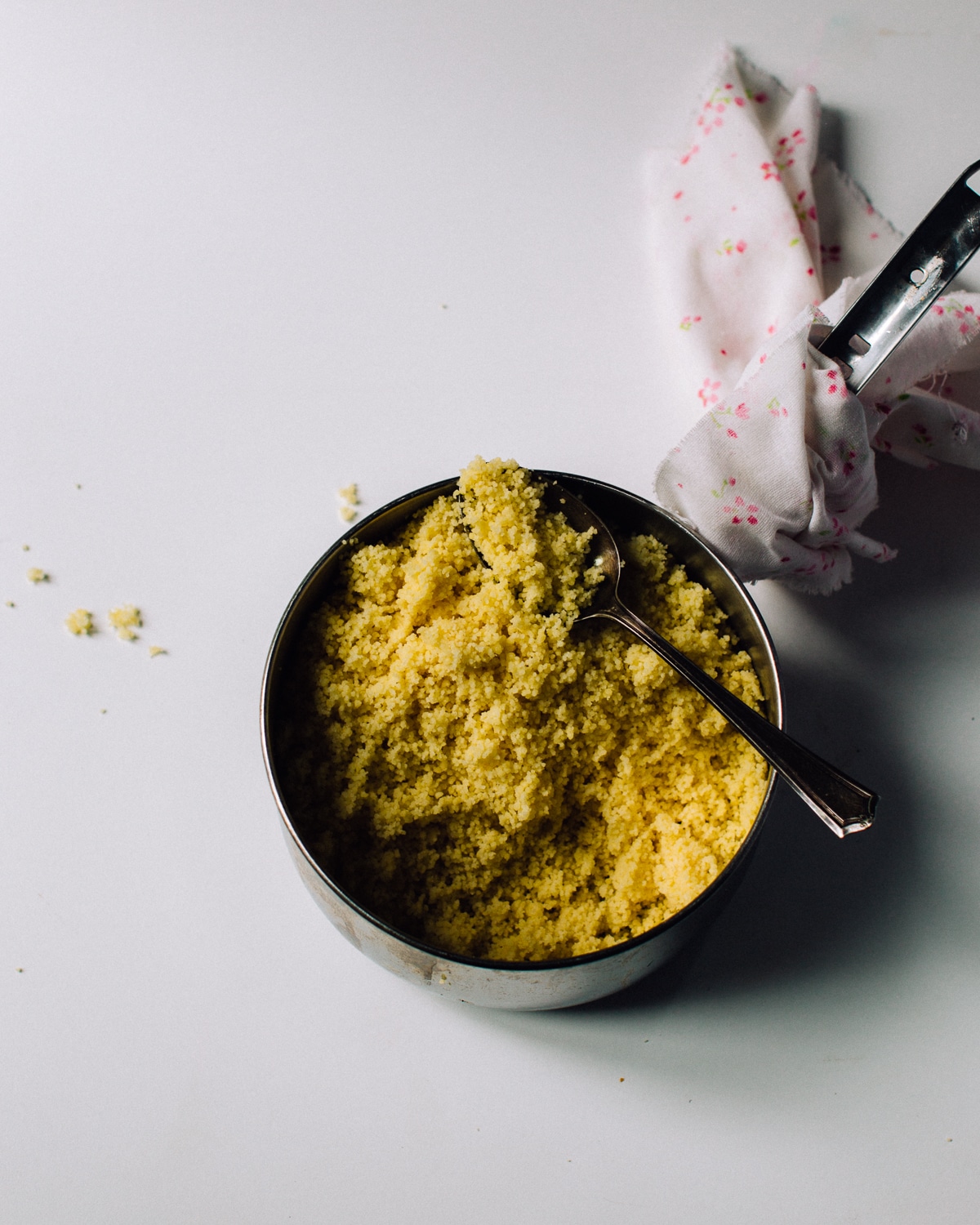
Because couscous is such a tiny pasta, it’s super quick to prepare. From start to finish, it takes about 12 minutes to cook couscous; 3-7 minutes to bring your water to a boil, then about 5 additional minutes for the couscous to soak up the water and cook.
How to Cool Couscous Fast for a Salad
To cool couscous quickly for a salad, spread it out in a thin layer over a large, rimmed baking sheet and let stand at room temperature for 10-15 minutes. Stir it a few times to expedite the cooling process.
How Much Couscous Per Person?
For a side dish, use about 1/2 cup of dry couscous per person. For a main, use 3/4 to 1 cup. Couscous more than doubles in volume as it cooks, so 1/2 cup uncooked couscous yields just over 1 cup cooked.
Here’s a general guide to help you get it right.
| Serving | Dry couscous per person | Cooked yield |
|---|---|---|
| Side dish | 1/2 cup (about 60 g) | About 1 cup |
| Main dish | 3/4 to 1 cup (about 80 to 100 g) | About 1 1/2 to 2 cups |
For a Side Dish:
- A good rule of thumb is to allocate about 1/2 cup of uncooked couscous per person. This should yield roughly 1 cup of cooked couscous, which is typically a satisfying portion for a side dish.
For a Main Course:
- If couscous is the star of the show, plan for 2/3 to 1 cup of uncooked couscous per person. This will give you about 2 cups of cooked couscous, enough for a hearty main course.
Group Gatherings:
- For larger events, aim for a total of about 4 cups of uncooked couscous. This should yield around 8 cups of cooked couscous, enough to serve 10-12 people as a side dish where there are lots of other food options.
When in doubt, it’s always better to have a little extra than to run out, especially if you’re hosting guests. 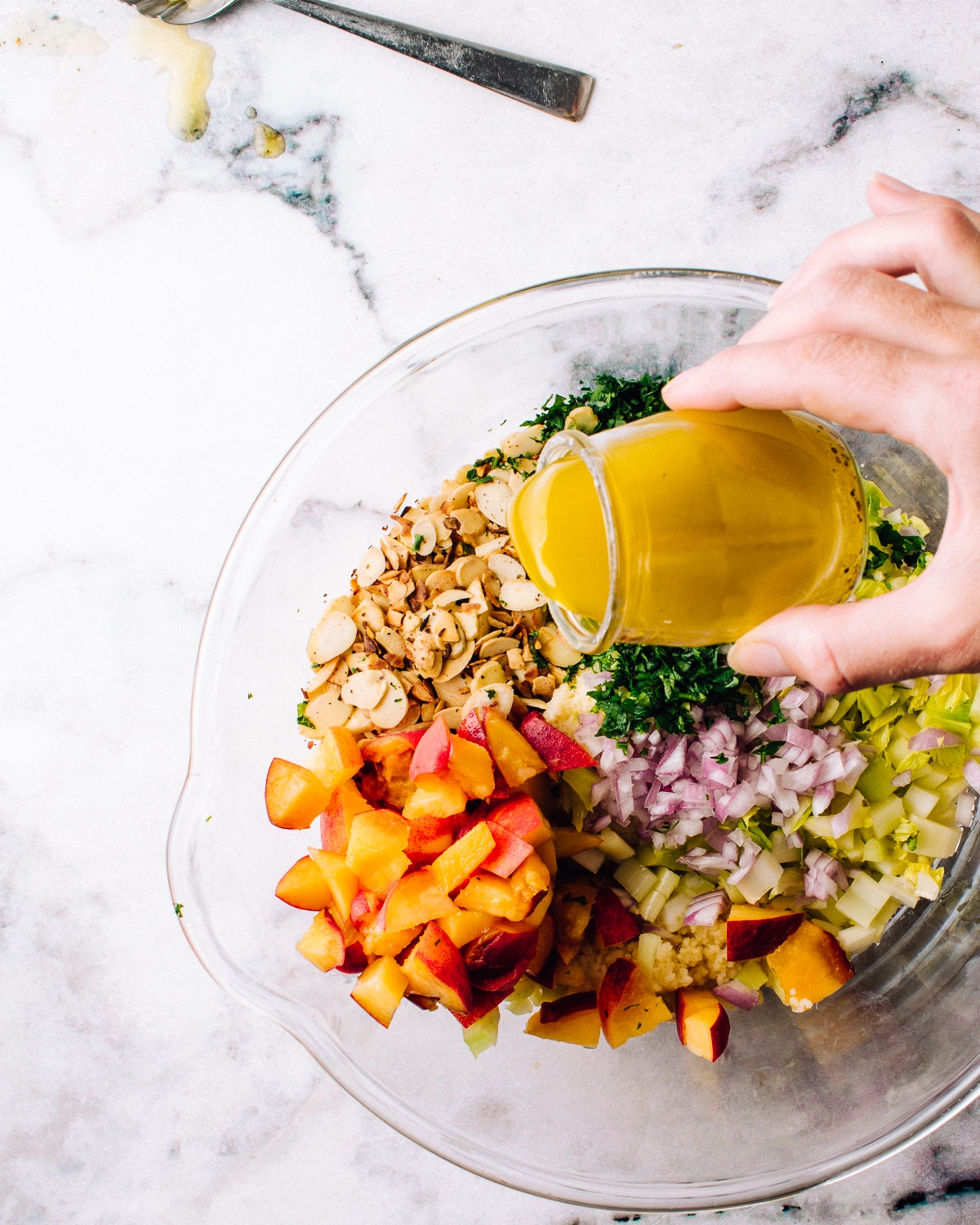
Try these Couscous Recipes
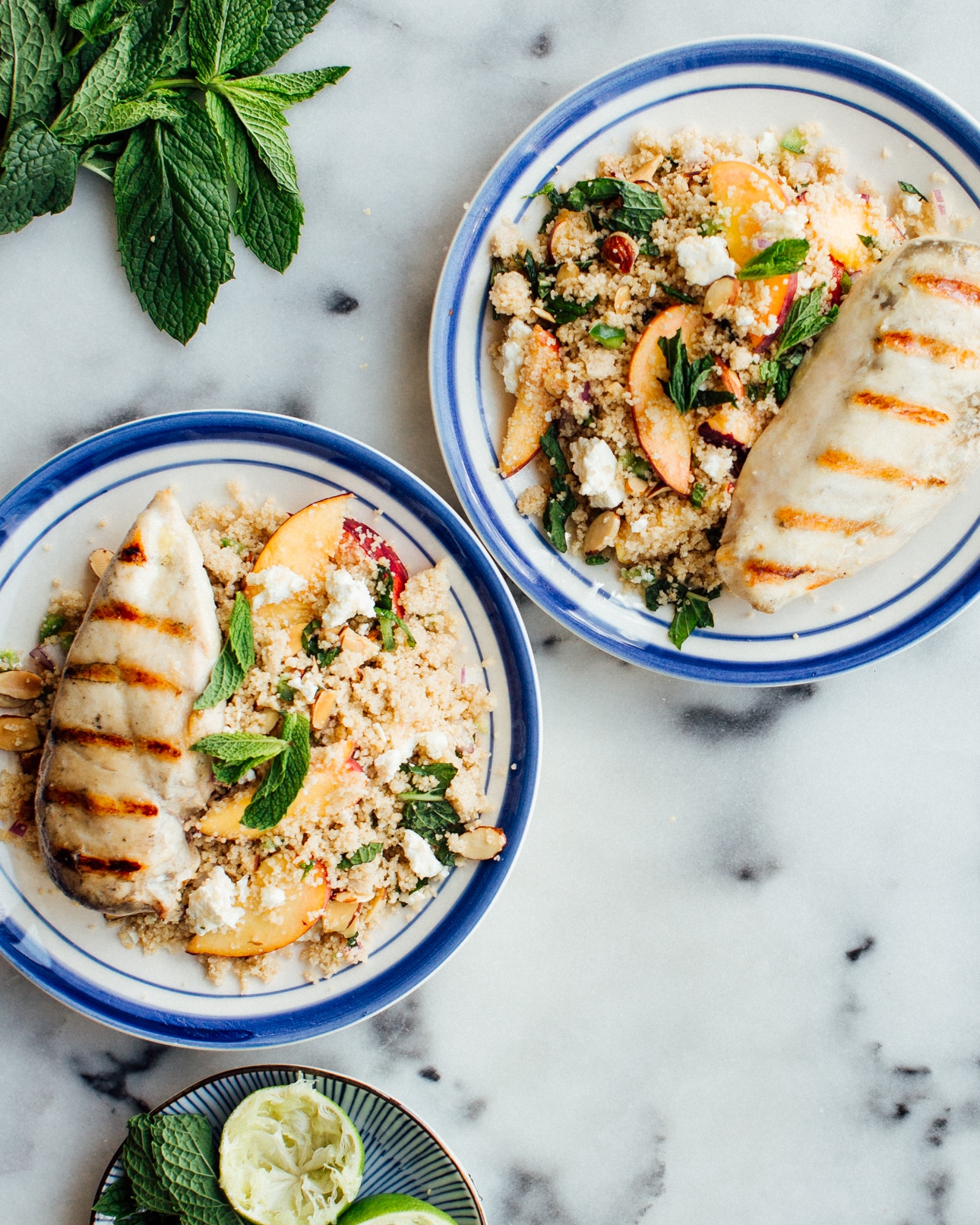
Grilled Chicken Couscous with Peaches & Mint
My Favorite Couscous Salad Dressing
9+ Genius Israeli Couscous Recipes You Have to Try
Israeli Couscous Salad with Mango + Avocado
Why Your Couscous Turns Out Mushy or Clumpy
Mushy or clumpy couscous almost always means too much liquid, or couscous that sat in the pot without being fluffed. Stick to 1 1/2 cups liquid per 1 cup dry couscous, rest it covered for 5 minutes, then fluff right away. Here are the other mistakes to avoid.
- Too much liquid. Stick to 1 1/2 cups liquid per 1 cup dry couscous. Extra liquid has nowhere to go, so the grains swell and collapse.
- Stirring while it steams. Every stir breaks grains and releases starch, and that starch is what glues couscous into clumps.
- Forgetting to fluff. Fluff with a fork the moment the 5 minutes are up. Couscous left to sit sets into a solid block.
- Skipping the fat. A teaspoon of olive oil or butter stirred through the dry couscous coats each grain and keeps them separate.
How to Make the Best Couscous: Final Notes + Secrets
Unlock the full potential of your couscous with these key takeaways:
- Use a Fork: Always fluff your couscous with a fork, not a spoon.
- Quality Matters: Use high-quality couscous for better texture and flavor.
- Season the liquid. Couscous is bland on its own, so salt the water or use stock. Underseasoning is the most common reason it tastes flat.
Frequently Asked Questions
For a side dish, use about 1/2 cup of dry couscous per person, which yields roughly 1 cup cooked. For a main, use 3/4 to 1 cup of dry couscous per person. Couscous more than doubles in volume as it cooks.
Plan on about 60 g of dry couscous per person for a side dish, or 80 to 100 g for a main. That is roughly 1/2 cup to 1 cup uncooked, which fluffs up to a generous serving.
Use 1 1/2 cups of liquid for every 1 cup of dry couscous. This 1:1.5 ratio works for most fine and medium couscous. Always check the package, since brands vary slightly.
For 1 cup of dry couscous, use 1 1/2 cups of water or broth. Bring the liquid to a boil, stir in the couscous, cover, and rest it off the heat for 5 minutes.
Mushy, gummy couscous usually means too much liquid. Stick to the 1:1.5 ratio, fluff with a fork right after resting, and do not stir it while it steams.
Yes. Cook it, fluff it, and store it in an airtight container in the fridge for up to 3 days. Reheat with a splash of water or olive oil, or serve it cold in a salad.
Cooked couscous keeps for up to 3 days in an airtight container. For longer storage, freeze it for up to 3 months and thaw it before reheating.
Yes, and it is the easiest way to add flavor. Swap the water for an equal amount of chicken or vegetable stock, then season with a little salt, olive oil, or lemon.
What is Couscous? Do You Know What it Actually is?
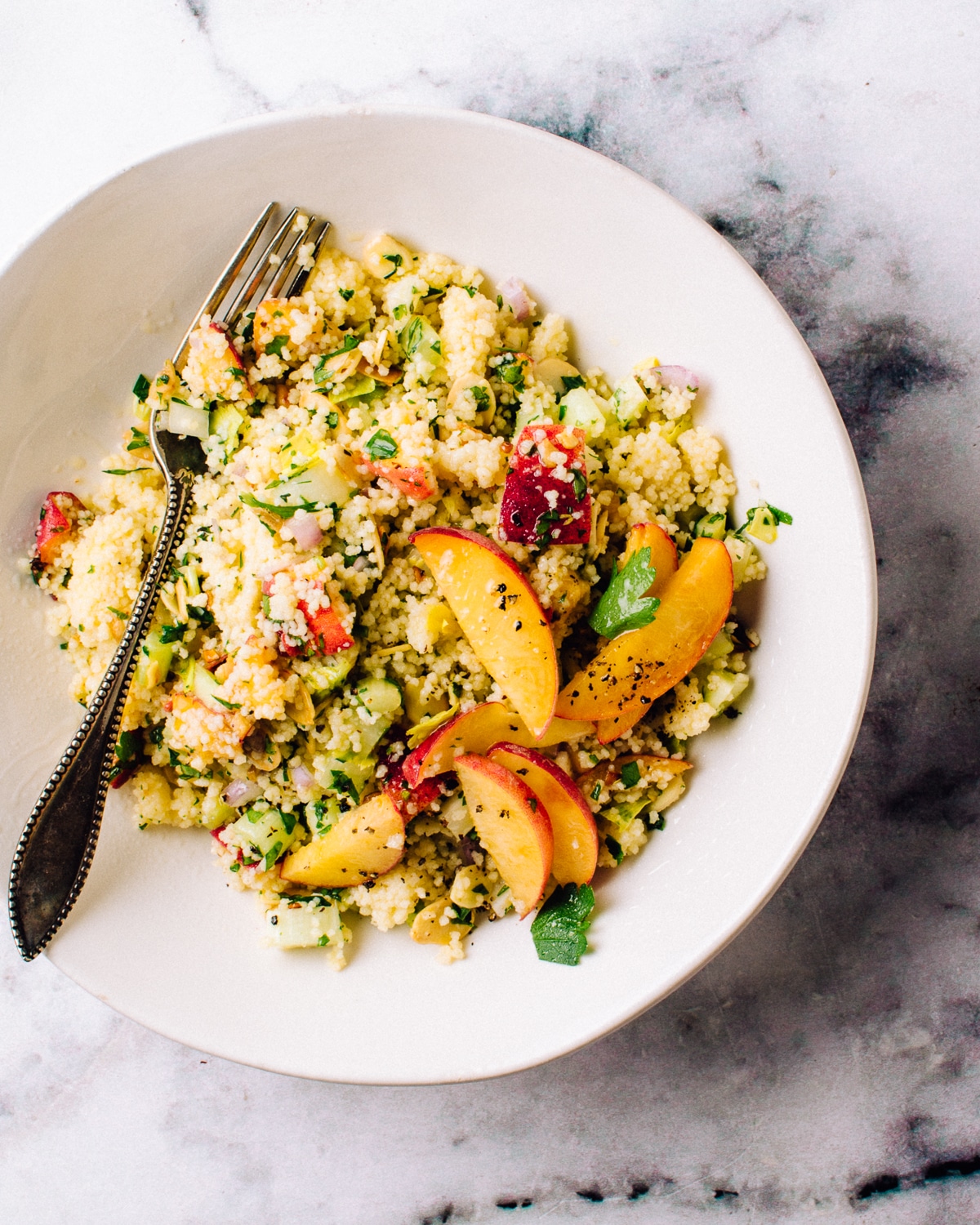
Couscous is a traditional North African dish made from tiny steamed balls of crushed durum wheat semolina flour. It’s commonly consumed in countries like Morocco, Tunisia, Algeria, and Libya, and has gained popularity around the world as a quick and versatile grain option.
Couscous is often mistaken for a grain, but it’s actually a type of pasta (made from wheat unless you buy a gluten-free one specifically).
Next reading: Couscous vs Pasta (everyone is surprised by this comparison!)
Different Types of Couscous
There are several types of couscous, with the most common in grocery stores being Moroccan couscous. This one has the smallest size and cooks very quickly.
Israeli couscous (also known as pearl couscous) has a larger pearl shape and takes a bit longer to cook (here are a bunch of great Israeli Couscous Recipes).
There’s also a whole-wheat couscous that is a bit chewier and has a nuttier flavor compared to the regular type.
Couscous can be used in a variety of dishes, both savory and sweet. It can be flavored with herbs, spices, fruits, and vegetables, and can serve as a side dish alternative to rice, salad base (try this yummy lemon dressing for couscous salad).
A mainstay of North African cuisine, couscous is most traditionally served with warm spiced stews or vegetables. In North America we more commonly eat it as a salad. Either way, couscous is a wonderfully simple, almost-instant, easy weeknight staple.
Pin Me!