
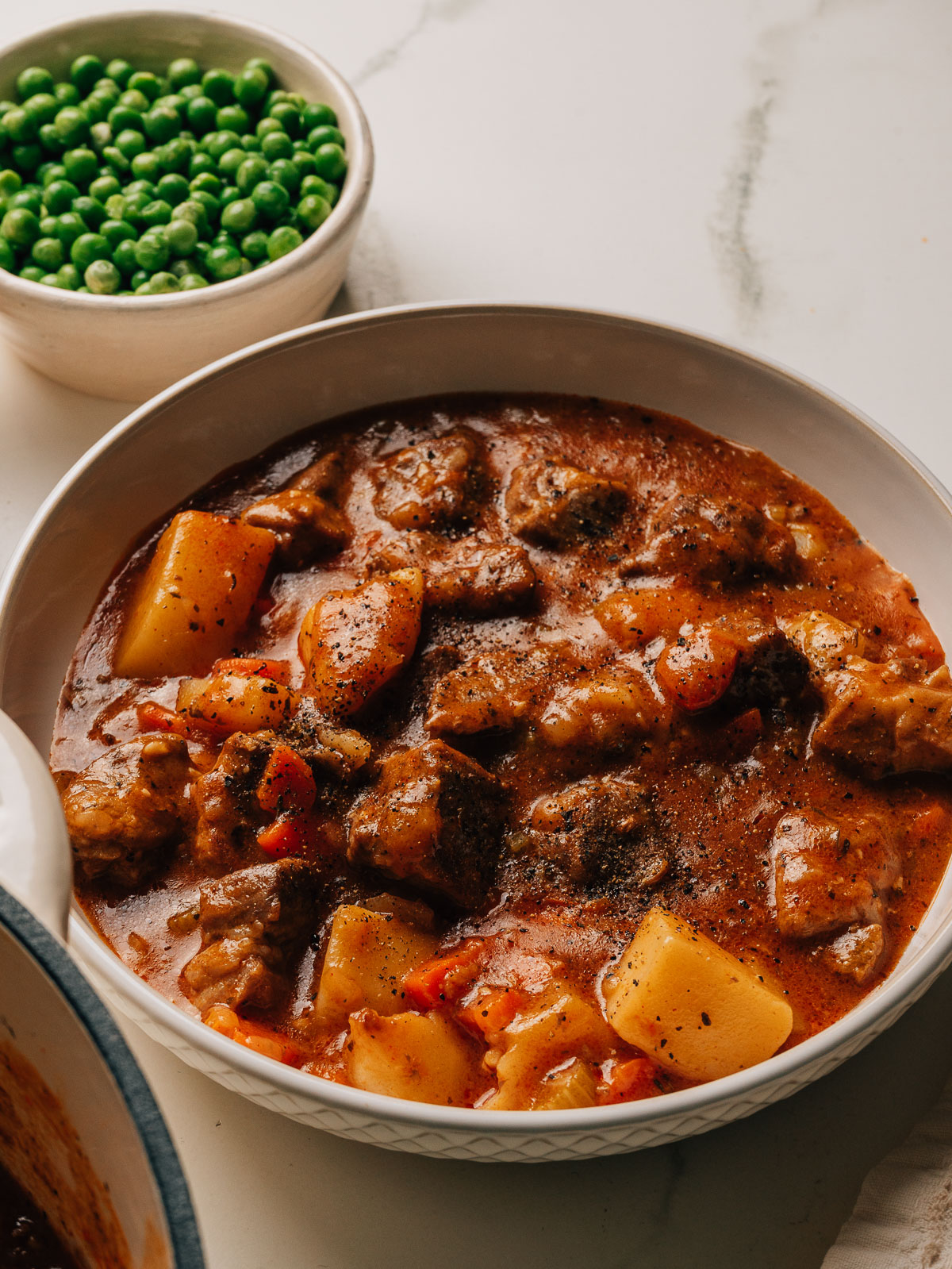
This easy Pork Stew recipe is my favorite comfort food for cold nights. As a food scientist, I get nerdy about why recipes work. This tender pork stew uses three tricks most recipes skip: a properly built fond, cooked-out tomato paste, and a cold butter finish.
Pork Stew Ingredients
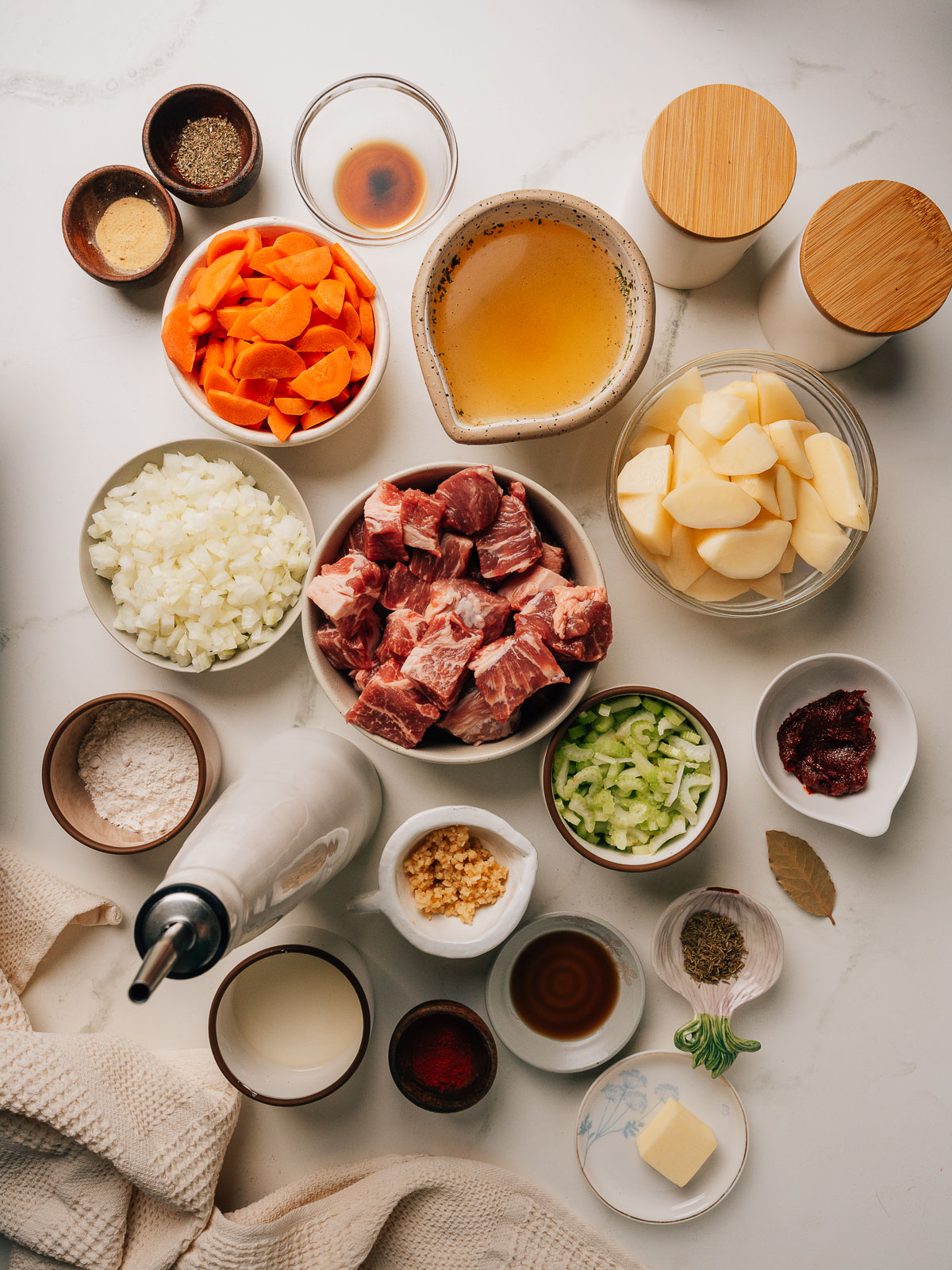
Here are some ingredient notes for a deeply flavored pot of pork stew.
- Pork shoulder: also called pork butt, cubed into 1 1/2-inch pieces for even braising and the right meat-to-sauce ratio. Save the leaner pork loin for roasting, or try my popular crockpot pork loin recipe.
- Onion and celery
- Fresh garlic and tomato paste: the tomato paste gets cooked until it darkens and sticks for serious umami.
- Dried thyme, dried parsley, onion powder, smoked paprika: the seasoning blend that gives the stew its savory backbone.
- All-purpose flour: sprinkled over the cooked vegetables to thicken the pork gravy from the start.
- Chicken broth
- Carrots and Yukon Gold potatoes: Yukons hold their shape but go creamy on the inside.
- Bay leaf: just one, for a subtle herbal layer in the broth.
- Worcestershire sauce and soy sauce: two umami boosters that round out the gravy.
- Cornstarch slurry: optional, for thickening the gravy further at the end.
- Cold unsalted butter: whisked in at the end for a silky, glossy finish. It’s a French technique called “mounting with butter”.
Full recipe quantities listed in the recipe card at the bottom of the article.
If you love slow-simmered, gravy-rich cozy meals like this, you’ll also want my Dutch Oven Classic Beef Stew in the rotation.
Variations and Substitutions
Easy ways to make this pork stew recipe your own:
- Splash of red wine: deglaze with 1/2 cup of dry red wine after cooking the tomato paste for an even richer gravy. White wine like Sauvignon Blanc works too.
- Add bacon: render 4 strips of chopped bacon before browning the pork for a smoky base.
- Try rosemary: swap the dried thyme for 1 tsp dried rosemary or a small fresh sprig for a piney note.
- Add mushrooms: brown 8 oz of cremini with the veggies for an extra hit of umami.
- Swap potatoes: parsnips, turnips, or rutabaga work in place of some of the potatoes for a sweeter root flavor.
Grab These Tools
You don’t need much, but a few right pieces make a big difference here.
- Heavy Dutch oven: a 5 to 7 quart enameled cast iron pot is ideal for even browning and gentle simmering.
- Sharp chef’s knife: makes cubing the pork shoulder fast and even.
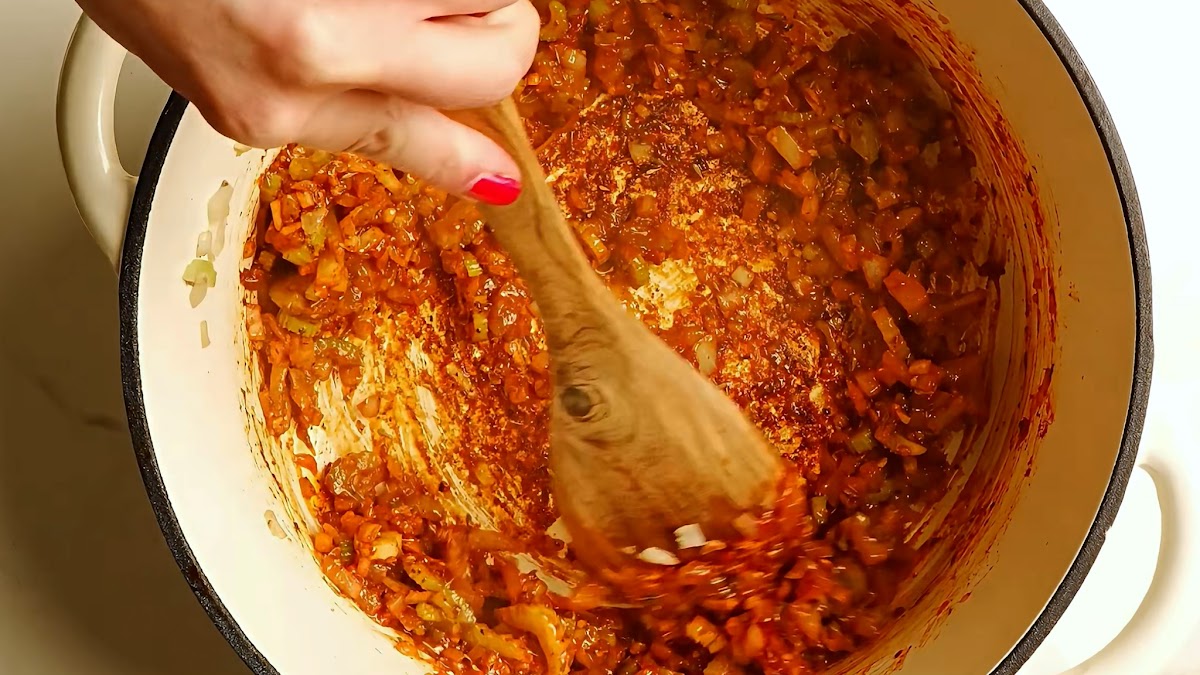
- Wooden spoon: perfect for scraping up the fond once the broth goes in.
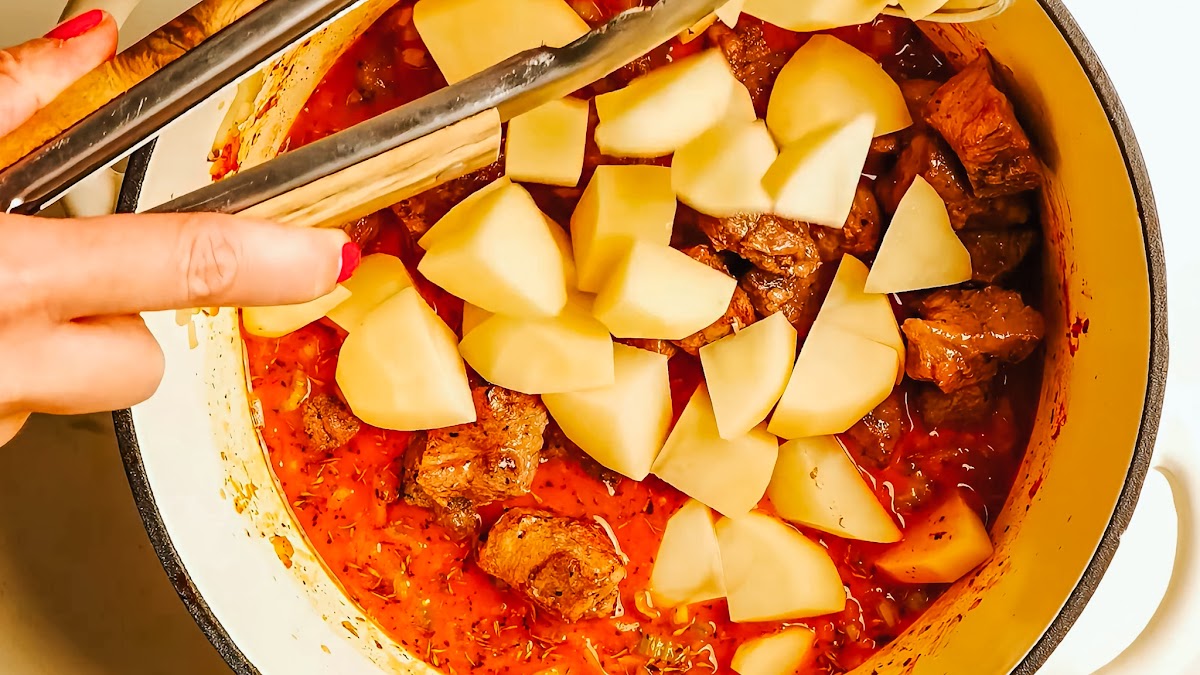
- Tongs: the easiest way to flip pork pieces without losing the sear.
How to Make Pork Stew: An Easy Guide
The whole pot comes together in one Dutch oven. Here’s exactly how I build the layers of flavor.
Heat the Pot and Sear the Pork
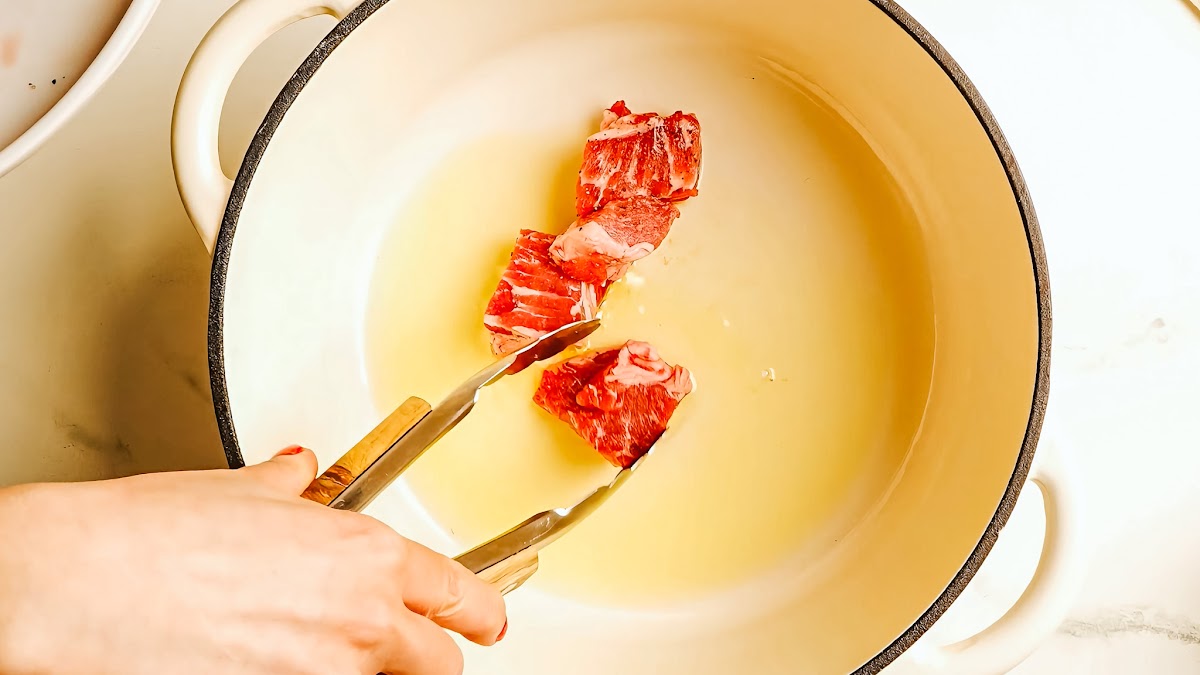
Heat a large Dutch oven over medium-high for 3 to 4 full minutes. Add the olive oil and let it shimmer for another 30 seconds.
Pat the cubed pork dry and season it with 1 1/2 tsp kosher salt and the black pepper. Brown the pork pieces in batches with space between them, about 3 to 4 minutes per side. Transfer the seared cubes to a plate.
Soften the Aromatics
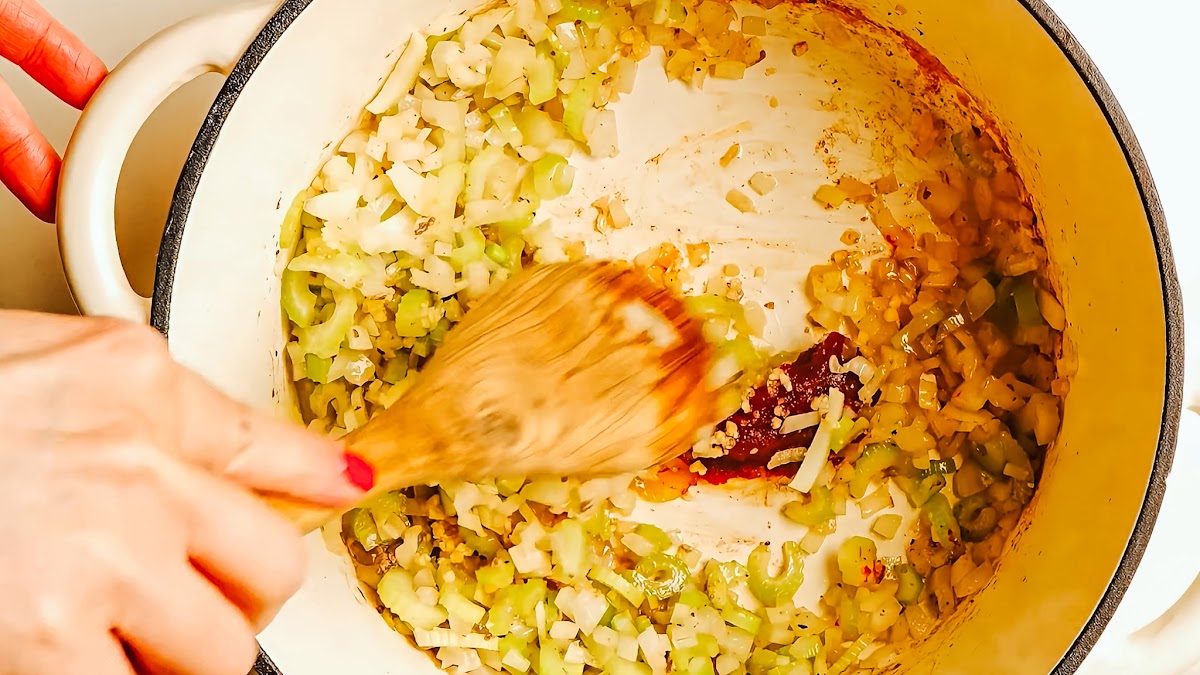
Reduce the heat to medium. Add the diced onion, celery, and remaining 1/2 tsp salt. Cook until softened and lightly golden, about 6 minutes.
Build the Flavor Base
Stir in the fresh garlic, tomato paste, thyme, and smoked paprika. Cook for 3 to 4 minutes, stirring often, until the tomato paste darkens and sticks to the bottom of the pot. This is where real depth of flavor lives.
Sprinkle the flour over the veggies and stir to coat. Cook for 1 minute to take the raw edge off the flour.
Deglaze and Simmer
Pour in the chicken broth and 1 tsp more salt, scraping up the browned bits with a wooden spoon. Return the pork and any juices to the pot.
Add the carrots, potatoes, bay leaf, Worcestershire sauce, and soy sauce. Bring everything to a gentle simmer. Cover and cook on low for 75 minutes, stirring once or twice, until the pork is fork-tender.
Finish with Slurry and Butter
Remove the bay leaf. Whisk in the cornstarch slurry and the cold butter. Simmer uncovered for about 5 minutes, until the gravy is glossy and thickened to your liking.
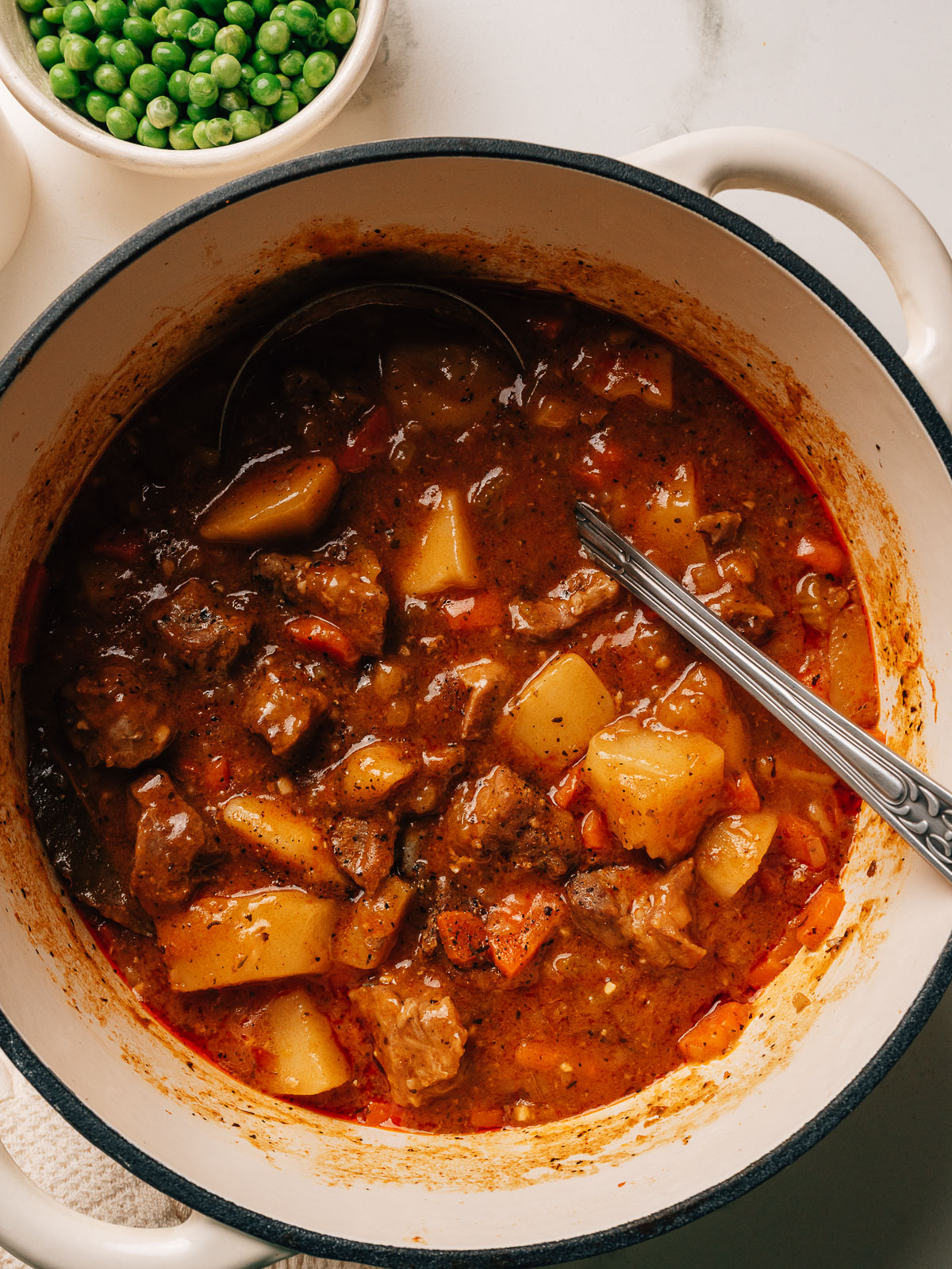
Taste and adjust salt if needed. Let the finished pork stew rest for 10 minutes before serving so the gravy thickens further as it sits.
5 Common Mistakes When Making Pork Stew
Here are the most frequent mix-ups to avoid when making pork stew:
- Skipping the sear: the fond from browning is the foundation of the gravy. Don’t rush this step or skip it.
- Crowding the pan: when pork pieces touch, they steam instead of brown. Work in two or three batches with space between them.
- Pulling tomato paste too early: it should darken and stick to the pot before you add liquid. That sticky stage is where the deep, savory flavor lives.
- Boiling instead of simmering: a hard boil toughens pork shoulder. Keep the heat low and steady once the broth is in.
- Forgetting to taste at the end: the broth reduces over 75 minutes, so the salt should always be checked before serving.
Make Ahead and Storage
Pork stew tastes even better the next day after the flavors meld in the fridge.
Storing Leftovers
- Cool first: let the stew sit at room temperature for no more than an hour before chilling.
- Airtight container: store in the fridge for 3 to 4 days.
- Press the surface: a piece of plastic wrap on the surface keeps a skin from forming.
Freezing
- Portion it out: divide into freezer-safe containers in single or family-sized servings.
- Freeze up to 3 months: the gravy holds beautifully, though potatoes can soften slightly.
- Label and date: note the date on the container so you don’t lose track.
Reheating Pork Stew
- Thaw overnight: move frozen stew to the fridge the day before you plan to reheat.
- Stovetop, low and slow: warm gently in a pot over medium-low, stirring occasionally.
- Loosen if needed: a splash of broth or water brings the gravy back if it tightened up too much.
How to Serve This Pork Stew Recipe
The gravy is the star, so I serve this with something to soak it all up.
Pork Stew Toppings
- Fresh herbs: a shower of chopped parsley or fresh thyme leaves brightens each bowl.
- Cracked black pepper: a final twist over the top sharpens the gravy.
Side Dishes for Pork Stew
- Crusty bread: I usually make my Dutch oven bread (an easy no-knead recipe). Tear pieces off and dunk straight into the gravy.
- A bright green salad: something crisp and lemony to balance the richness of the pot.
- Buttered egg noodles: serve a smaller portion of stew over noodles to stretch leftovers.
- Roasted broccoli or green beans: a quick sheet-pan side keeps the meal balanced.
How to Make the Best Pork Stew: Final Notes + Secrets
A few small choices are what make this hearty pork stew recipe taste so much better than the sum of its parts.
- Best cut of pork: pork shoulder (also called pork butt) wins every time. Its fat and connective tissue break down into a silky, rich sauce. Lean cuts (like a pork loin roast) go dry in the same time frame.
- Cook the tomato paste: the few minutes spent darkening and sticking it to the pot drives a huge amount of savory depth.
- Sprinkle the flour over the veggies: this builds the roux right in the pot and means the gravy never tastes pasty.
- Low and slow: a gentle simmer for 75 minutes is what turns the pork tender. A hard boil toughens it back up.
- Cold butter at the end: a tablespoon whisked in off-heat gives the gravy its glossy, restaurant finish.
- Rest before serving: 10 minutes off-heat lets the gravy settle and thicken into a coatable sauce.
FAQs About Pork Stew
Just skimming through? Here are some quick answers to the commonly-asked questions.
Pork shoulder, also called pork butt, is the best cut of pork for stew. Its fat and collagen break down into a tender, silky sauce during a long, gentle simmer. Lean cuts dry out in the same time frame.
Yes. Brown the pork and soften the vegetables on the stovetop first, then transfer everything to a slow cooker on low for 6 to 8 hours. Add the cornstarch slurry and butter at the end for the same finish.
Yes. Brown the pork on the saute setting, then add the rest of the ingredients and pressure cook on high for 35 minutes with a 10 minute natural release. Stir in the slurry and butter on saute at the end.
Absolutely. Pour in 1/2 cup of dry red wine after cooking the tomato paste and let it simmer for 2 minutes before adding the broth. It deepens the flavor of the gravy and adds richness without overpowering the pork.
Whisk a slurry of 1 tablespoon cornstarch with 2 tablespoons cold water and stir it into the simmering stew. Or remove the lid and simmer 10 to 15 minutes longer to reduce the gravy naturally.
They work together to layer in umami without making the stew taste like either one. If you only have one, use 2 tsp of whichever you have. Tamari works in place of soy for a gluten-free version.
This stew freezes well for up to 3 months. Cool it completely first, then portion into airtight containers or freezer bags. Thaw overnight in the fridge before reheating gently on the stovetop.
Yukon Golds are a waxier potato that holds up well, but cutting them too small or simmering at a hard boil will break them down. Cut them into chunky pieces and keep the heat at a gentle simmer.
Warm it gently on the stovetop over medium-low heat, stirring occasionally. Add a splash of broth or water if the gravy thickened too much in the fridge. Avoid the microwave on high, which can toughen the pork.
Other Tender Pork Recipes You’ll Love
- Slow Cooker Pork Shoulder
- Instant Pot Pulled Pork
- Slow Cooker Pork Loin
- Instant Pot Pork Loin
- Fall-Off-The-Bone Oven-Baked Spare Ribs
Easy Tender Pork Stew
Video
Ingredients
- 2 tbsp olive oil
- 2 lb pork shoulder cut into 1 1/2-inch cubes
- 3 tsp kosher salt divided
- ½ tsp black pepper
- 2 ½ cups chopped onion about 1 large onion
- 1 ½ cups sliced celery about 2 ribs
- 4 tsp minced garlic about 4 large cloves
- 2 tbsp tomato paste
- 1 tsp dried thyme
- 1 tsp dried parsley
- 2 tsp onion powder
- ½ tsp smoked paprika
- ¾ tsp ground black pepper
- 2 tbsp all-purpose flour
- 4 cup chicken broth
- 2 cup sliced carrots about 2 large
- 3 medium Yukon Gold potatoes peeled and cut into chunks
- 1 bay leaf
- 1 tbsp Worcestershire sauce
- 1 tbsp soy sauce
- 1 tbsp cornstarch mixed with 2 tbsp cold water, optional
- 1 tbsp cold unsalted butter
Instructions
- Heat a large Dutch oven over medium-high heat for 3 to 4 full minutes. Add oil and let it heat until shimmering hot, another 30 seconds or so.
- Pat pork dry and season with 1 1/2 tsp kosher salt and black pepper.
- Brown pork in batches, leaving space between pieces. Cook until deeply browned on two sides, about 3 to 4 minutes per side. Transfer to a plate.
- Reduce heat to medium. Add onion, celery, and remaining 1/2 tsp salt. Cook until softened and lightly golden, about 6 minutes.
- Stir in garlic, tomato paste, thyme, and smoked paprika. Cook until tomato paste darkens slightly and sticks to the bottom, 3 to 4 minutes, stirring frequently.
- Sprinkle flour over the vegetables and stir to coat. Cook 1 minute to remove raw flour taste.
- Pour in chicken broth and 1 tsp more salt, scraping up browned bits from the bottom. Return pork and any juices to the pot. Add carrots, potatoes, bay leaf, and Worcestershire sauce.
- Bring to a gentle simmer. Cover and cook on low for 75 minutes, stirring occasionally, until pork is fork-tender and sauce has thickened.
- Remove bay leaf. Whisk in cornstarch slurry and cold butter, and simmer uncovered for about 5 minutes, or until thickened to desired consistency.
- Taste and adjust salt if needed. Let rest 10 minutes before serving so the stew thickens slightly.
Notes
Nutrition
Nutrition information is automatically calculated, so should only be used as an approximation.










Thank you for another tasty recipe! I made this last night for the first time and it was delicious. There was just the right amount of a variety of seasonings to make this dish very flavorful.
I have a question regarding the 1 tbsp of soy sauce as listed in the ingredients. There was no mention of when to include it in the directions, but I assumed it would be in step 7. I decided to leave it out, as I didn’t want to overdo the salt flavor.
Could you do this with beef instead. If yes, which is the best cut of beef to use.
Hi Elizabeth! You absolutely can. I’d use beef chuck (sometimes labeled chuck roast or stew meat). It’s the beef equivalent of pork shoulder: well-marbled with collagen that breaks down into fall-apart tenderness during a long simmer. Cube it into 1 1/2-inch pieces like the pork, give it the same hard sear, and braise as written. I haven’t tested the swap directly in this recipe, but the technique translates beautifully. If you’d rather start from a recipe that’s already dialed in for beef, my Dutch Oven Classic Beef Stew is right up the same alley. Either way, hope you love it!