
Here is my easy sushi rice recipe for perfect sushi rice that coats, rolls, and binds just like the rice in your favorite sushi restaurant.

Want to make perfect sushi rice? Let’s do it. This recipe is made with 5 simple ingredients from local and/or Japanese grocery stores and makes the best rice for all your sushi needs.
Why You’ll Love This Sushi Rice Recipe
- Authentic taste: This recipe uses traditional ingredients like rice vinegar, sugar, and kosher salt to give you that classic sushi rice flavor.
- Perfect texture: The sticky, short-grain sushi rice holds together beautifully, making it ideal for sushi rolls, bowls, and bakes.
- Easy to make: This method is beginner-friendly, friends. There’s no need to drain, fluff or mess about, this recipe is so easy.
- Versatile: This sushi rice can be used in various dishes, from classic sushi rolls to creative sushi bakes and poke bowls.
Here’s What You Need
Good sushi rice needs very little; here are the tools and ingredients to gather:
Ingredients
Here’s what to round up to make a luscious batch of sushi rice:
- Sushi rice: Use Japanese sushi rice because of its sticky texture. This short-grainwhite rice gives you that classic sushi experience. Don’t use other types of rice, like arborio, because they won’t give you a proper sushi rice result.
- Sugar: A little sugar balances the flavor of the rice beautifully.
- Rice vinegar: Choose a natural (unseasoned) rice vinegar, not the one labeled “Seasoned Rice Vinegar” because it already contains sugar and salt.
- Kosher salt: Honestly, rice is meaningless without salt. Make sure to season it with sea salt or kosher salt rather than table salt, which is a little harsh.
- Furikake: It’s optional, but I love it. Grab it from the Asian foods section of your local grocery store, or an Asian grocery store, or on Amazon.
Substitutions and Variations
Here are a few twists and turns to take with the ingredients:
- Rice: Try short-grain rice for a similar sticky texture as an alternative to Japanese rice. Avoid using long-grain rice, as it won’t stick together well.
- Vegan: Check that the furikake blend you have doesn’t include fish sauce.
- Furikake: As a furikake swap, use toasted sesame seeds, chopped nori (seaweed), or a sprinkle of soy sauce for added flavor.
- Vinegar: If you don’t have rice vinegar, try apple cider or white wine vinegar, though the flavor will be slightly different. Reduce the quantity to 1 1/2 tablespoons to avoid overpowering the rice.
Tools to Grab
The only tool you’ll need is a large pot to cook the rice in. A metal or silicone spatula is also helpful to stir through the vinegar.
How to Make Sushi Rice: An Easy Guide
Here’s exactly how to make this simple rice recipe:

Rinse the rice
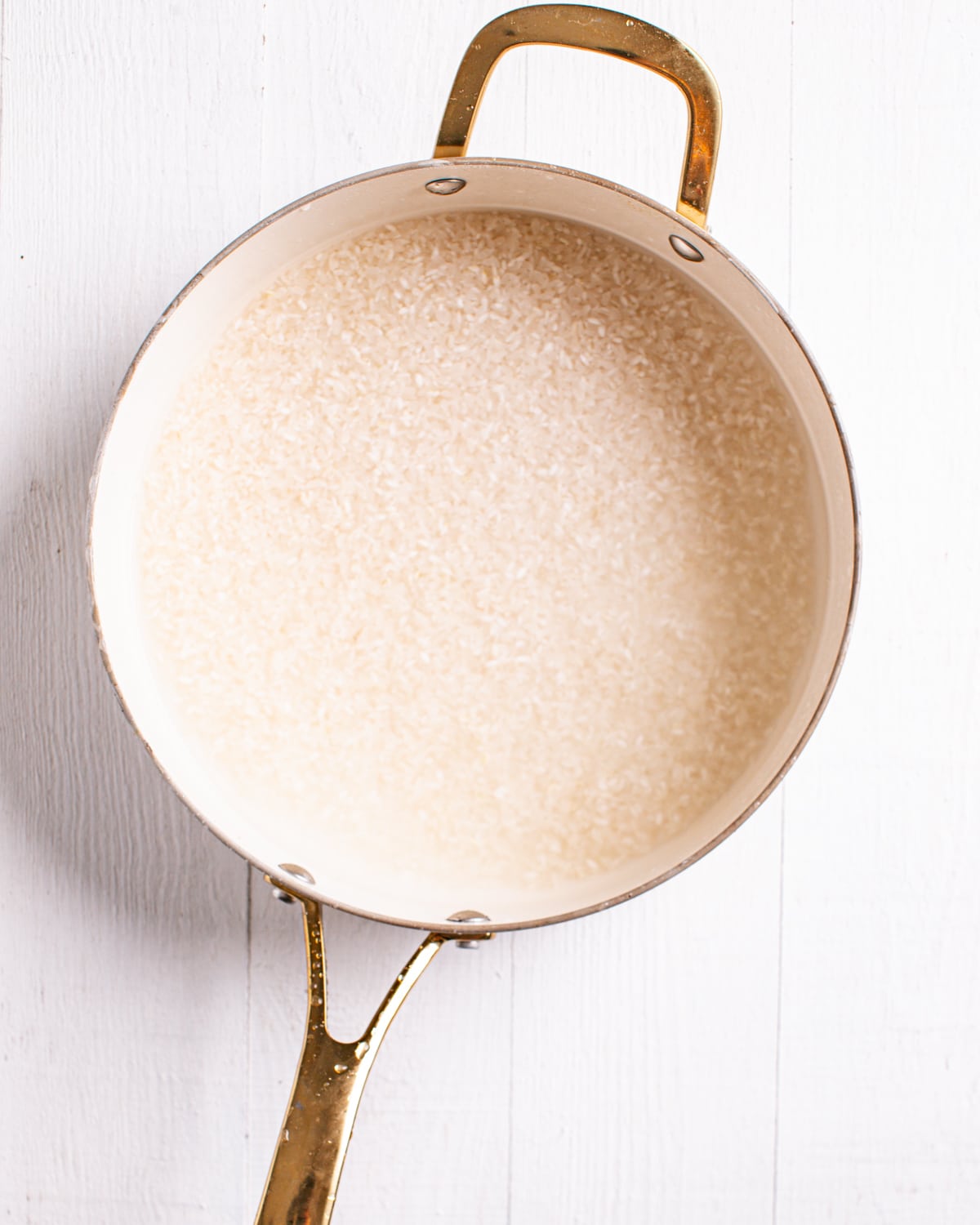
First, rinse the sushi rice under cold water until the water runs clear. Next, put the rice and 2 1/2 cups of water in a pot.
Cook the rice
Heat the pot on medium-high until it starts to boil. Once boiling, cover the pot and reduce the heat to low. Let it simmer for 18 minutes. Afterward, turn off the heat and cover the pot with its lid for another 10 minutes.
Add the dressing
Mix rice vinegar, sugar, and salt until the sugar and salt dissolve. Gently stir this mixture into the warm rice.
Make Ahead and Storage
You can prepare the sushi rice up to a day in advance. Once cooked and seasoned, let it cool to room temperature before storing.
Store the prepared sushi rice in an airtight container in the refrigerator for up to 3 days. When ready to use, gently reheat the rice in the microwave or on the stovetop with a splash of water to restore its texture.
Avoid freezing the sushi rice, as it can change the texture and make it too dry or mushy when thawed.

How to Serve This Sushi Rice Recipe
- Make this recipe the rice component for this viral sushi bake recipe. If you haven’t made it yet, put it on your list ASAP!
- Next up is this Spicy Salmon Rice Muffins
- Perfect for Tuna Poke Bowls
- An ideal side dish to Air Fryer Tuna Steak drizzled with this super-yummy Spicy Mayo for Sushi.
- With Japanese-inspired salmon recipes, like this soy and garlic Baked Salmon with Mayonnaise or sticky-delicious Honey Teriyaki Salmon
- Turn this yummy Boom Boom Shrimp into a full meal with a bowl of sushi rice.
This sushi rice is also delicious with all your sushi bowls and homemade sushi rolls.
5 Common Mistakes When Making Sushi Rice
Steer clear of these 5 trip-ups:
- Using the wrong type of rice: Not using short-grain Japanese sushi rice can lead to rice that doesn’t stick together properly. Long-grain or other types of rice don’t have the right texture for sushi.
- Skipping the rinse: Not rinsing the rice thoroughly can leave excess starch on the grains, making it overly sticky and mushy. Rinse the rice under cold water until the water runs clear.
- Incorrect water-to-rice ratio: Too much or too little water can lead to undercooked or overcooked rice. For perfect results, follow the recommended ratio (2 1/2 cups of water for 2 cups of rice).
- Not seasoning while warm: Adding the rice vinegar mixture to cold rice won’t allow the grains to absorb the flavor properly. Always season the rice while it’s still warm.
- Overmixing the rice: Stirring the rice too vigorously can break the grains and make the rice too mushy. Use a gentle cutting and folding motion with a spatula to mix the seasoning evenly without damaging the rice.
NEXT READING: My Indian Mother-in-Law’s recipe for How to Make PERFECT Basmati Rice.
Final Notes, Pro Tips + Science-Based Secrets
As a food scientist, here are my secret steps to getting pro sushi rice:
- Tip #1: Use a larger pot than you think you will need. This is not the time for that small saucepan. A large pot allows you to season the rice without making a mess.
- Tip #2: Add the rice vinegar while the rice is still warm. This helps the rice absorb the seasoning better. Cover the warm rice with a damp towel to prevent it from drying out.
- Tip #3: Use a cutting motion with a spatula to gently fold the seasoning into the rice. This prevents the grains from breaking and ensures even distribution without making the rice mushy.
- Tip #4: If possible, fan the rice as you mix in the seasoning. This cools the rice quickly, making it shiny and less sticky.
- Tip #5: Use unseasoned rice vinegar. It’s milder and sweeter than other vinegars, which perfectly complements sushi rice. Avoid seasoned rice vinegar, as it already contains added sugar and salt.
FAQs About Sushi Rice
Are you whizzing through this article? Here’s what not to miss:
Sushi rice cooks well in a rice cooker or instant pot. Follow the rice cooker’s instructions for cooking short-grain rice. Once cooked, transfer the rice to a large bowl and follow the seasoning steps as usual.
For the best results, use short-grain Japanese sushi rice. This type of rice has the perfect sticky texture needed for sushi.
Rinsing the rice removes excess starch from the grains, preventing the rice from becoming too sticky and mushy. Rinse under cold water until the water runs clear.
Store leftover sushi rice in an airtight container in the refrigerator for up to 3 days. Reheat gently in the microwave or on the stovetop with a splash of water to restore its texture.
It’s best to use unseasoned rice vinegar to make sushi rice. Unseasoned vinegar allows you to control the amount of sugar and salt added, providing a milder, more balanced flavor. Seasoned rice vinegar already contains added sugar and salt, which may alter the taste.
Other Asian Take-Out Dupes You’ll Love
If you love quick, easy Asian takeout-inspired recipes, you must also try:

Perfect Sushi Rice Recipe
Ingredients
- 2 cups sushi rice
- 2 ½ cups water
- 1 tbsp sugar
- 2 tbsp rice vinegar
- 1 tsp kosher salt
- 2 tbsp furikake optional
Instructions
- First, rinse the sushi rice under cold water until the water is clear. Then, put the rice and 2 1/2 cups of water in a pot.
- Heat the pot on medium-high until it boils. Cover the pot and turn the heat down to low when it starts to boil. Let it simmer for 18 minutes. After that, turn off the heat and cover the pot for ten more minutes.
- Mix rice vinegar, sugar, and salt until the sugar and salt dissolve. Gently stir this mixture into the warm rice.
Notes
Nutrition
Nutrition information is automatically calculated, so should only be used as an approximation.











Your sushi rice recipe made my homemade sushi night a success! The texture was spot on.
The texture and flavor are spot on. Thanks for sharing your tips, Jenn!
Incredible how good this homemade sushi rice tastes. I had no idea I could make it like a Japanese restaurant lol
wow, was actually easy to make. thought itd be harder, nice one.
Very good sushi rice. Happy I found this recipe/.
do I gotta rinse the rice first? always skips that lol
Hi Tami, yes you do. You need to rinse off the excess starch. You want the rice to be tacky but not one big sticky lump.
Um, isnt sushi rice supposed to have specific sushi vinegar?
Sushi vinegar is just rice vinegar mixed with sugar and salt, which we are doing here in this recipe. I don’t like to buy single-use ingredients, but you’re welcome to use that and omit the sugar/salt if you prefer.
Finally, a simple sushi rice recipe that works. Thank you!
made my first sushi rice, very good thanks
hey can i use regular vinegar instead of rice vinegar for sushi rice? idk if it makes difference.
It does make a difference! Rice vinegar is milder and sweeter. Regular vinegar might be too harsh.
Yes it definitely makes a difference. Mia is right!