Best Temperature To Grill Steak (for Perfect Steak Every Time!)

Oct 17, 2024
Learn the best temperature to grill steak for a perfect crust and juicy interior every time, plus the factors that make the biggest difference! I’m a Food Scientist sharing everything you need to know.
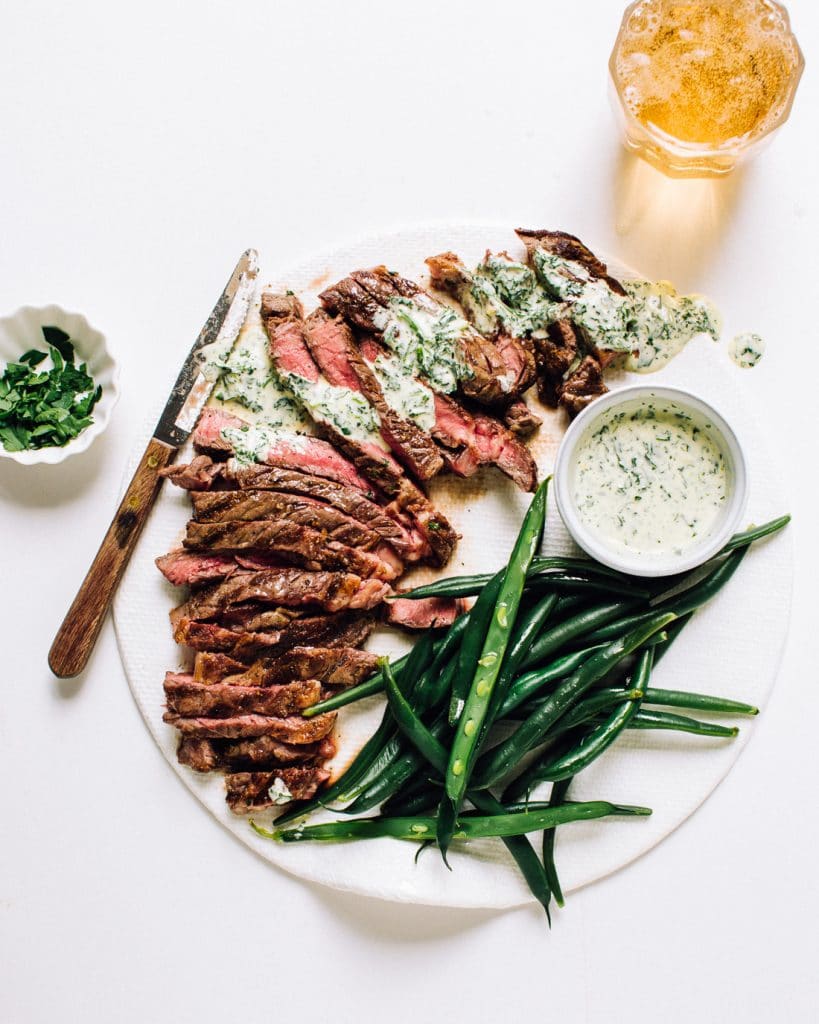
Grilling a steak to perfection is easier than you think. Knowing which temperature to cook it at, how long to cook it for, and how to handle it are key.
Here’s all you need to know about cooking steak on the grill.
What is The Best Temperature to Grill Steak? (Short Answer)
The best temperature to grill steak depends on important factors (like the thickness of the steak + the desired level of doneness) but here’s the answer in a nutshell:
- First sear: Start grilling steak at a high temperature, around 450°F to 500°F to get a good sear with flavorful grill marks.
- Then finish: Then, move the steak to a cooler grill zone (300ºF to 350ºF) to finish cooking without overcooking the outer part.
But what does that even mean?
Let’s dive into how to figure out the temperature of areas inside your grill, plus how to get the temp and timing just right for your specific steak’s thickness!
Find the Best Grill Temperature for Perfectly Cooked Steak
Let’s start by breaking down the best grill temperature by the steak’s thickness, which is the main factor that will determine how hot you’ll want your grates.
Best Grill Temperature for Thinner Cuts
Thinner cuts are about 1 to 1.25 inches thick.
These are ideal for the quick-sear method, where you sear them over high heat for a couple of minutes on each side to get a crust, then finish cooking over indirect heat.
For a 1-inch steak, here’s the grill temp to use:
- Searing: You want direct heat for this step, which means placing the steak directly over the flame or hot coals. Use high heat (450°F to 500°F / 230°C to 260°C) to quickly sear the steak, creating that nice crust.
- Indirect Heat: Move the steak to a cooler part of the grill, where it’s not directly over the flame, and close the lid. This is indirect heat (300°F to 350°F / 150°C to 175°C), which allows the steak to finish cooking more gently without burning the outside.
Lift the lid to check the steak’s doneness with a meat thermometer after 2-3 minutes, then every minute until done.
Best Grill Temperature for Thicker Cuts of Steak
Thicker cuts, like porterhouse steak or T-bone steaks, are often 1.5 to 2 inches thick or even more.
These cuts need more time to cook evenly, so searing them and then using indirect heat ensures the inside cooks without overcooking the outside.
For a 2-inch steak or larger, here’s the grill temp to use:
- Searing: Same as above, sear at 450°F to 500°F to get those beautiful charred grill marks.
- Indirect Heat: Move the steak to a cooler part of the grill (250°F to 300°F), where it’s not directly over the flame, and close the lid to allow the interior to cook without burning the outside.
Use a meat thermometer to check doneness after 5 minutes, then every few minutes until it reaches your desired temperature.
How to Measure Grill Temperature in Different Zones
“How do I know what temperature my grill is on the direct heat vs. indirect heat side? I only have one thermometer on the grill’s lid!”
Don’t worry. I’ve got you!
To figure out the temperature of specific areas of the grill, especially when you’re using both high and low heat zones, here are a couple of methods:
- Hand Test: Hold your hand about 5 inches above the grill grates and count how many seconds you can keep it there before pulling away:
- High heat (450°F to 500°F): 1 to 2 seconds.
- Medium heat (300°F to 350°F): 4 to 5 seconds.
- Low heat (250°F to 300°F): 6 to 7 seconds.
Science-y? No. But surprisingly effective.
- Infrared Thermometer: If you want to be precise, an infrared thermometer is an excellent tool.
Point it at the grill grate in different areas to check the exact surface temperature.
When is Grilled Steak Done?
Always use a meat thermometer to check the steak’s doneness in the thickest part of the steak.
Here’s a rough guide for internal temperatures:
- Rare steak: 120°F to 125°F (49°C to 52°C)
- Medium-rare steak: 130°F to 135°F (54°C to 57°C)
- Medium steak: 140°F to 145°F (60°C to 63°C)
- Medium-well steak: 150°F to 155°F (65°C to 68°C)
Using a meat thermometer is the most accurate way to determine the internal temperature of the steak. However, if you don’t have one, you can use the touch test:
- Rare: Very soft with little resistance, like pressing on the fleshy part of your palm when your hand is relaxed.
- Medium Rare: Soft, but with slightly more resistance.
- Medium: Firm, but still yielding.
- Medium Well: Firm with a slight springiness.
- Well Done: Very firm with little to no give.
Whichever doneness you choose, let the steaks rest after cooking to help retain juices.
Understanding Steak’s Doneness
Here’s a deeper dive into what the different doneness levels mean:
- Rare: 120-125°F (49-52°C) internal temperature. The steak will have a cool, red center.
- Medium rare: 130-135°F (54-57°C) internal temperature. The center will be warm and red, with a slightly pinkish hue.
- Medium: 140-145°F (60-63°C) internal temperature. The center will be pink and the outer edges browned.
- Medium well: 150-155°F (66-68°C) internal temperature. The center will have a slightly pinkish hue but mostly cooked through.
- Well done: 160°F (71°C) and above internal temperature. The steak will have little to no pink and will be fully cooked through.

Best Steak Cuts for Grilling
When it comes to grilling steak, some cuts of steak are better suited for this cooking method because of their tenderness, flavor, and ability to cook evenly.
Here are some of the best steak cuts for grilling:
- Ribeye steak: Known for its rich marbling and juicy flavor. The marbling helps keep the meat moist during grilling, resulting in a tender and flavorful steak.
- New York strip steak: (also known as strip steak or top sirloin): This cut comes from the loin region of the cow and has a good balance of tenderness and taste. It has a firm texture and is well-suited for grilling.
- Filet mignon: This ultra-tender and lean cut comes from the tenderloin and is prized for its buttery texture. While it’s not as heavily marbled as ribeye or strip steak, it still grills beautifully.
- T-Bone and porterhouse: These cuts include a portion of the tenderloin and the strip steak, separated by a T-shaped bone. They offer the best of both worlds: the tenderness of the filet mignon and the rich flavor of the strip steak.
- Flat iron: Also known as a top blade steak, the flat iron is a relatively tender and flavorful cut that grills well. You must try my juicy flat iron steak recipe with the tastiest creamy green sauce.
- Skirt steak: While not as tender as some other cuts, skirt steak has a rich, beefy flavor and a coarse texture that makes it perfect for grilling. It’s often used in dishes like fajitas and carne asada.
- Flank steak: Like skirt steak, flank steak is flavorful but can be a bit tougher. However, when properly marinated and grilled, it can be deliciously tender and a great option for grilling.
How To Grill Steak (Easy Step-by-Step)
Here’s an easy step-by-step guide to help you achieve that mouthwatering, juicy, and perfect steak recipe:
Ingredients:
- Steak (ribeye, sirloin, T-bone, etc.)
- Salt
- Pepper
- Olive oil (optional)
- Any additional seasonings or marinades of your choice (optional)
Equipment:
- Grill (gas or charcoal)
- Tongs
- Meat thermometer (optional but recommended)
Instructions:
- Preparation:
- Take the steak out of the refrigerator about 30-60 minutes before grilling to allow it to come to room temperature. This helps ensure even cooking. Related: How to Defrost Steak in the Microwave
- Pat the steak dry with paper towels to remove excess moisture. This helps with searing.
- Preheat the Grill:
- Preheat your grill to high heat. For gas grills, preheat with all burners on high. For a charcoal grill, let the coals burn until they are covered with white ash.
- Season the Steak:
- Rub the steak with olive oil (if using). This helps the seasonings adhere and prevents sticking.
- Season both sides of the steak generously with salt and pepper, or any other seasonings or marinades of your choice. Keep it simple for the first try to taste the natural flavors of the meat.
- Grilling:
- Place the steak on the preheated grill. If using a gas grill, place it directly over the flames. For charcoal grills, place it directly over the hottest part of the coals.
- Let the steak cook without moving it for about 3-4 minutes. This allows for a nice sear to form on the bottom.
- After 3-4 minutes, using tongs, flip the steak to the other side and let it cook for another 3-4 minutes for medium-rare doneness. Adjust the cooking time according to your preferred level of doneness. (Cooking times can vary depending on the thickness of the steak and the heat of your grill.)
- For more precise cooking, you can use a instant-read thermometer to check the internal temperature. For medium-rare, aim for around 130-135°F (55-57°C).
- Resting:
- Once the steak is cooked to your desired doneness, remove it from the grill and let it rest for about 5-10 minutes. This allows the juices to redistribute throughout the meat, resulting in a juicier steak.
- Serve:
- After resting, slice the steak against the grain for maximum tenderness and serve hot.

How Long to Grill Steak For
The ideal grilling time for steak depends on several factors, including the thickness of the steak, the desired level of doneness, and the heat of your grill.
As a general guideline, for a steak about 1 inch thick, you can grill it for about 4-5 minutes per side for medium-rare, 5-6 minutes per side for medium, and 7-8 minutes for well-done.
However, it’s essential to use a instant read thermometer to ensure accuracy, aiming for an internal temperature of 130°F (54°C) for medium-rare, 140°F (60°C) for medium, and 160°F (71°C) for well-done. Adjust the cooking time accordingly based on these temperature targets.
How To Season Beef Steak
Seasoning beef steak properly is crucial for enhancing its flavor and creating a delicious dining experience. Here’s a simple guide to seasoning beef steak:
- Salt: Liberally sprinkle both sides of the steak with salt. Kosher salt works well due to its coarse texture, which helps it adhere to the surface of the meat. Allow the salt to sit on the steak for at least 40 minutes before cooking to allow it to penetrate the meat.
- Pepper: Add freshly ground black pepper to both sides of the steak. Pepper adds a depth of flavor and complements the beefiness of the steak.
- Optional seasonings: Depending on personal preference, you can add additional seasonings such as garlic powder, onion powder, paprika, or dried herbs like thyme or rosemary. Be careful not to overwhelm the natural flavor of the beef.
- Oil: Before cooking, lightly coat the steak with oil. This helps the seasoning adhere to the surface of the meat and promotes caramelization during cooking.
- Massage the seasonings In: Use your hands to gently massage the salt, pepper, and any additional seasonings into the steak, ensuring even coverage on all sides.
- Resting Time: Allow the seasoned steak to rest at room temperature for about 30 minutes before cooking.
- Cook to perfection: Now, cook the steak to your desired level of doneness using your preferred method, whether it’s grilling, pan-searing, or broiling. Remember to let the steak rest for a few minutes after cooking before slicing and serving to allow the juices to redistribute evenly.

Marinades for Grilling Steak
Marinating steak before grilling can infuse it with flavor and tenderize tougher cuts of meat.
Here are some delicious marinades to try:
- Classic steak marinade:
- Ingredients: Soy sauce, Worcestershire sauce, minced garlic, olive oil, balsamic vinegar, brown sugar, black pepper.
- Instructions: Whisk together all ingredients in a bowl. Place the steak and marinade in a resealable plastic bag or shallow dish, ensuring the meat is well coated. Marinate in the refrigerator for at least 2 hours or overnight for maximum flavor.
- Citrus marinade:
- Ingredients: Orange juice, lime juice, minced garlic, cilantro, cumin, olive oil, salt, pepper.
- Instructions: Combine all ingredients in a bowl and mix well. Pour over the steak and let it marinate for at least 1 hour, or up to 4 hours in the refrigerator.
- Asian-inspired marinade:
- Ingredients: Soy sauce, rice vinegar, sesame oil, ginger (grated), garlic (minced), brown sugar, green onions (chopped).
- Instructions: Mix all ingredients in a bowl until sugar is dissolved. Place the steak in a shallow dish or resealable bag and pour the marinade over it. Marinate for at least 1 hour before grilling.
Remember to discard any leftover marinade that has come into contact with raw meat to avoid cross-contamination.
How to Tenderize Steak
Tenderizing steak can turn tougher cuts into succulent, melt-in-your-mouth delights. Here are some methods to tenderize steak:
- Mechanical tenderizing: Use a meat mallet or tenderizing tool to physically break down the muscle fibers of the steak. Place the steak on a sturdy surface and pound it evenly on both sides.
- Marinating: As mentioned earlier, marinades containing acidic ingredients like vinegar, citrus juice, or yogurt can help tenderize steak by breaking down tough muscle fibers. Longer marinating times generally result in more tender meat.
- Salt brining: Dissolve salt in water and submerge the steak in the brine solution for a few hours or overnight in the refrigerator. The salt helps to denature proteins and retain moisture, resulting in a juicier and more tender steak.
- Enzyme-based marinades: Certain fruits like pineapple, kiwi, and papaya contain enzymes such as bromelain and papain, which can tenderize meat. Using these fruits into a marinade can help break down tough fibers. Be cautious with these marinades, as over-marinating can lead to mushy meat.
- Velveting: A technique used in Asian cuisine, velveting involves coating thinly sliced meat with a mixture of egg white, cornstarch, and sometimes rice wine or vinegar. After marinating briefly, the meat is quickly blanched in hot water or oil, resulting in a tender and velvety texture.
For tougher cuts of steak, you’ll love my fall-apart-tender Pressure Cooker Steak.
Final Tips for Juicy Grilled Steak
Remember to let your steaks come to room temperature before grilling, and always season them generously with salt and pepper (or your favorite steak rub) before cooking.
Additionally, be sure to let the steaks rest for a few minutes after grilling to allow the juices to redistribute, ensuring a juicy and flavorful steak.









Thank you! I have never seen such detailed instructions, which are very useful for kitchen incompetents like me. 🙂 I suddenly feel that maybe I can learn to cook. Now I am looking forward to trying your flat iron steak recipes and many others after that. They all sound wonderful!