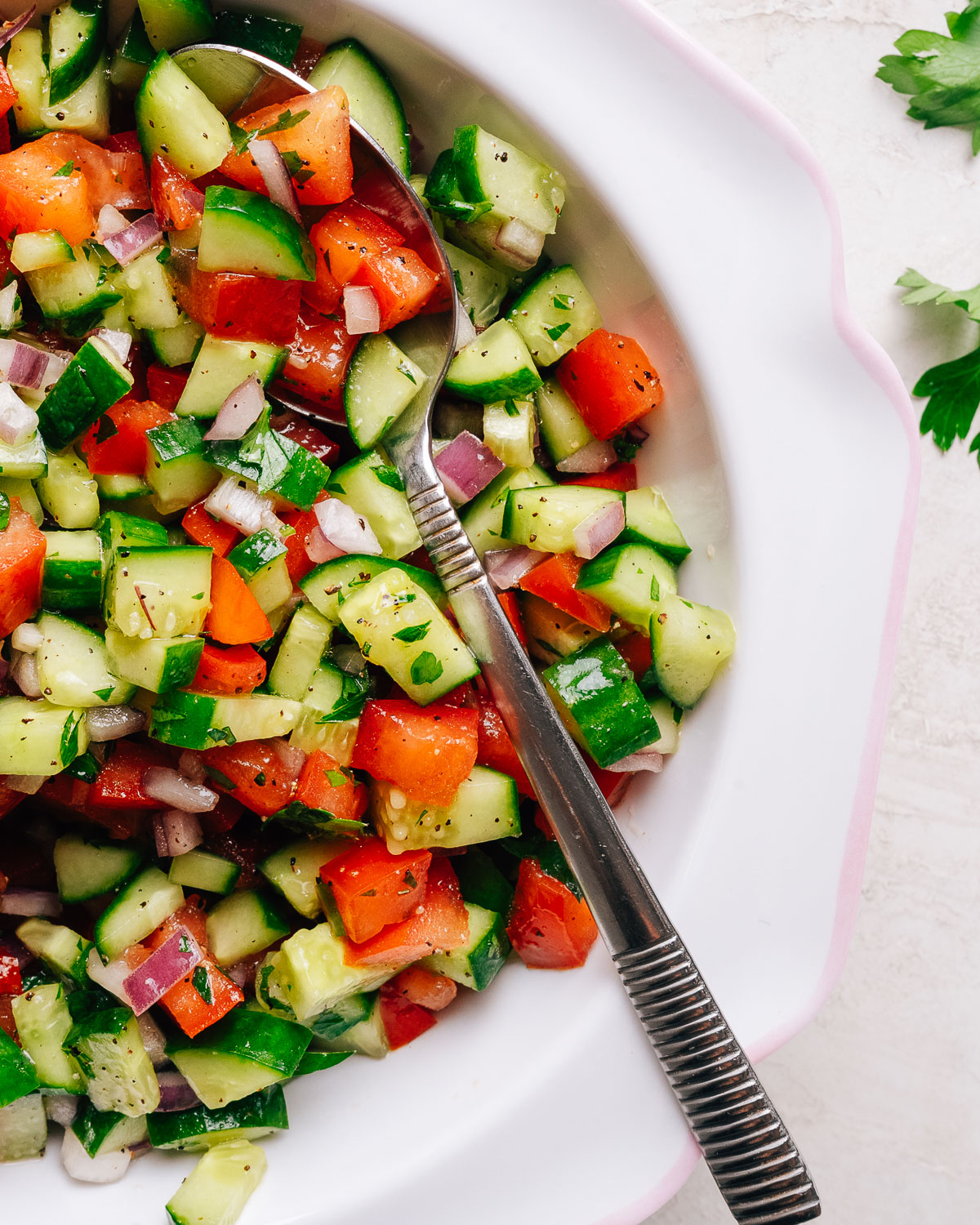
Israeli Salad is the freshest thing on a summer table. It is just cucumber, tomato, onion, and herbs, diced small and dressed simply. It’s more about the satisfying knife work, not a long ingredient list.
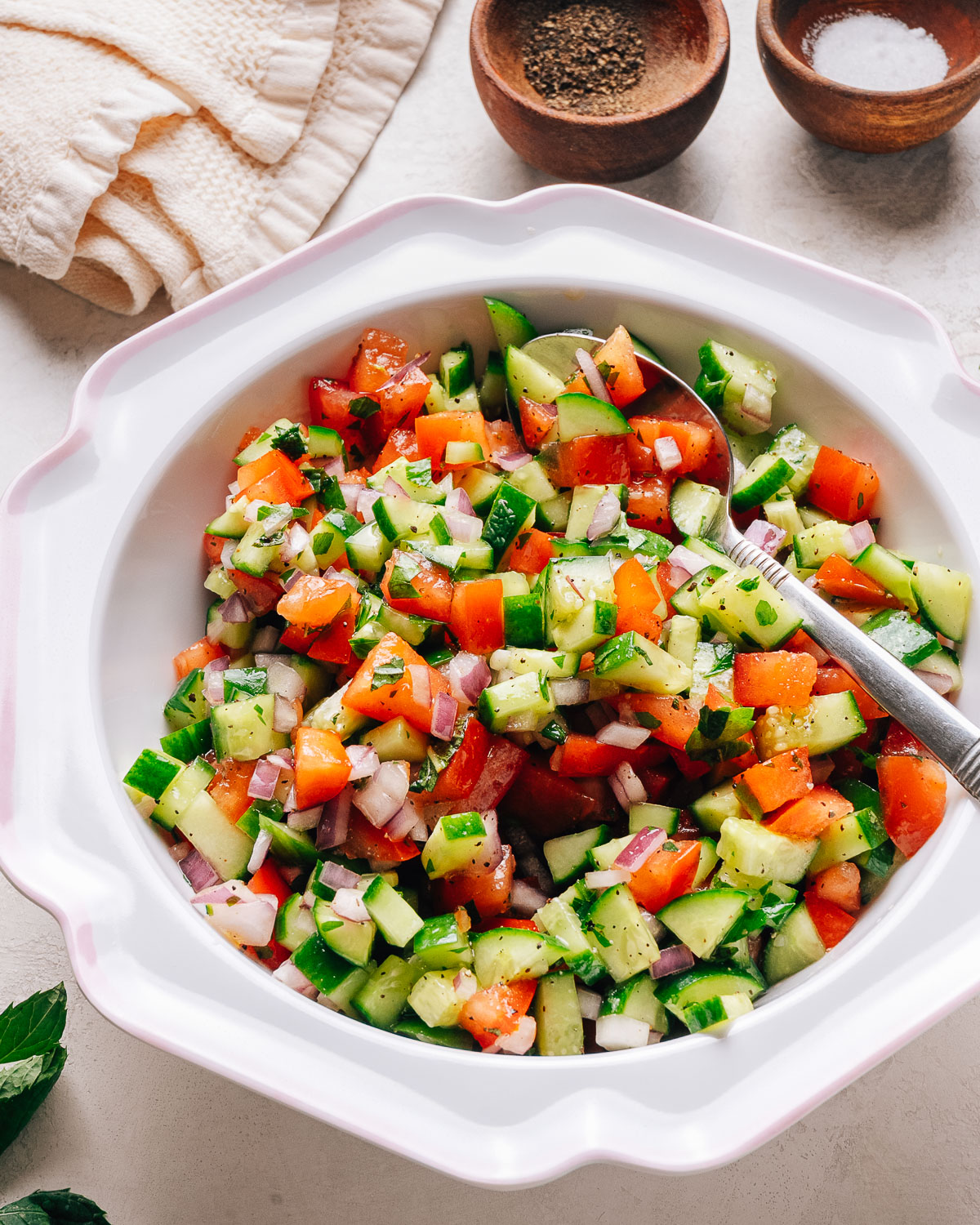
Above all, the secret to authentic Israeli Salad is a fine, even dice and seeded tomatoes. Small pieces let every bite carry all the textures and flavors.
I serve this with almost everything off the grill. It is perfect next to my Grilled Boneless Chicken Thighs or scooped up with Crispy Falafel.
Israeli Salad Recipe Ingredients
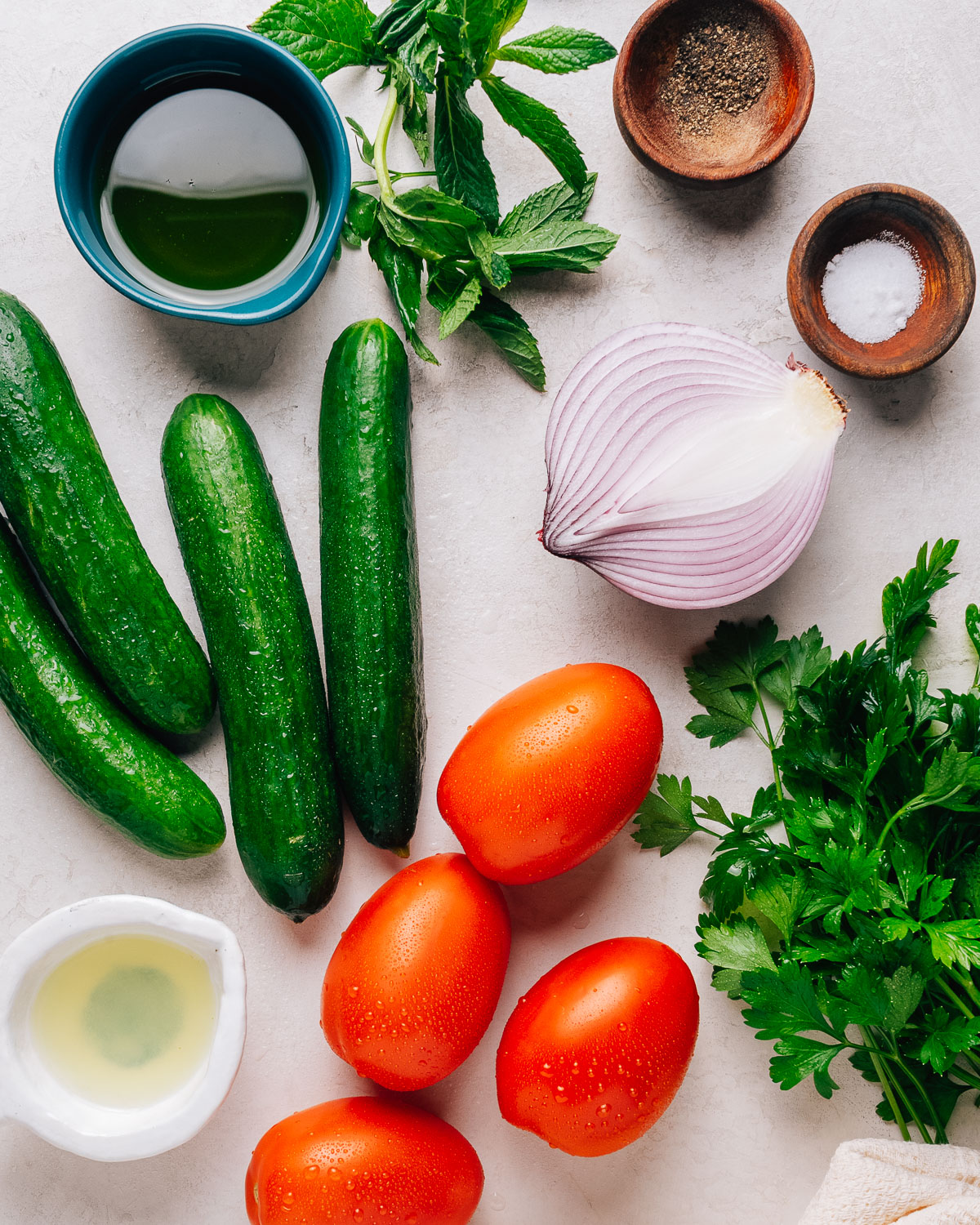
Here is everything you need for a classic Israeli salad.
- Persian cucumbers: firm and nearly seedless, so they stay crisp.
- Roma tomatoes: these are firmer than other tomato varieties, making them easier to chop finely. They’re also meatier and less watery. Seeding them keeps the salad crisp instead of soggy.
- Red onion: soaked in cold water to soften its bite.
- Fresh parsley
- Fresh mint: optional, for a cool, bright lift.
- Extra-virgin olive oil
- Fresh lemon juice
- Kosher salt
- Black pepper
Full recipe quantities listed in the recipe card at the bottom of the article.
Variations and Substitutions
This salad takes well to small tweaks.
- Add crumbled feta for a Greek-style version, like my Greek pasta salad.
- Swap in dill if parsley or mint are not your thing.
- Stir in chickpeas to make it a light main.
- Use English cucumbers when Persian ones are hard to find.
- Add a pinch of sumac for a tangy, lemony edge and pretty color.
- Add diced bell pepper for crunch and color, like a more Arab-style salad.
Grab These Tools
You only need a few basics here.
- A sharp chef’s knife for a clean, even dice.
- A cutting board with a juice groove if you have one.
- A large mixing bowl for tossing.
How to Make Israeli Salad: An Easy Guide
This comes together in about 20 minutes, with no cooking required.
Dice Everything Small
First, cut the cucumbers, tomatoes, and onion into even pieces, about 1/4 inch. The uniform size is the whole point. It gives the salad its signature texture.
Seed the Tomatoes
Scoop out the watery seed pockets before you dice. This keeps the salad from turning soupy as it sits. You get the flavor without the extra liquid.
Seeding is the least traditional step here. Classic versions leave the seeds in, so the juices loosen the dressing. I seed them for a crisper, make-ahead salad.
Soak the Onion
Soak the diced onion in cold water for 5 minutes, then drain. The water rinses away the harsh sulfur compounds. You get gentle onion flavor without the sharp bite.
Toss and Dress
Next, combine the vegetables, parsley, and mint in a large bowl. Add olive oil, lemon juice, salt, and pepper just before serving. Toss, taste, and adjust with more lemon or salt.
5 Common Mistakes When Making Israeli Salad
Here are the most frequent mix-ups to avoid when making israeli salad:
- Skipping the de-seeding. Leaving the tomato seeds in makes the salad watery fast.
- Dicing unevenly. Big, ragged pieces lose the signature crisp, balanced bite.
- Dressing too early. Salt pulls water from the vegetables, so dress right before serving.
- Using soft tomatoes. Overripe tomatoes break down and water out the bowl.
- Skipping the onion soak. Raw red onion can overpower everything else.
Make Ahead and Storage
Luckily, a little prep ahead makes this even easier.
Storing Leftovers
- Refrigerate leftovers in an airtight container for up to 2 days.
- Drain off any liquid that collects before serving again.
Making It Ahead
- Dice the vegetables a few hours ahead and keep them chilled.
- Add the dressing only when you are ready to serve.
Freezing Israeli Salad
- Do not freeze this salad. The fresh vegetables turn mushy once thawed.
How to Serve This Israeli Salad Recipe
Of course, I serve this alongside almost anything from the grill or a mezze spread.
What to Serve with Israeli Salad
- Grilled mains: it shines next to my Grilled Boneless Chicken Thighs and Beef Kafta.
- Skewers: pile it beside Juicy Chicken Skewers.
- Mezze: scoop it up with Crispy Falafel and warm Turkish Bread.
Israeli Salad Toppings
- Drizzle with my Lemon Tahini Dressing for richness.
- Crumble feta or add olives for a salty bite.
- Spoon it over hummus as a fresh, crunchy topping.
How to Make the Best Israeli Salad: Final Notes + Secrets
Overall, a few small habits make the difference here.
- Salt at the end. Salt draws water from the vegetables, so add it just before serving.
- Firm produce wins. Use the firmest tomatoes and crispest cucumbers you can find.
- Taste and tune. A final squeeze of lemon brightens the whole bowl.
- Let the herbs lead. Plenty of parsley keeps it fresh and green.
You might know this salad by other names. It is closely related to Arab salad and Turkish shepherd’s salad, also called çoban salatası. This chopped cucumber and tomato salad turns up across the Middle East.
FAQs About Israeli Salad
Just skimming through? Here are some quick answers to the commonly-asked questions.
Israeli salad is a simple chopped salad of cucumber, tomato, onion, and herbs. It is dressed with olive oil and lemon juice. The vegetables are diced small, which gives the salad its signature fresh, crisp, and balanced texture.
Israeli salad does not have lettuce. It is built on finely diced cucumber and tomato, not leafy greens. The chopped vegetables hold their crunch much longer than lettuce, which is why this salad stays crisp even after it sits.
The best cucumbers for Israeli salad are Persian cucumbers. They are firm, thin-skinned, and nearly seedless, so they stay crisp. If you cannot find them, English cucumbers work well too. Avoid large waxy cucumbers, which can be watery.
To keep Israeli salad from getting watery, seed the tomatoes before dicing. Then dress the salad just before serving, since salt pulls liquid from the vegetables. Draining off any collected liquid before serving leftovers also helps keep it crisp.
You can make Israeli salad ahead by dicing the vegetables a few hours early. Keep them in the fridge and add the dressing only when you are ready to serve. This keeps the salad crisp instead of soft and soggy.
Israeli salad lasts about 2 days in an airtight container in the fridge. It is best the day it is made, when the vegetables are crispest. Drain off any liquid and add a little fresh lemon before serving leftovers.
Israeli salad pairs with almost anything from the grill. I love it with grilled chicken, beef kafta, and chicken skewers. It is also perfect on a mezze spread with falafel, hummus, and warm pita or Turkish bread.
Israeli salad is light, fresh, and full of vegetables. It uses simple olive oil and lemon instead of heavy dressing. As a registered dietitian, I love that it is naturally gluten-free, vegan, and easy to fit into most ways of eating.
Other Salads You’ll Love
- Israeli Couscous Salad with Mango and Avocado
- Easy Couscous Salad with Lemon Dressing
- Indian Cucumber-Yogurt Salad
- Caprese Pasta Salad
- Healthy Greek Pasta Salad
- Grilled Eggplant with Whipped Feta
Easy Israeli Salad Recipe (5-Minutes!)
Ingredients
- 4 Persian cucumbers (or 2 English cucumbers) finely diced
- 4 firm Roma tomatoes seeded and finely diced
- ½ cup red onion finely diced
- ½ cup fresh parsley chopped
- 2 tbsp fresh mint chopped (optional)
- 3 tbsp extra-virgin olive oil
- 2 tbsp fresh lemon juice about 1 lemon
- 1 tsp kosher salt
- ¼ tsp black pepper
Instructions
- First, dice the cucumbers, tomatoes, and onion into small, even pieces, about 1/4 inch. The uniform size gives the salad its signature texture and balanced bite.
- Soak the diced onion in cold water for 5 minutes, then drain. This rinses away the harsh sulfur compounds for a gentler onion flavor.
- Next, combine the cucumber, tomato, onion, parsley, and mint in a large bowl.
- Add the olive oil, lemon juice, salt, and pepper. Toss gently to coat. Dress just before serving, because salt draws water out of the vegetables over time.
- Finally, taste and adjust with more lemon or salt. Serve right away while everything is crisp and cold.
Notes
Nutrition
Nutrition information is automatically calculated, so should only be used as an approximation.