
This dreamy Stuffed Pork Tenderloin recipe is filled with a creamy, mediterranean stuffing (with spinach, sun-dried tomatoes and cream cheese). My sear-then-roast method creates a golden crust and juicy, tender pork every time.
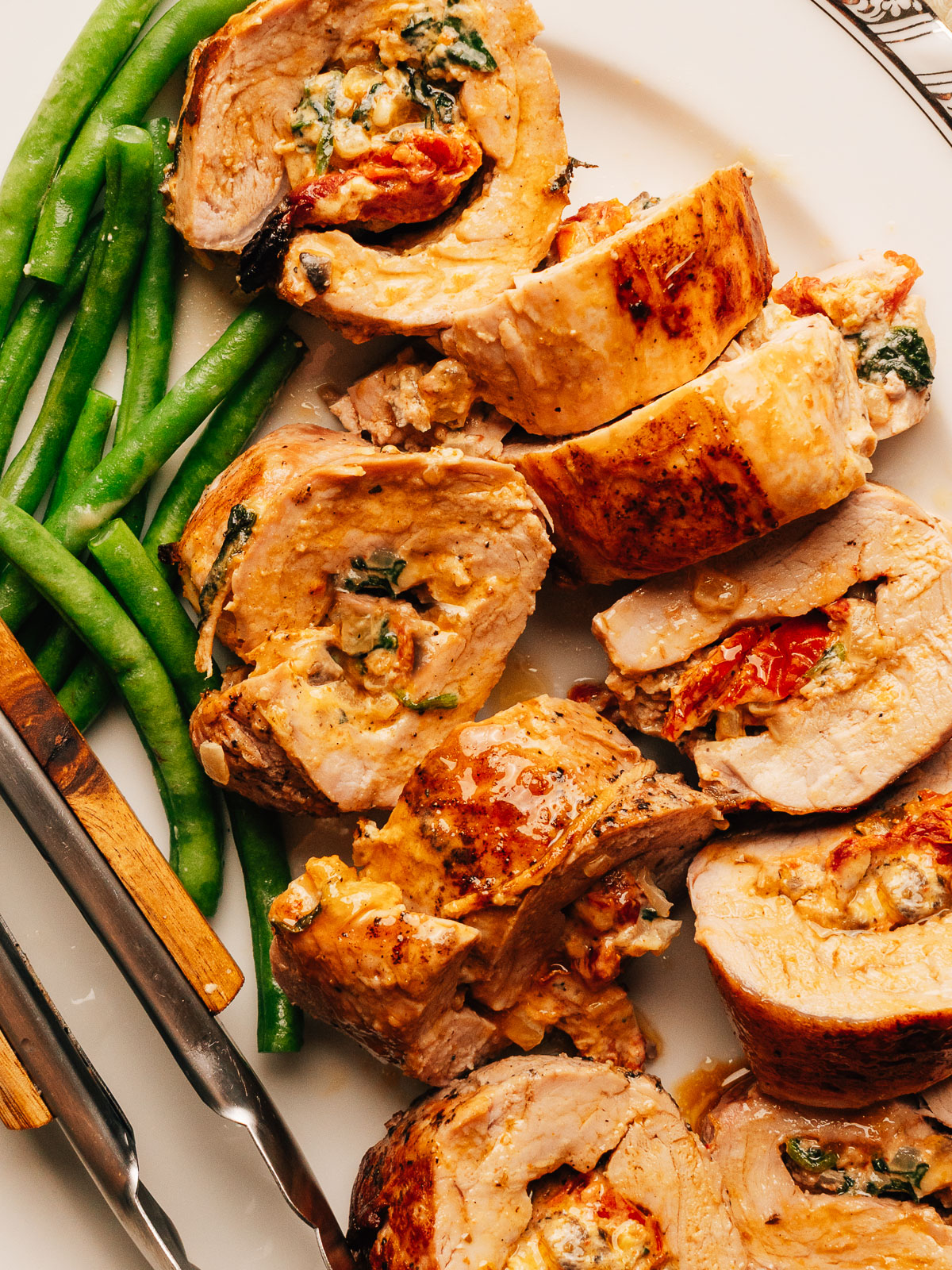
Some cooks call Stuffed Pork Tenderloin a pork roulade, but the technique is the same. The moisture in the filling helps keep the pork juicy from the inside out. You’re gonna love it!
Read on for more tips on making ultra Tender Pork Tenderloin.
Stuffed Pork Tenderloin Ingredients
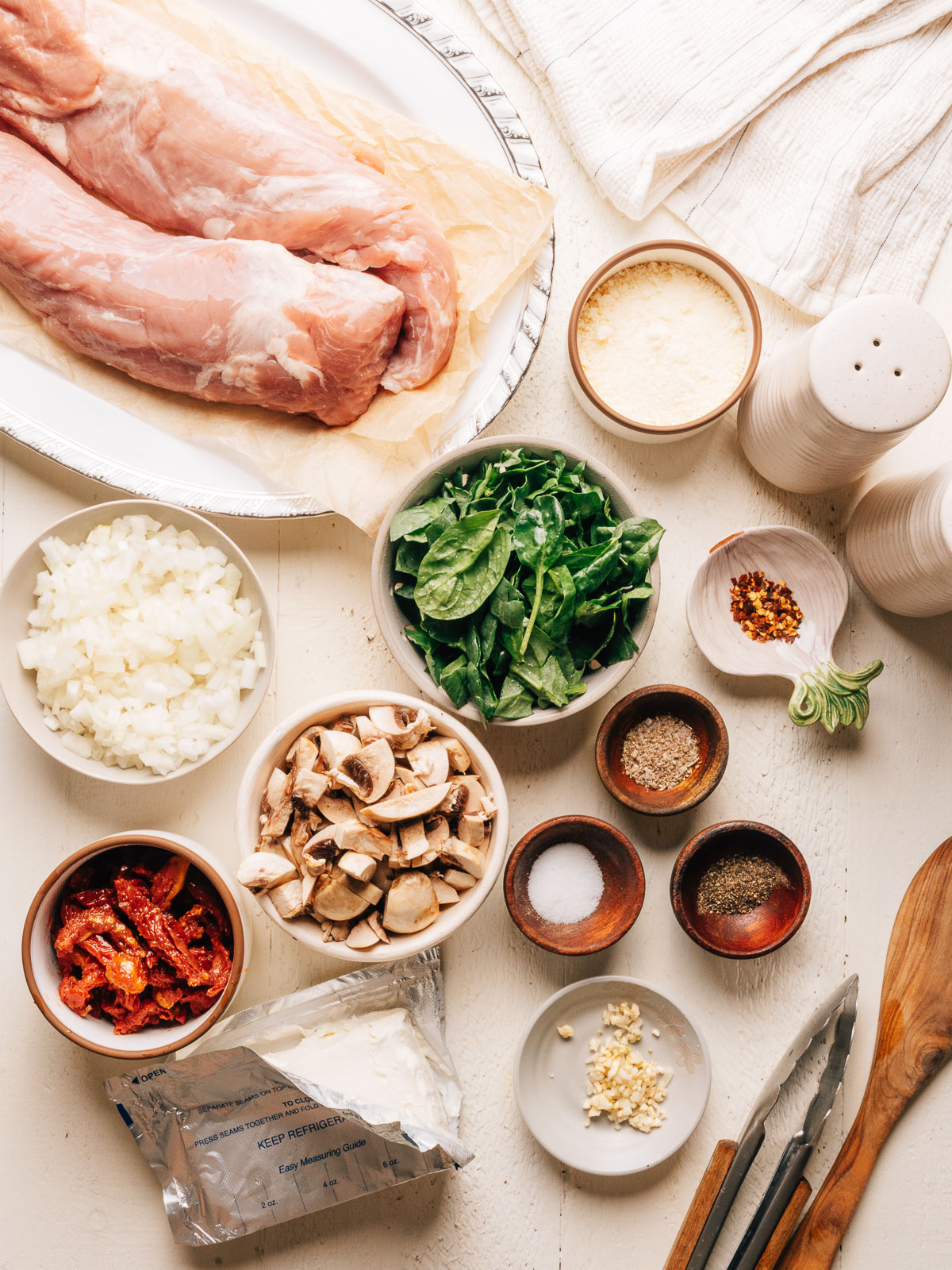
Here is what goes into both the pork and the stuffing.
For the Pork
- Pork tenderloins: two whole, about 1 to 1 1/2 lb each. Make sure you grab pork tenderloin, not pork loin. They are very different cuts.
- Kosher salt
- Black pepper
For the Filling
- Olive oil: 2 tbsp total, divided between the filling and the sear.
- Onion: finely chopped so it disappears into the filling.
- Mushrooms: finely chopped, white or cremini both work.
- Garlic: freshly minced.
- Fresh spinach: chopped, packed.
- Sun-dried tomatoes: chopped, oil-packed for richer flavor.
- Cream cheese: softened so it blends smoothly into the warm vegetables.
- Parmesan: freshly grated for the best melt.
- Italian seasoning: 1 tsp, or swap with fresh thyme or rosemary.
- Red pepper flakes: optional, for a little heat.
Full recipe quantities listed in the recipe card at the bottom of the article.
Also, if you love a tender pork dinner, my Air Fryer Pork Tenderloin has rave reviews and is on the table in 15 minutes flat.
Variations and Substitutions
Of course, the filling and seasoning leave plenty of room to play.
- Swap the cheese: Alternatively, goat cheese, ricotta, or boursin all work in place of cream cheese.
- Apple and sage stuffing: For example, swap the spinach and tomato filling for diced apple, fresh sage, and a splash of apple cider for a fall-friendly pork tenderloin stuffing. You can use the base filling from my Apple-Sausage Stuffed Pork Chops recipe.
- Add bacon or prosciutto: In addition, a few chopped slices folded into the filling adds smoky depth.
- Switch the greens: Similarly, kale or chard work in place of fresh spinach. Wilt them down the same way.
- Try a different herb: Likewise, fresh rosemary, thyme, or sage in place of Italian seasoning.
- Single tenderloin: halve all filling amounts and use one tenderloin for a smaller meal.
Grab These Tools
In addition, the right tools make rolling and roasting effortless.
- Sharp chef’s knife: for trimming the silver skin and butterflying the tenderloin cleanly.
- Sturdy cutting board: gives you a stable surface for pounding and rolling.
- Plastic wrap and a meat mallet: for pounding the pork to even thickness.
- Kitchen twine: ties the rolls so the filling stays inside.
- Oven-safe skillet: moves from stovetop sear to oven roast in one pan.
- Instant-read thermometer: the only way to nail 140 to 145°F doneness.
How to Make Stuffed Pork Tenderloin: An Easy Guide
Overall, the whole pork tenderloin recipe moves from prep to plate in about 45 minutes.
Butterfly and Pound the Pork
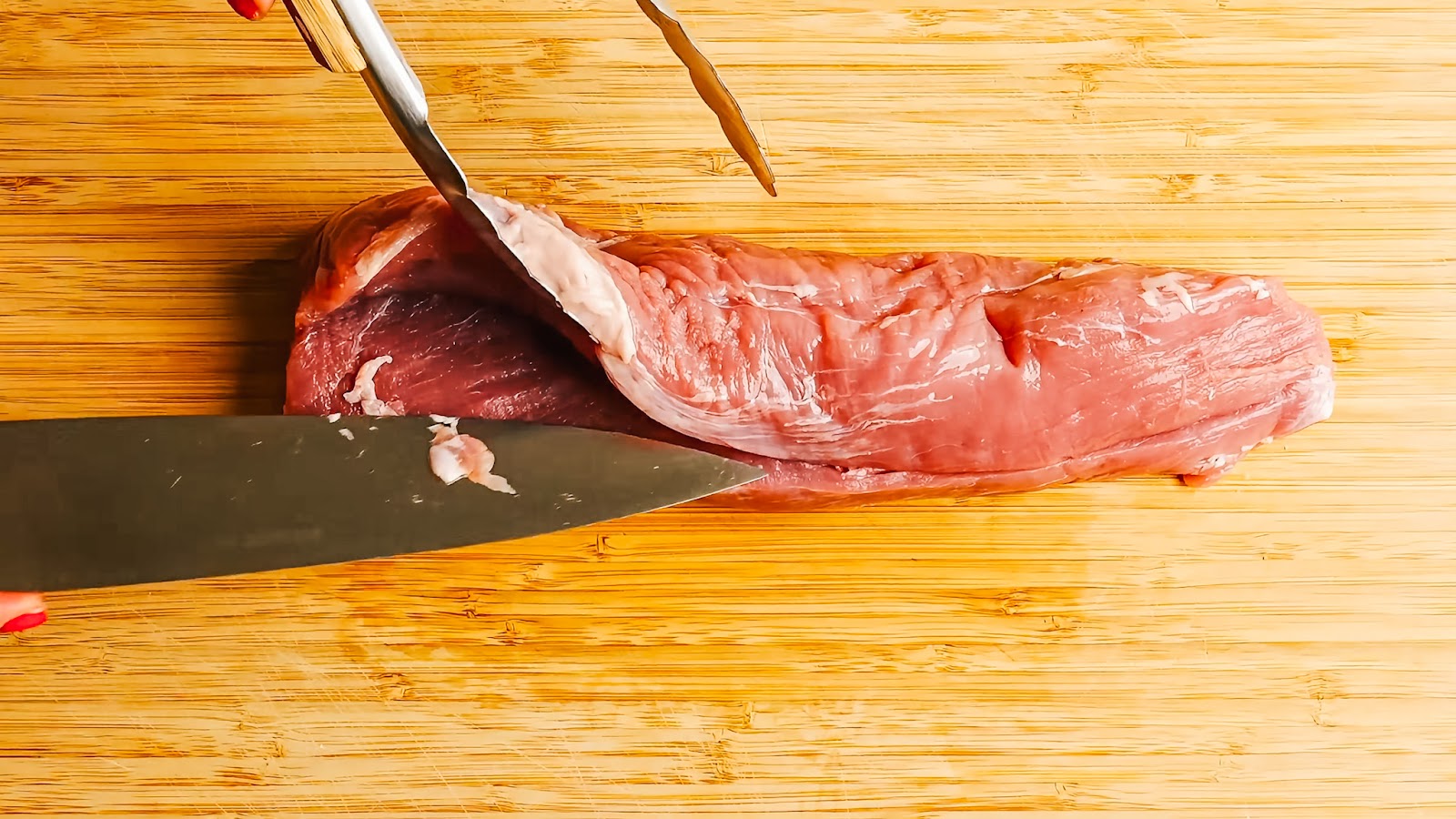
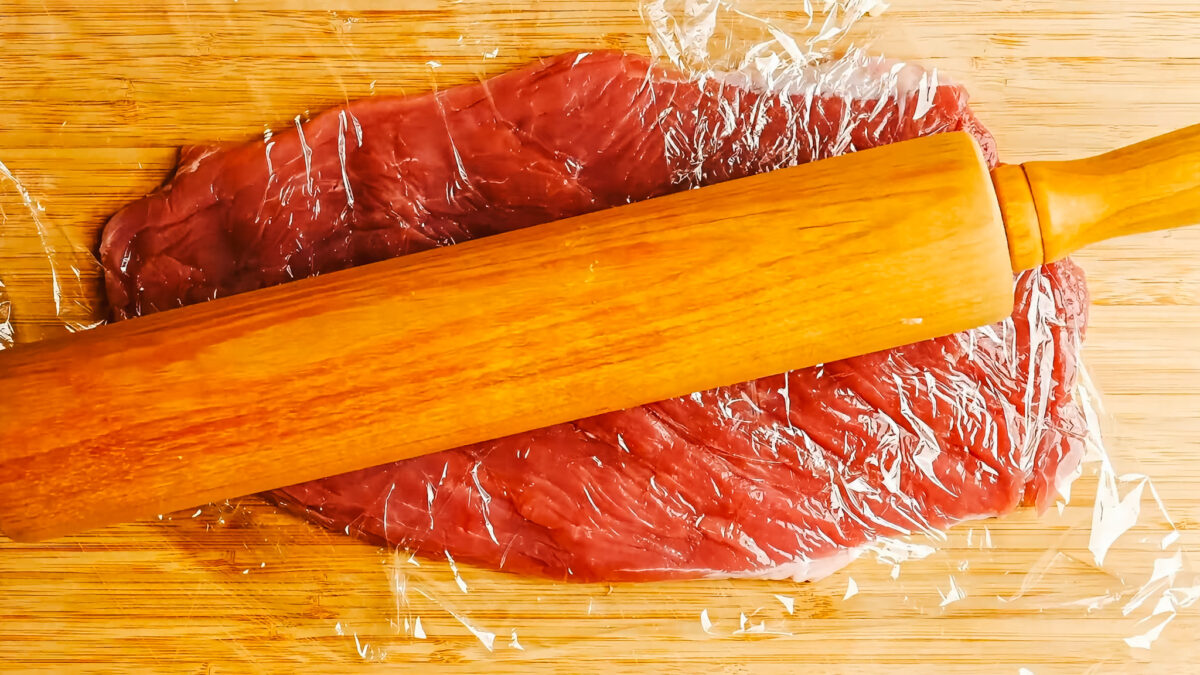
First, cut each tenderloin lengthwise without slicing all the way through. Open it like a book and lay it between two sheets of plastic wrap. Pound gently to a 1/4 to 1/2 inch thickness, then season both sides with salt and black pepper.
Cook the Vegetables
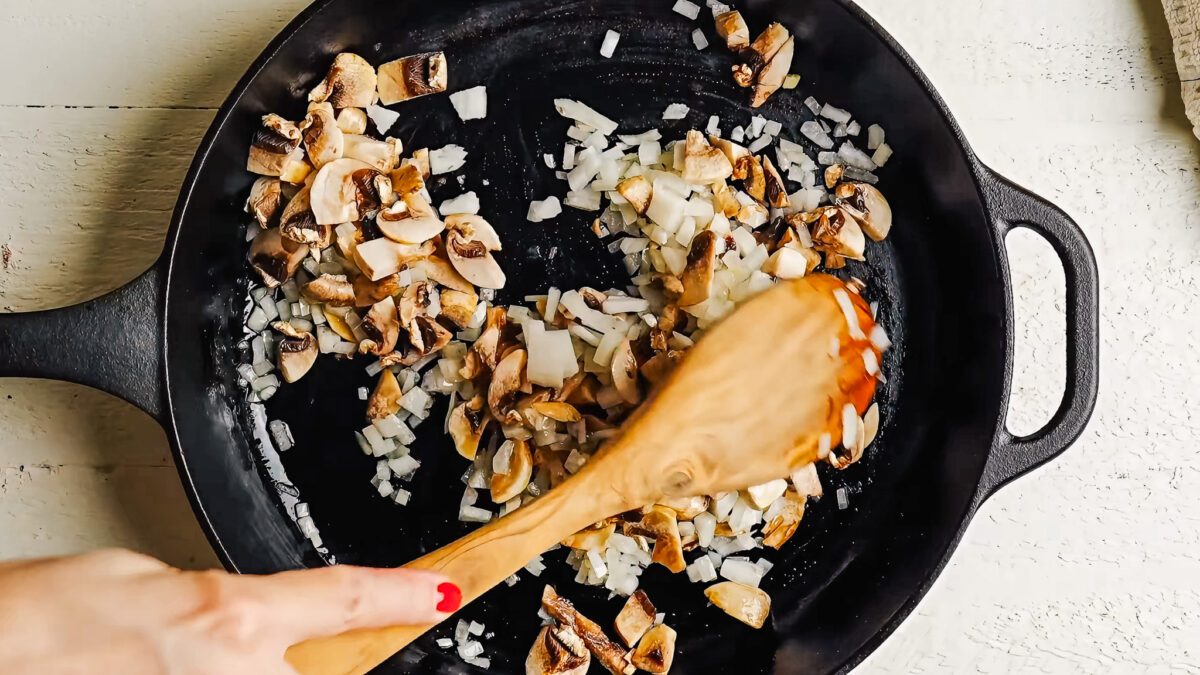
Next, heat 1 tbsp of the olive oil in a skillet over medium heat. Add the onion and mushrooms with a pinch of salt and cook until softened and lightly browned, about 6 minutes. Stir in the garlic and cook 30 seconds. Add the fresh spinach and cook just until wilted.
Mix the Stuffing
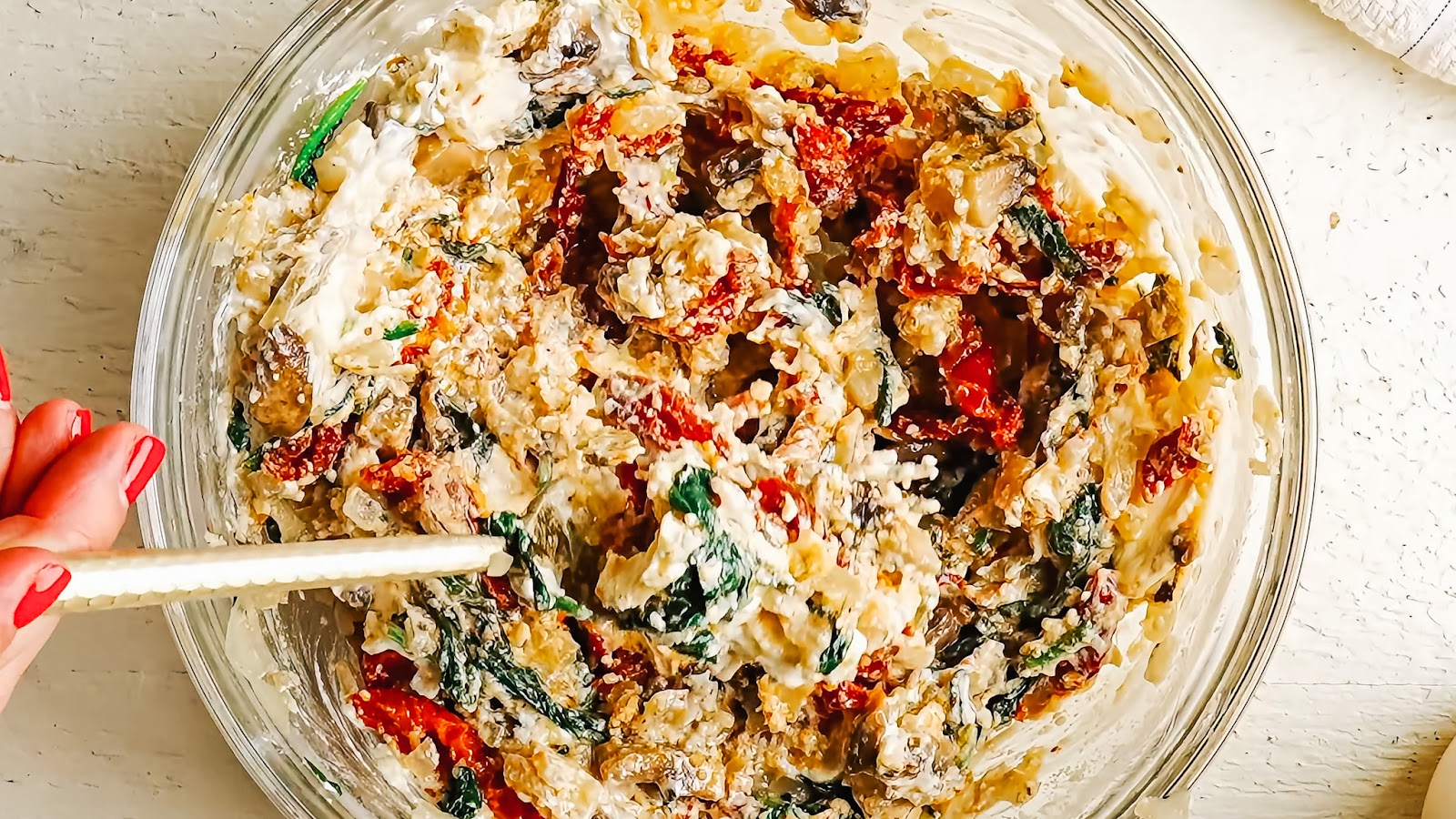
Then, move the vegetables to a bowl and let them cool slightly. Stir in the sun-dried tomatoes, softened cream cheese, Parmesan, Italian seasoning, and red pepper flakes if using. The stuffing should look glossy and hold together when scooped.
Stuff and Tie the Tenderloins
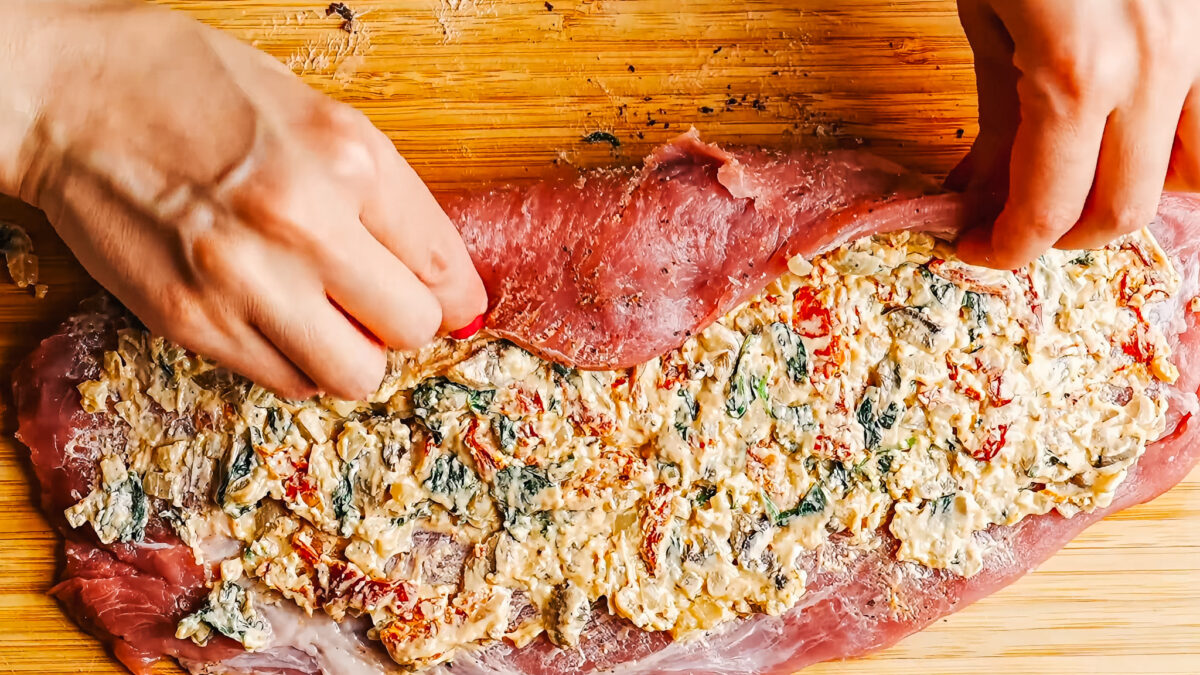
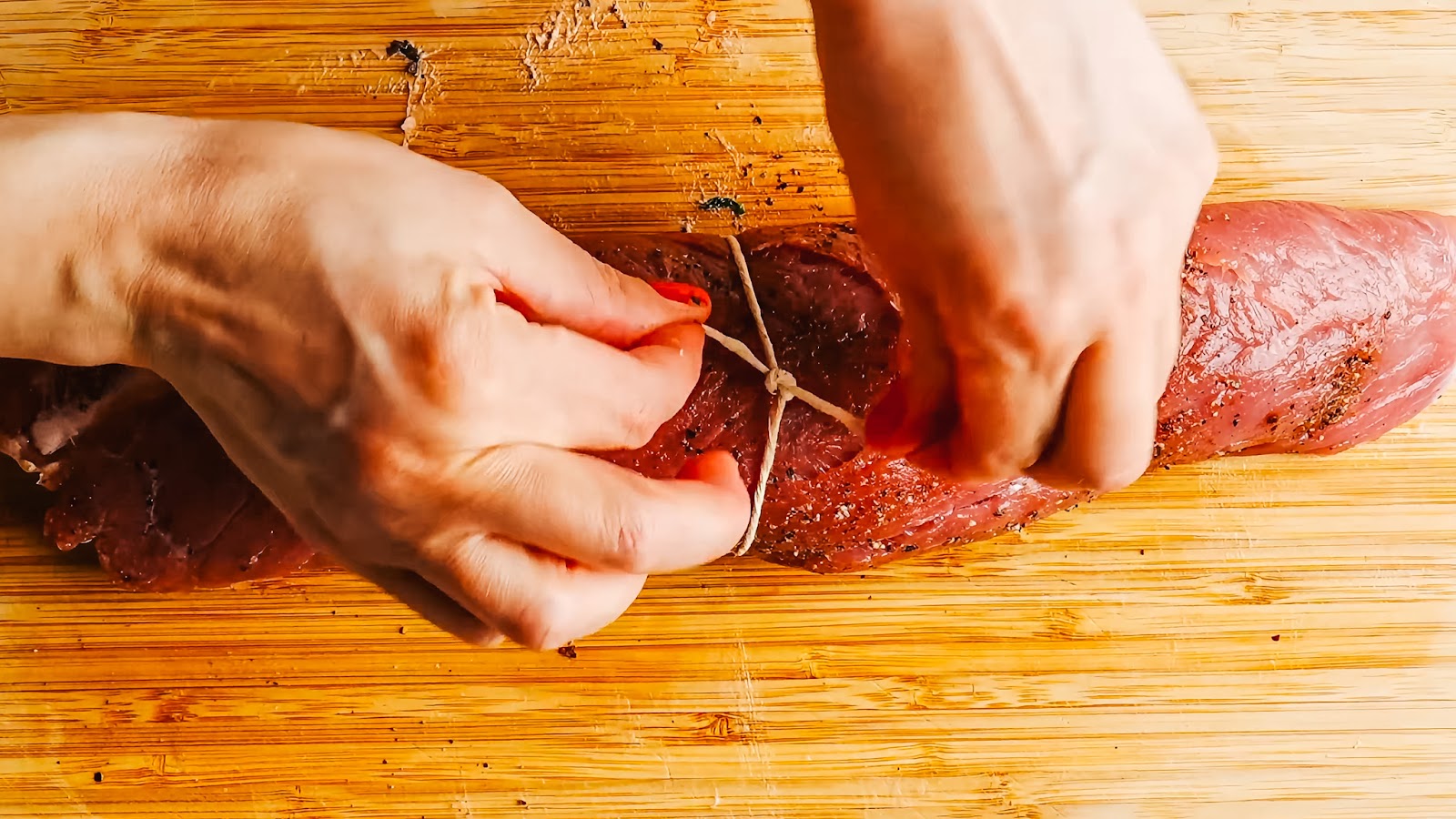
After that, spread the filling over each butterflied tenderloin, leaving a 1 inch border around all edges. Roll tightly from the long side, keeping the filling tucked in. Tie kitchen twine around each roll every 1 1/2 inches to hold the shape.
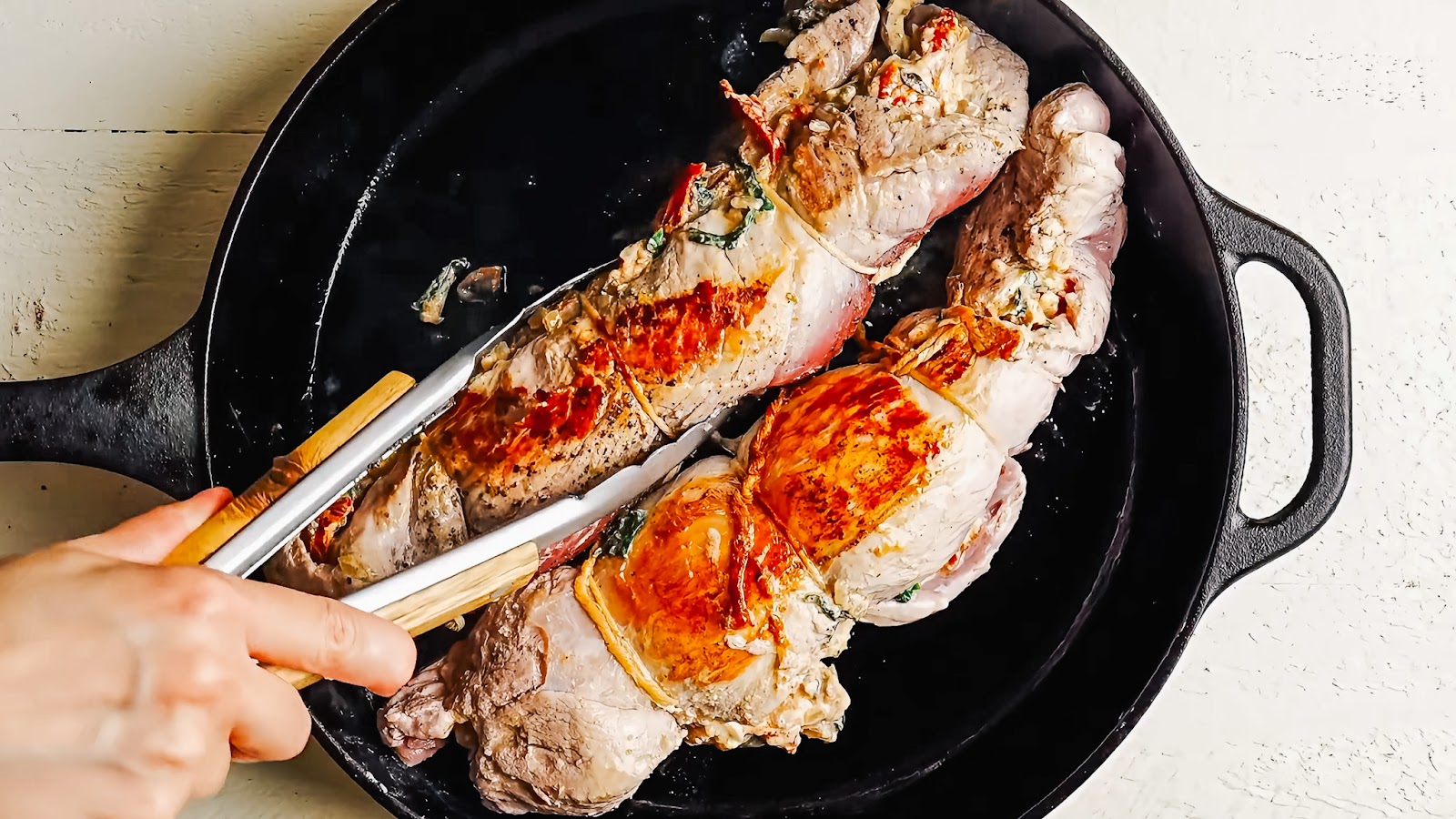
Sear in the Skillet
Then, heat the remaining 1 tbsp olive oil in a large oven-safe skillet over medium-high heat. Sear the rolled tenderloins on all sides until deeply golden, about 2 to 3 minutes per side. The crust adds flavor and color before the oven finishes the cook.
Roast and Rest
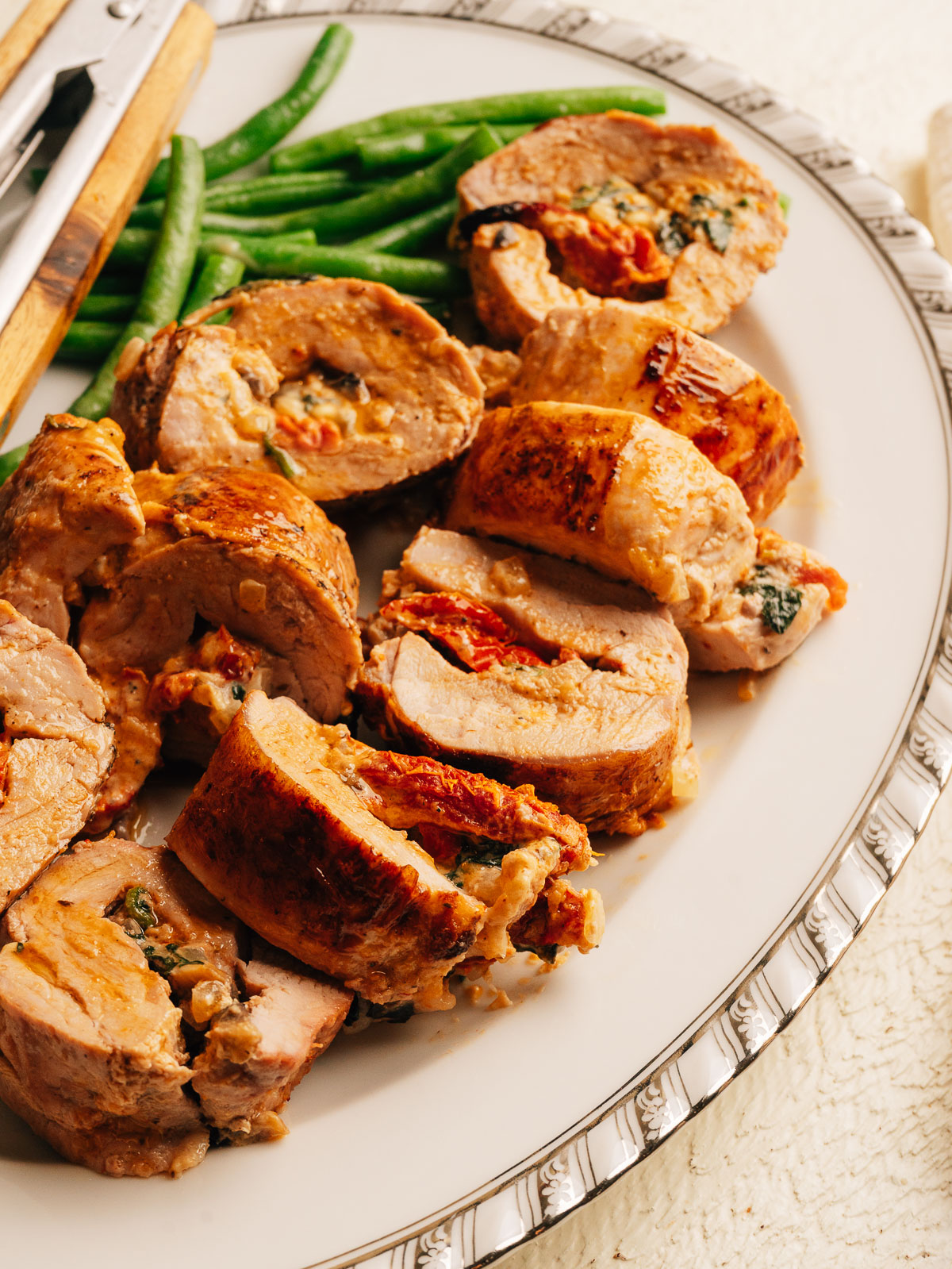
Finally, slide the skillet straight into a 400°F oven and roast 12 to 18 minutes. Pull at 140 to 145°F internal temperature, measured at the thickest part. Rest the pork on a cutting board for 10 minutes before snipping the twine and slicing into rounds.
5 Common Mistakes When Making Stuffed Pork Tenderloin
Here are the most frequent mix-ups to avoid when making stuffed pork tenderloin:
- Using pork loin instead of tenderloin: They are not the same cut. Pork loin is bigger and tougher and needs different cooking. Tenderloin is the long, narrow cut.
- Skipping the pound: A thicker piece of pork will not roll cleanly and tends to split. Pound to even 1/4 to 1/2 inch thickness on a sturdy cutting board.
- Overstuffing the roll: Too much stuffing oozes out during roasting. Stick to the 1 inch border and a thin, even layer.
- Skipping the twine: Without ties, the roll unravels in the pan. Loop twine every 1 1/2 inches before searing.
- Cooking past 145°F: Pork tenderloin dries out fast above this temperature. Pull at 140 to 145°F and let the rest finish it.
Make Ahead and Storage
In fact, this dish handles the make-ahead and leftover game beautifully, which makes it perfect for a dinner party.
Make Ahead
- Filling ahead: the cooked filling holds up to 2 days in the fridge in an airtight container.
- Roll ahead: stuff and tie the tenderloins up to 24 hours before cooking. Cover and chill.
- Pull from cold: let the rolled pork sit out for 20 minutes before searing so it cooks evenly.
Storing Leftovers
- Refrigerate: sliced or whole, in an airtight container for up to 3 days.
- Slice cold: chilled pork roast slices more cleanly on a cutting board. Reheat the slices gently to keep them tender.
Reheating Stuffed Pork Tenderloin
- Oven method: arrange slices in a baking dish, add a splash of broth, and cover with foil. Warm at 325°F for about 15 minutes.
- Skillet method: warm slices in a covered pan over low heat with a splash of broth.
- Skip the microwave on high: use 50 percent power to keep the pork from toughening.
How to Serve This Stuffed Pork Tenderloin Recipe
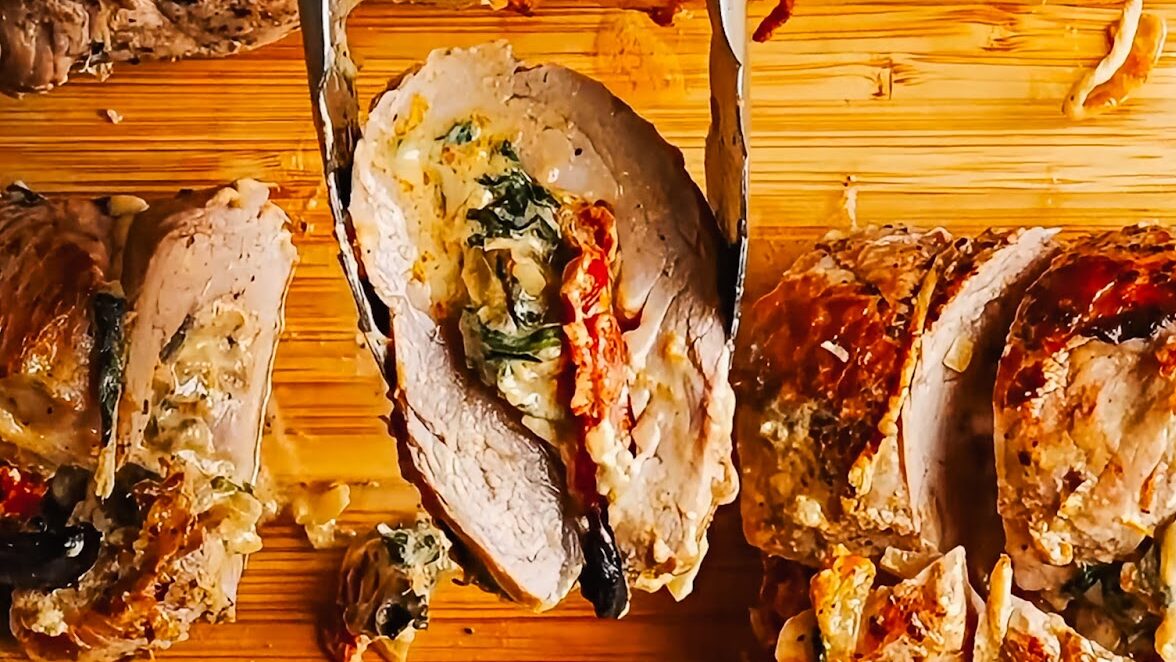
Of course, this dish is built for a comforting plated dinner party with classic sides.
Sauces and Toppings
- Pan sauce: deglaze the skillet with white wine and chicken broth, finish with butter.
- Lemon and herbs: a squeeze of lemon and fresh parsley brightens every slice.
- Balsamic glaze: a thin drizzle plays off the sun-dried tomatoes in the filling.
Side Dishes for Stuffed Pork Tenderloin
- Creamy mashed potatoes: the classic pairing for catching every drop of pan sauce.
- Roasted vegetables: sheet pan carrots, parsnips, or root veg roast at the same temperature as the pork.
- Garlic green beans: a quick sauté with olive oil and lemon zest.
- Crusty dutch oven bread: a simple loaf to swipe through the pan juices.
How to Make the Best Stuffed Pork Tenderloin: Final Notes + Secrets
Ultimately, these small details make the difference between good and great.
- Trim the silver skin: the shiny membrane on the surface of the tenderloin stays tough no matter how long you cook it. A sharp knife removes it in seconds.
- Soften the cream cheese fully: cold cream cheese leaves lumps in the filling. Set it on the counter while you prep.
- Sear in a hot pan: a smoking hot skillet builds a real crust through the Maillard reaction.
- Use a thermometer: visual cues lie with pork tenderloin. The thermometer is the only precise way to hit 140 to 145°F, and it makes a HUGE difference to the juiciness if you get the final temp right.
- Rest before slicing: the 10-minute rest on a cutting board lets juices redistribute. Cutting early sends those juices onto the board.
- Use sharp scissors for the twine: snip the strings before plating so each slice stays intact.
FAQs About Stuffed Pork Tenderloin
Just skimming through? Here are some quick answers to the commonly-asked questions.
Pork loin and pork tenderloin are different cuts. Tenderloin is small, narrow, and very tender, while pork loin is wider and tougher. This easy stuffed pork tenderloin recipe is built for tenderloin and the cooking time will not work for loin. Always check the label before buying.
The USDA recommends 145°F internal temperature for whole pork cuts. Pull the pork at 140°F and rest for 10 minutes, since carryover heat will bring it to 145°F. Going past this point dries out the lean meat and toughens the texture.
Yes. Roll and tie the tenderloins up to 24 hours before cooking, then cover and refrigerate. Pull them out 20 minutes before searing so they cook evenly. The filling can also be made up to 2 days ahead and stored in an airtight container in the fridge.
Three things help. Pound the pork to even thickness on a cutting board so it rolls cleanly. Leave a 1 inch border around the filling. Tie kitchen twine around the roll every 1 1/2 inches. With those steps the stuffing stays neatly tucked inside through searing and roasting.
Tough pork tenderloin almost always means it was overcooked. The cut is very lean and dries out fast above 145°F. Use an instant-read thermometer and pull the pork at 140°F. The 10-minute rest on a cutting board also helps juices redistribute through the meat.
An oven-safe skillet is the easiest path because you sear and roast in the same pan. If you do not have one, sear in a regular skillet first over medium-high heat. Then transfer the tenderloins to a parchment-lined baking sheet for the oven step. The result tastes the same.
Yes, stuffed pork tenderloin and pork roulade refer to the same technique: pounding the meat thin, layering on a filling, and rolling it back up. You may also see it called a rolled pork roast at the grocery store. The recipe steps are the same no matter the name.
Other Pork Recipes You’ll Love
It pairs beautifully with a crisp chopped Israeli salad to cut the richness.
Stuffed Pork Tenderloin
Video
Ingredients
For the Pork
- 2 pork tenderloins about 1 to 1 1/2 lb each
- 2 tsp kosher salt divided
- ½ tsp freshly ground black pepper divided
For the Filling
- 2 tbsp olive oil divided
- 1 cup finely chopped onion about 1 small
- 1 cup finely chopped mushrooms white or cremini
- ½ tsp kosher salt
- 2 tsp minced garlic about 2 large cloves
- ½ cup chopped fresh spinach packed
- ⅓ cup sun-dried tomatoes chopped, oil-packed
- 4 oz cream cheese softened
- ⅓ cup grated Parmesan
- 1 tsp dried Italian seasoning
- ¼ tsp red pepper flakes optional
Instructions
- Preheat the oven to 400°F.
Prep the Pork Tenderloin
- Cut each pork tenderloin lengthwise without slicing all the way through. Open like a book and pound gently (with a rolling pin or meat mallet) between sheets of plastic wrap to about 1/4 to 1/2 inch thick. Season both sides with kosher salt and black pepper (1 tsp salt and 1/4 tsp pepper per tenderloin).
Make the Filling
- Heat 1 tbsp of the olive oil in a skillet over medium-high heat. Add the onion and mushrooms with the salt and cook until softened and lightly browned, about 6 minutes.
- Stir in the garlic and cook 30 seconds. Add the spinach and cook just until wilted. Remove from heat and let cool slightly.
- In a bowl, mix the vegetable mixture with the sun-dried tomatoes, cream cheese, Parmesan, Italian seasoning, and red pepper flakes (if using) until well combined.
Stuff the Pork Tenderloin
- Spread the filling evenly over one pork tenderloin at a time, leaving a 1 inch border around the edges. Roll tightly from the long side and secure with kitchen twine every 1 1/2 inches.
Sear and Roast
- Heat the remaining 1 tbsp olive oil in a large oven-safe skillet over medium-high heat. Sear the rolled tenderloins on all sides until golden, about 2 to 3 minutes per side.
- Transfer the skillet to the oven and roast 12 to 18 minutes, until the internal temperature reaches 140 to 145°F.
- Remove from the oven and rest 10 minutes before slicing into rounds.
Notes
Nutrition
Nutrition information is automatically calculated, so should only be used as an approximation.










I made this for Sunday dinner and the creamy Mediterranean filling completely stole the show — everyone went back for seconds. The tenderloin stayed so juicy and sliced beautifully into those pretty pinwheels. Already on the rotation!
Congratulations! Excellent recipes with foolproof instructions everytime. You have exceptional talent, Jenn. You made me a huge fan of yours.
Made this for Sunday dinner and it vanished — that creamy Mediterranean filling is the whole show. Slicing into it and seeing the swirl got actual gasps at the table. Definitely going on repeat.