
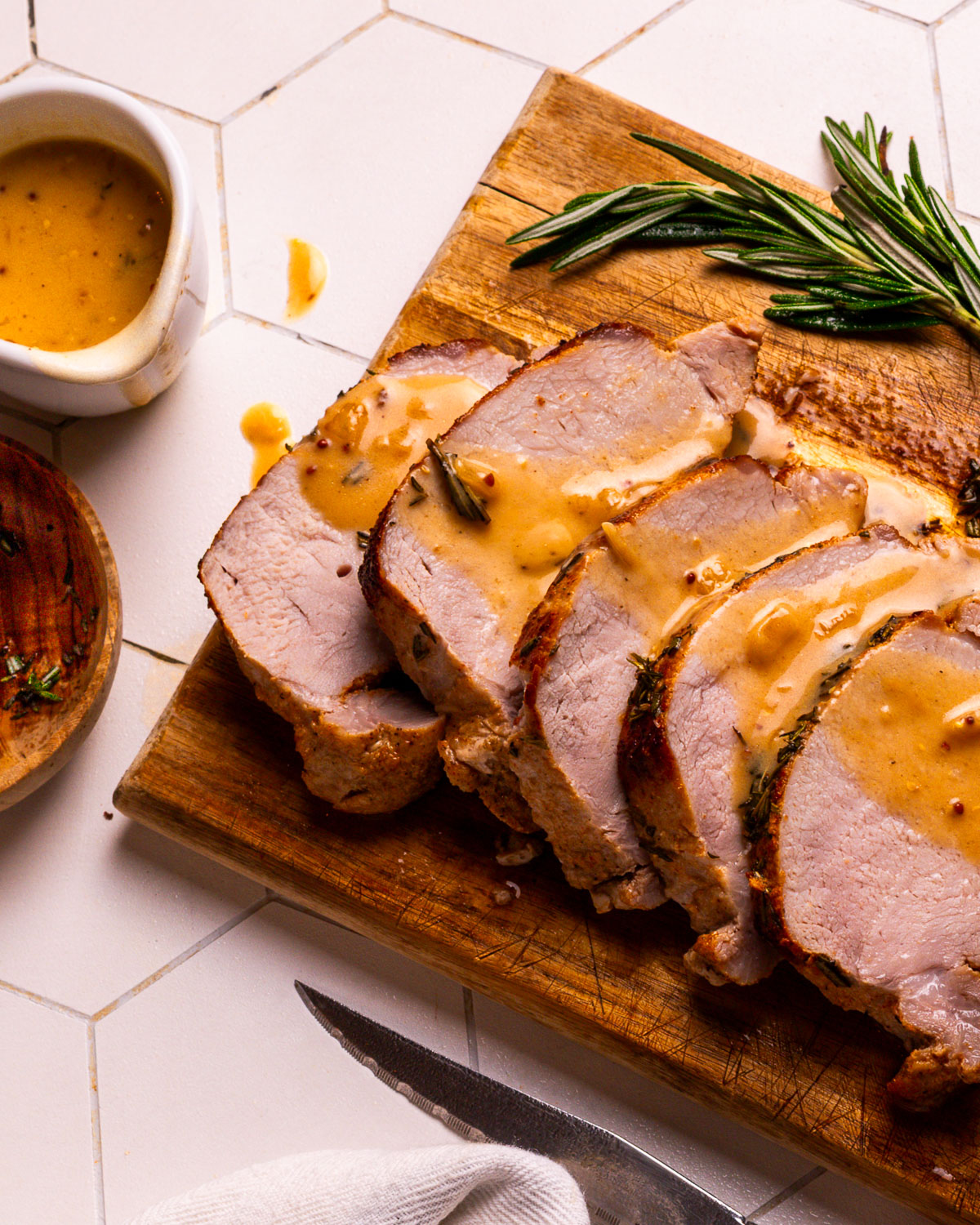
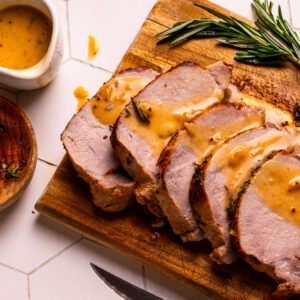
This silky pork gravy recipe is the one I come back to every single time I roast a pork loin. It’s glossy, creamy, and packed with rich, savory flavor.
Best Ever Pork Gravy (Easy Recipe!)
I originally shared this homemade pork gravy on my Roast Pork Loin recipe, and every day I receive comments like, “the pan sauce is outstanding!”, and,“the sauce is restaurant quality and would go well with any meat”.
What sets it apart from a basic brown gravy is the layered flavor. You start by softening onion in butter, adding flour and letting it brown, then bringing in chicken broth, white wine, mustard and cream before whisking in those precious pan drippings.
Ingredients and Notes
Don’t have pan drippings? No problem. I’ve included an easy workaround so you can make this any night of the week.
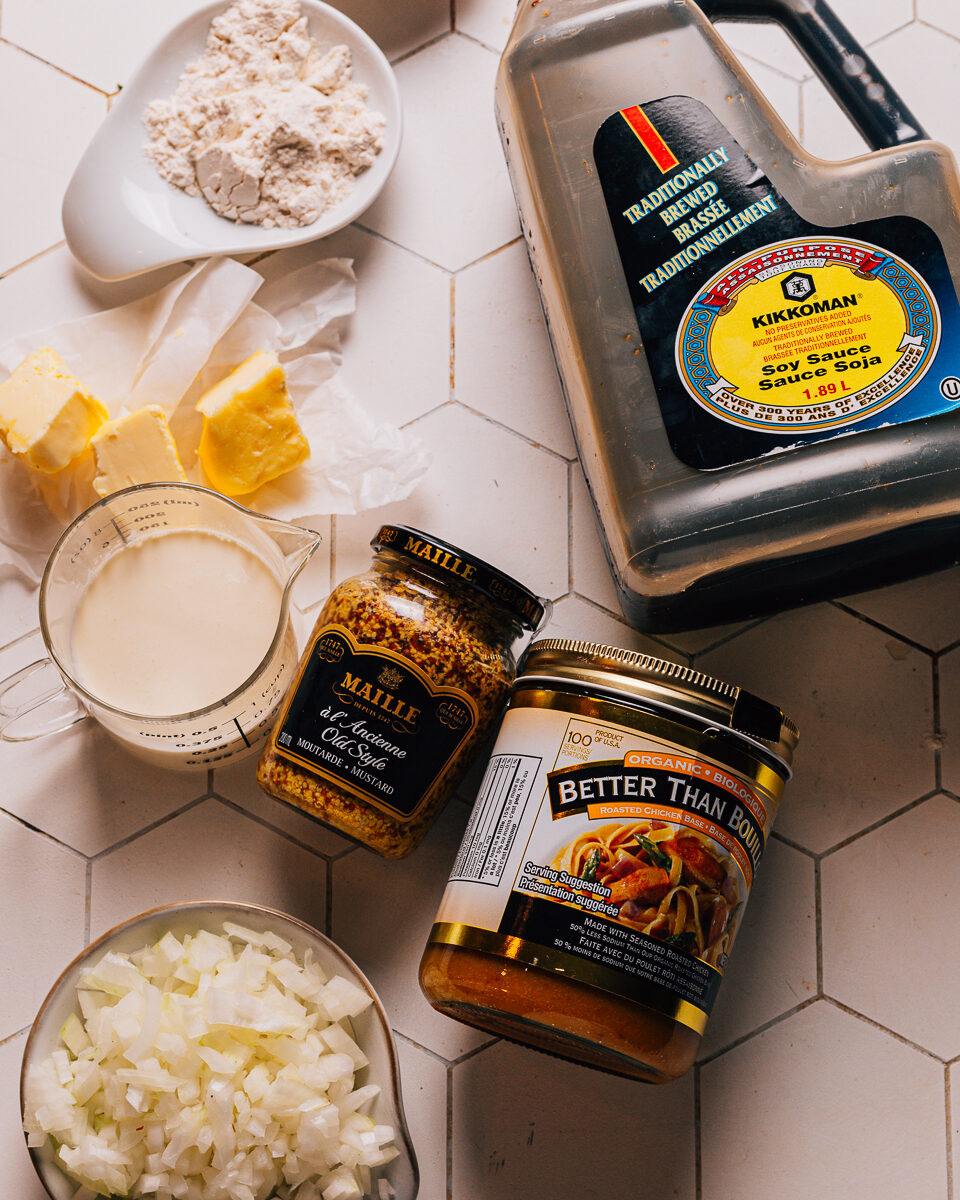
Full quantities are in the recipe card below. Here’s a closer look at what goes in and why each ingredient matters:
- Unsalted butter. The fat base for the roux and the foundation of flavor. Using unsalted lets you control the salt level yourself.
- Onion. Finely minced so it melts completely into the gravy. This adds sweetness and body without any stringy bits in the finished sauce.
- All-purpose flour. Three tablespoons thickens the gravy to that perfect pourable consistency. Cook it with the butter for a couple of minutes to get rid of the raw flour taste. (Try my Pork Stew recipe, too!)
- Chicken broth. The liquid backbone of the gravy. It might seem surprising to use chicken broth in a pork gravy, but it has a cleaner, more neutral flavor than beef broth and lets the pork drippings shine.
- White wine. Just 2 tablespoons, but it adds brightness and a little acidity that keeps the gravy from feeling heavy. Substitute more broth if you’d prefer not to cook with wine.
- Grainy mustard (or Dijon). This is the secret weapon. It adds a tangy, slightly spicy depth that cuts through the richness of the cream beautifully.
- Heavy cream. Stirred in at the end for a silky, luscious texture. Don’t substitute heavy cream with milk or half-and-half or you’ll lose that velvety body.
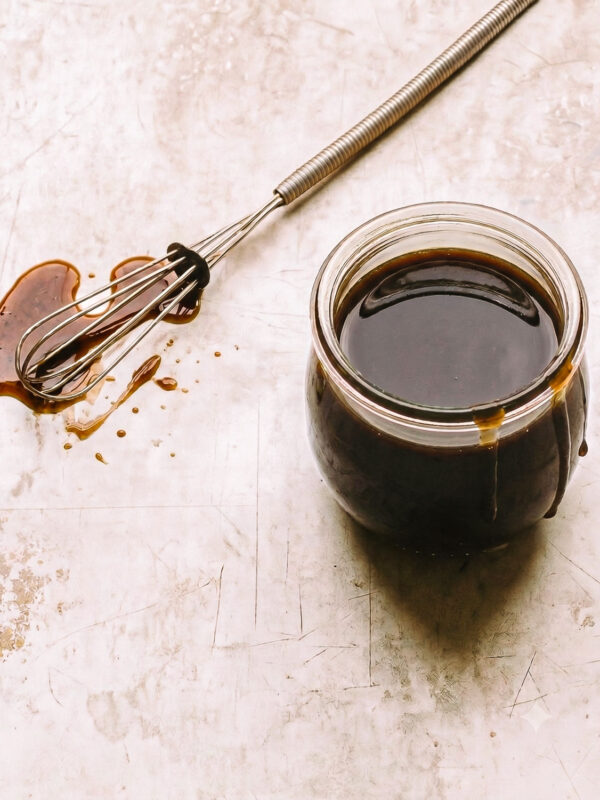
- Soy sauce. A tablespoon of soy sauce deepens the savory, umami quality of the gravy’s flavor in a way that’s completely undetectable as soy but makes you wonder why it tastes so good. I use it in my turkey gravy without drippings, too.
- Pan drippings. The collected juices from roasting pork are pure gold. They had so much rich flavor to homemade gravy. Skim the fat, then stir them in at the end. If you don’t have drippings, substitute with an additional ¼ cup of chicken broth.
How To Make Pork Gravy From Scratch
I prep the gravy on the stove while the pork is in the oven, then reheat it at the end of the cooking time, after the pork has rested (that’s when you’ll get the most juices!).
Step 1: Soften the Onion
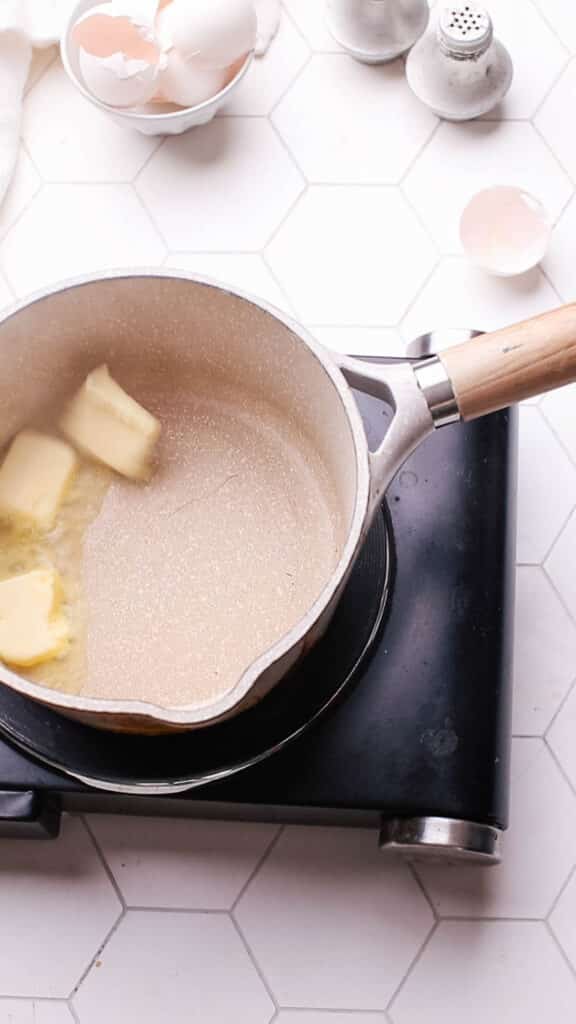
Melt the butter in a medium saucepan over medium heat. Add the finely minced onion and a pinch of salt, and cook, stirring occasionally, until completely softened (about 5 minutes). You’re not looking for any colour here, just soft and translucent.
Step 2: Build the Roux
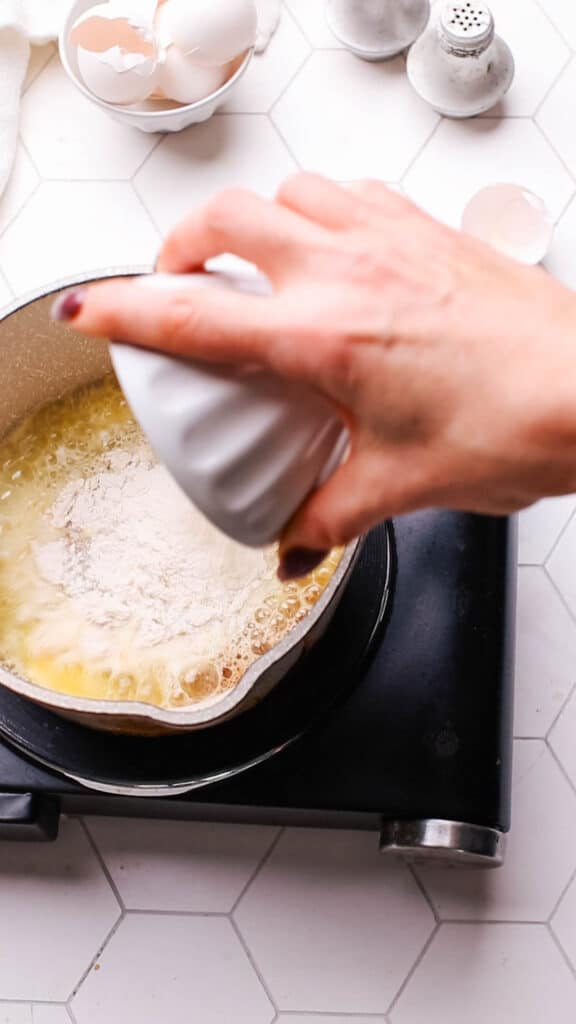
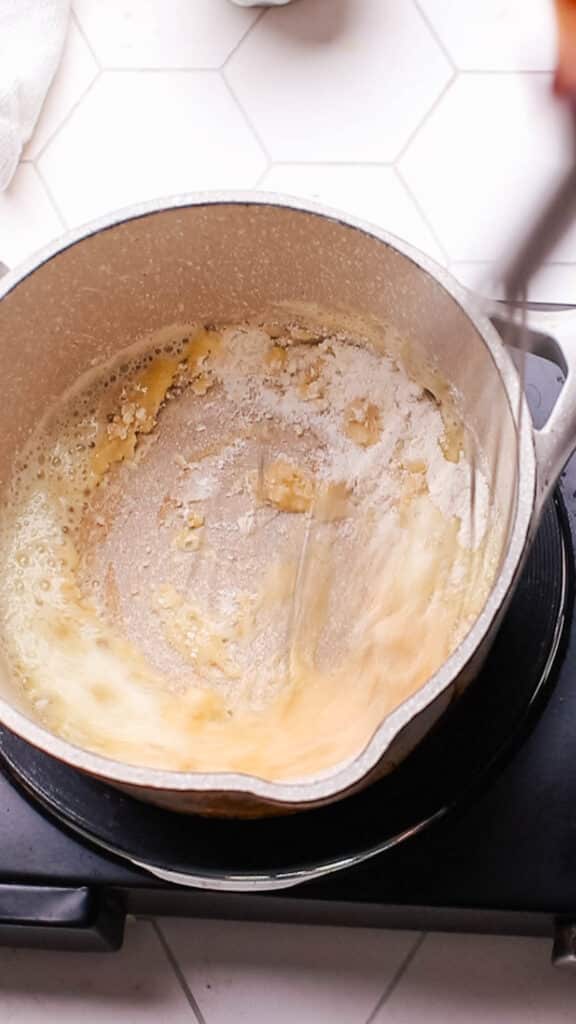
Whisk in the flour and cook, whisking constantly, for 1 to 2 minutes until the mixture turns a light golden color. This step is important: cooking the flour fully prevents a starchy, pasty flavor in the finished gravy.
Step 3: Add the Liquids
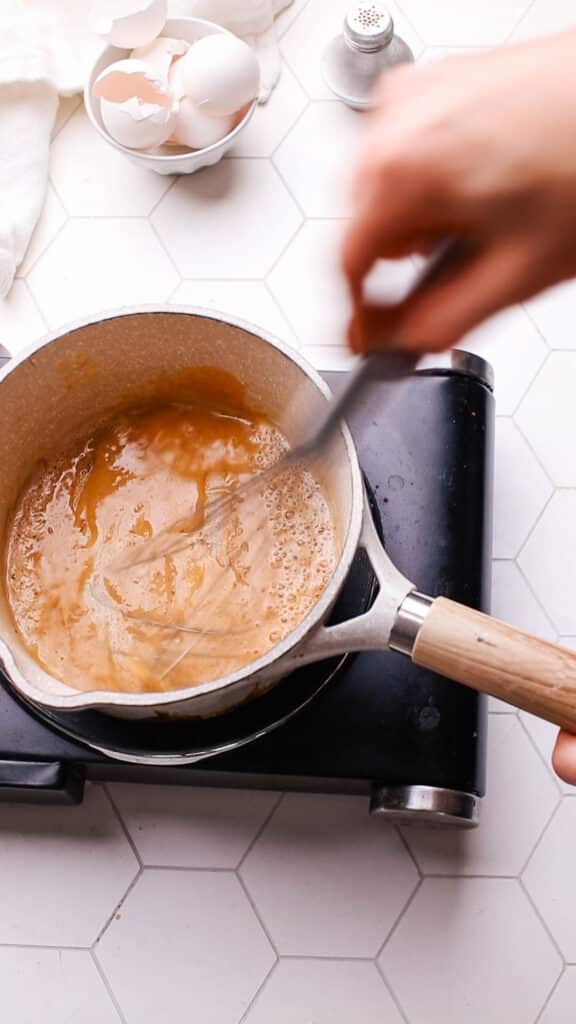
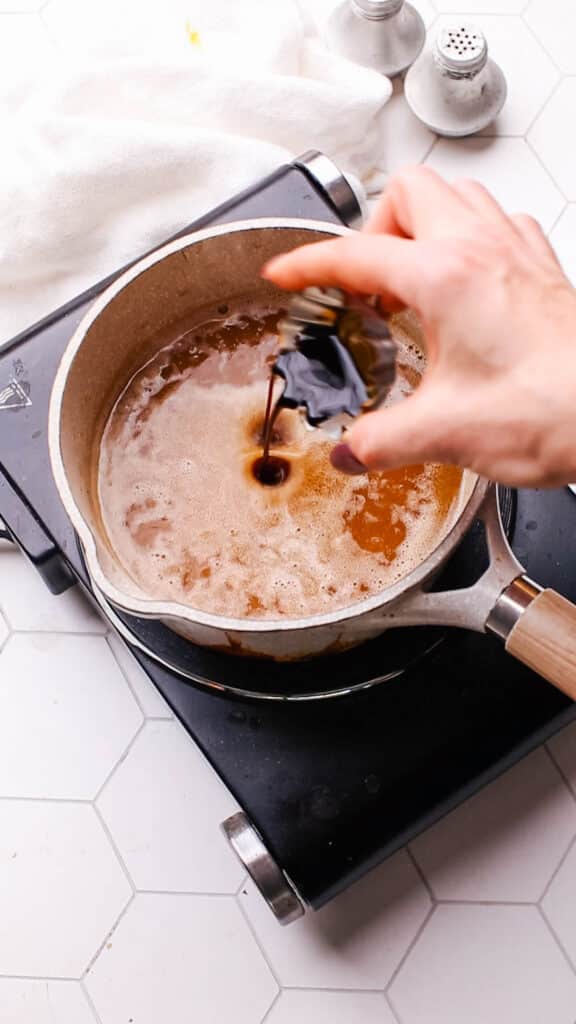
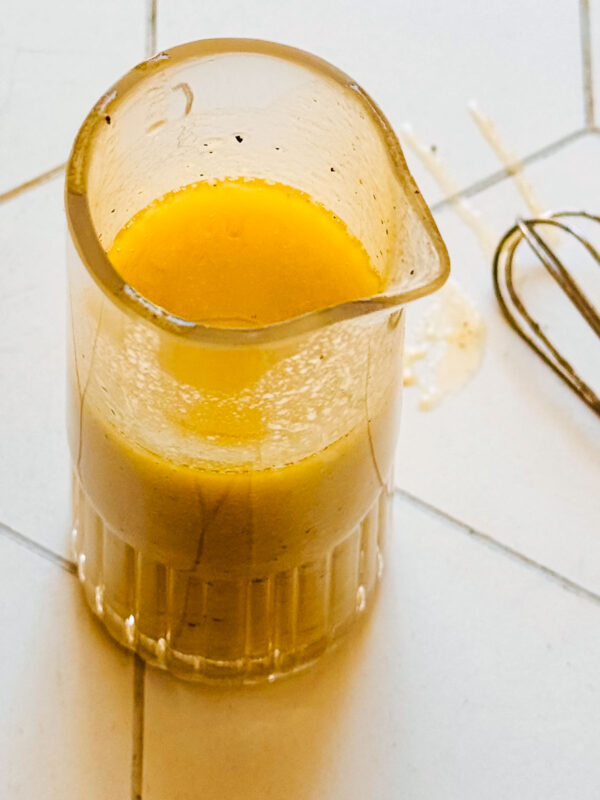
Slowly whisk in the chicken broth and white wine, a little at a time at first, to prevent lumps. Once all the liquid is incorporated and the gravy is smooth, stir in the mustard, heavy cream, black pepper, and soy sauce.
Step 4: Add Drippings and Simmer
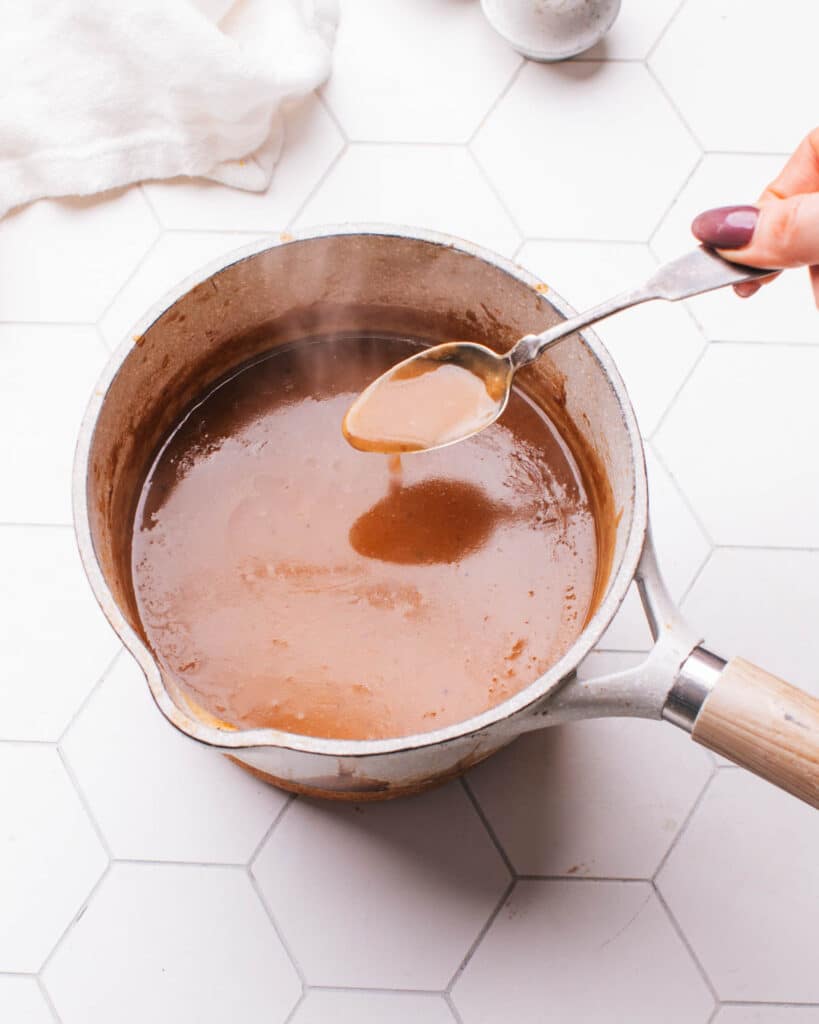
Pour in the reserved pan drippings (or an extra splash of broth if you don’t have them). Bring the gravy to a gentle simmer and cook, stirring occasionally, for 3 to 4 minutes until it reaches your desired thickness. Taste and adjust the seasoning with more salt and pepper as needed. If the gravy gets too thick, just thin it out with a splash more broth.

What To Serve Pork Gravy With
This gravy was born alongside a pork loin roast, but it’s genuinely good over all your favorite pork recipes, and not just special occasions:
- Roast Pork Loin. Slicing the roast into thick pieces then blanketing them in this sauce is one of the best Sunday dinners I know.
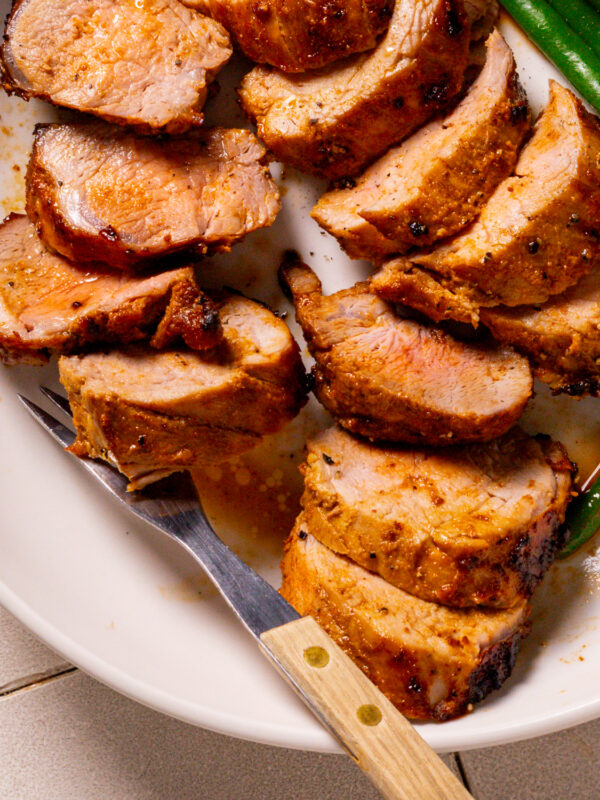
- Air Fryer Pork Loin. The air fryer gives you a beautifully crisp crust on the outside. This creamy gravy alongside it is just the right contrast.
- Baked Pork Chops. No roast in sight? Spoon this gravy over broiled or baked bone-in or boneless pork chops for an easy weeknight dinner that feels a lot more special than the effort required.
- Mashed potatoes. Non-negotiable. Creamy mashed potatoes and this pork gravy are made for each other. Homemade stuffing, too.
I also have Slow Cooker Pork Loin and Instant Pot Pork Loin recipes that are very popular and each have their own gravies.
Tips for the Best Pork Gravy
- Mince the onion very finely. The goal is for the onion to essentially dissolve into the gravy as it cooks. A coarse chop will leave bits that feel out of place in an otherwise silky sauce. A sharp knife and some patience go a long way here. (Alternatively you can blend the gravy with an immersion blender)
- Cook the flour long enough. A rushed roux tastes like pasty flour. A properly cooked roux (1 to 2 minutes of constant whisking over medium heat) turns golden and smells nutty. That’s the version you want.
- Add the liquid slowly at first. The first few splashes of broth are the most critical. Add them a little at a time and whisk thoroughly before adding more. Once you have a smooth paste, you can pour more freely.
- Skim the fat from your drippings. Let the pan drippings settle in a small bowl for a couple of minutes, then skim off the fat sitting on top. You want the flavorful juices, not the grease. A fat separator is helpful if you have one.
- Taste before you season. Pan drippings vary in saltiness depending on how heavily you seasoned your pork. Add salt at the very end, after the drippings are in, so you don’t end up over-seasoning.
- Keep it warm on low. If your pork is still resting and you’ve already finished the gravy, just keep it on the lowest heat setting and stir occasionally. It holds well for 10 to 15 minutes. Add a splash of broth if it thickens too much.
My brown butter sage sauce is also delicious with pork, as are the savory sauteed apples in my pork chops with apples recipe.
Storage and Reheating
Leftover pork gravy stores well in an airtight container in the refrigerator for up to 3 days.
- Leftovers will thicken considerably as it cools, which is totally normal.
- To reheat, warm it gently in a small saucepan over low heat, whisking in a splash of chicken broth until it loosens back to the right consistency.
- A quick 60 to 90 seconds in the microwave works too, just whisk halfway through.
You can also freeze pork gravy.
- Cream-based gravies can sometimes separate slightly when thawed, but a good whisk over low heat brings them back together.
- Freeze in a freezer-safe container for up to 2 months.
Frequently Asked Questions
Yes, absolutely. Just substitute the pan drippings with an extra ¼ cup of chicken broth. The gravy won’t have quite the same depth as one made with real drippings, but it’s still rich, flavorful, and well worth making. You can also stir in a small knob of butter at the end to add a little extra richness.
Pour the gravy through a fine mesh strainer and whisk vigorously or blend with an immersion (or regular) blender, carefully!
Yes. Substitute the all-purpose flour with a 1:1 gluten-free flour blend, or use cornstarch instead. If using cornstarch, whisk 1.5 tablespoons into a small amount of cold broth first (a slurry), then stir it into the gravy near the end instead of making a roux. Also swap the soy sauce for tamari or coconut aminos.
You can, but I find that chicken broth works better in pork gravy. Beef broth has a bolder, more assertive flavor that can overpower the pork drippings and the mustard. Chicken broth is more neutral and lets all the other flavors come through. That said, if beef broth is what you have, it will still produce a good, hearty gravy.
Let it simmer a few minutes longer, uncovered, stirring frequently. The gravy will reduce and thicken as the liquid evaporates. If you need it to thicken quickly, whisk a teaspoon of cornstarch with a tablespoon of cold water and stir it in. It will thicken within a minute or two.
Yes. Make it completely, let it cool, then refrigerate in an airtight container for up to 3 days. Reheat gently over low heat with a splash of broth, whisking as it warms up. It reheats beautifully.
Best Easy Pork Gravy
Ingredients
- 4 tbsp unsalted butter
- ¾ cup onion very finely minced
- ¼ tsp kosher salt
- 3 tbsp all-purpose flour
- 1 cup chicken broth
- 2 tbsp white wine or additional chicken broth
- 1 tbsp grainy mustard or Dijon
- ½ cup heavy cream
- ½ tsp freshly ground black pepper
- 1 tbsp soy sauce
- Pan drippings from roasting pork fat skimmed (substitute ¼ cup extra chicken broth if unavailable)
Instructions
- Melt the butter in a medium saucepan over medium heat. Add the finely minced onion and salt. Cook, stirring occasionally, until completely softened, about 5 minutes. Do not let it brown.
- Whisk in the flour and cook, whisking constantly, for 1 to 2 minutes until the mixture turns a light golden color and smells slightly nutty.
- Slowly whisk in the chicken broth and white wine, adding a little at a time at first to prevent lumps. Once smooth, stir in the grainy mustard, heavy cream, black pepper, and soy sauce.
- Pour in the reserved pan drippings (fat skimmed). Bring to a gentle simmer and cook, stirring occasionally, for 3 to 4 minutes until thickened to your desired consistency. Taste and adjust salt and pepper as needed. If the gravy becomes too thick, thin with a splash of broth.
Notes
Nutrition
Nutrition information is automatically calculated, so should only be used as an approximation.










Made this with leftover pork roast drippings and it was the silkiest, most savory gravy I’ve ever made at home. Poured it over mashed potatoes and biscuits — felt like a Sunday supper on a Tuesday.