
This easy Grilled Salmon recipe delivers perfectly moist and flaky fish with a beautiful grill marks in under 10 minutes. Simple food science tricks make it perfectly foolproof!
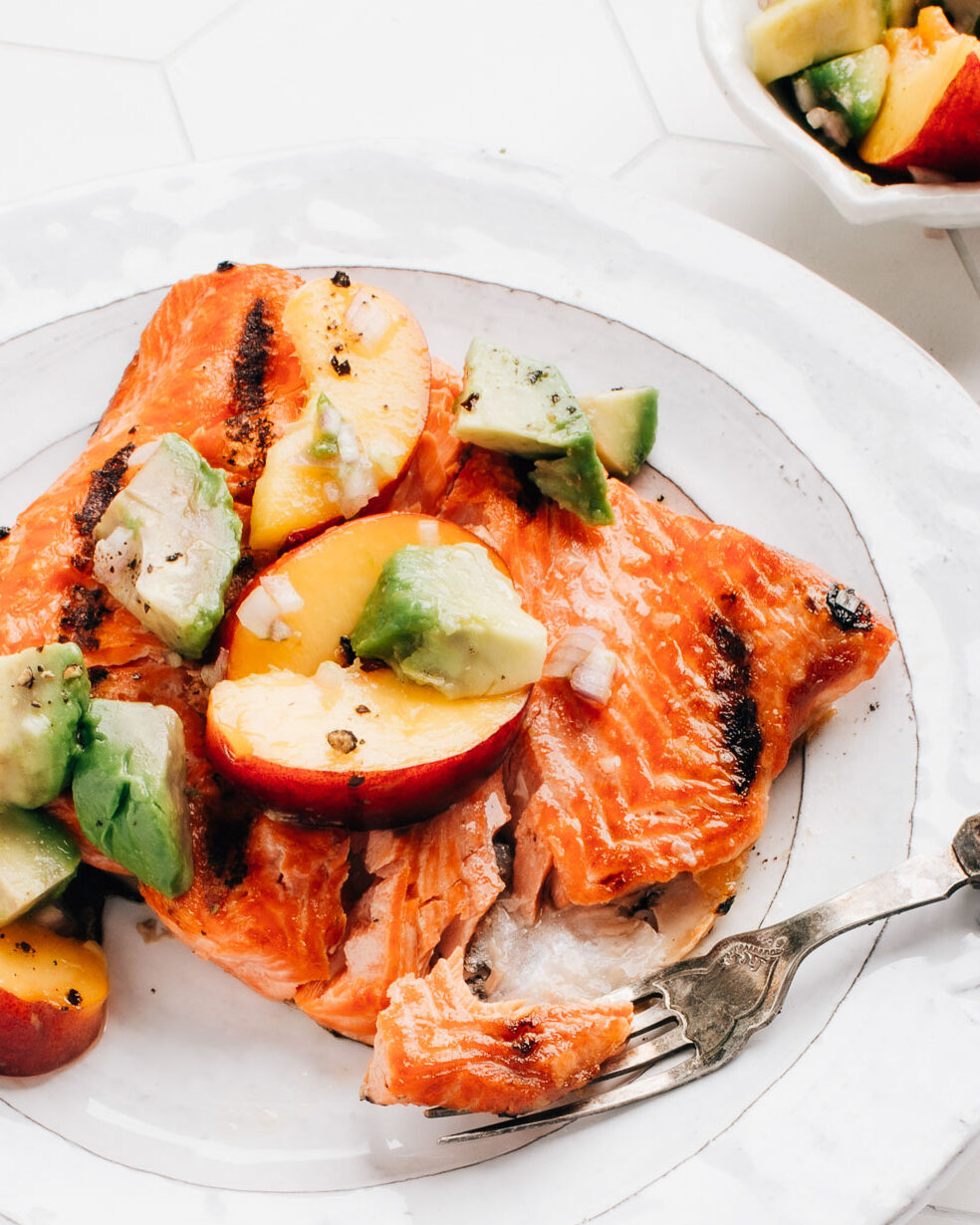
I’m a food scientist and I know grilling salmon can be tricky. You don’t want to undercook it, you CERTAINLY don’t want to over-cook it, and it has a tendency to stick to the grates. I’ve got you, boo.
Read on for all my tricks to take out the guesswork and deliver you some perfectly-grilled salmon every time.
Grilled Salmon Ingredients
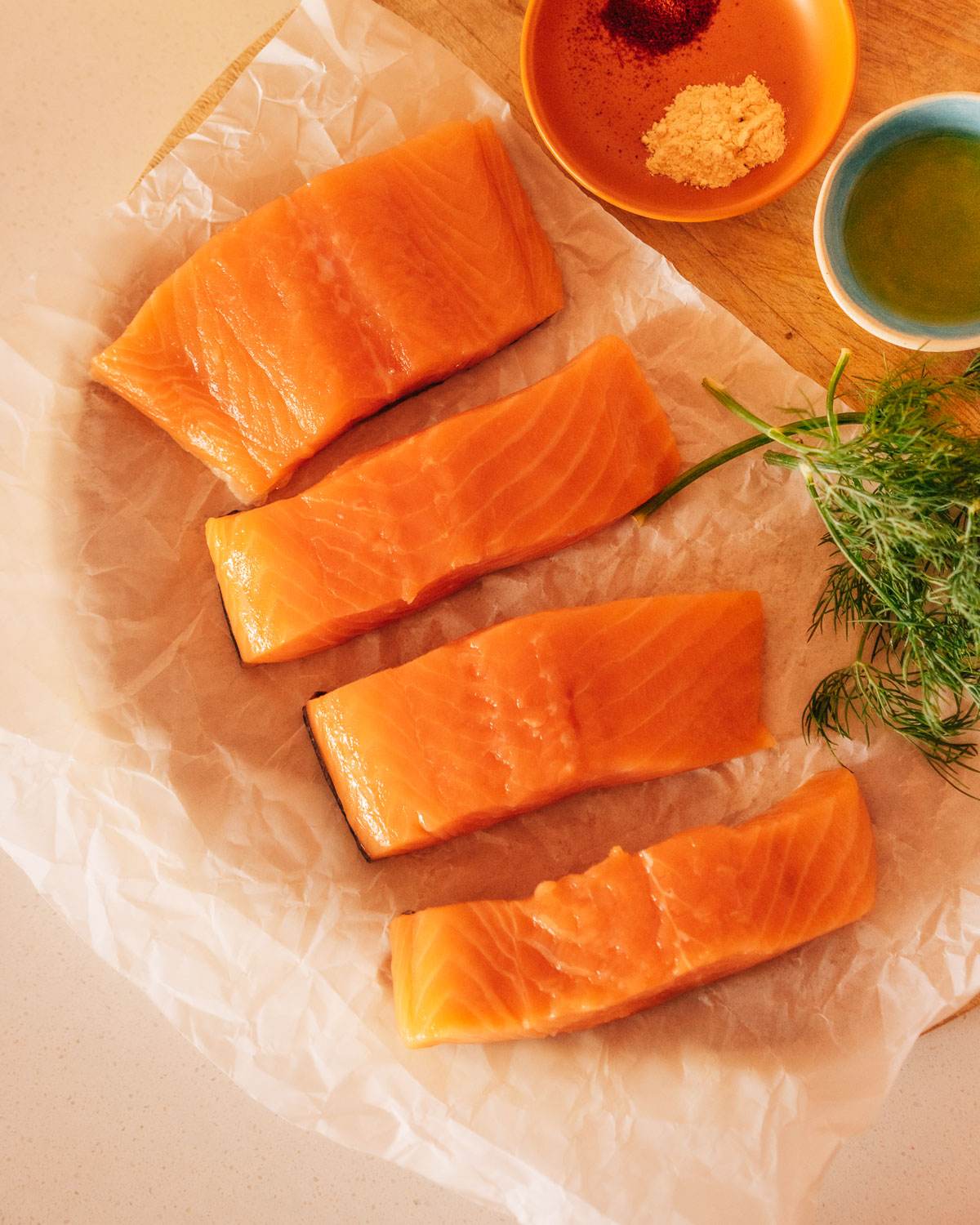
Here’s what you need for this foolproof grilled salmon.
For the Salmon
- Salmon fillets: Four 5 to 6 oz portions, skin on or off. Skin-on is easier to grill and keeps the fish moist.
- Olive oil: Helps the spices stick and prevents the fish from drying out.
- Kosher salt: The foundation of great flavor.
- Black pepper: A little goes a long way.
- Garlic powder: Adds savory depth + enhances browning with a short grill time.
- Smoked paprika: Brings a subtle smokiness that boosts the grill’s effect.
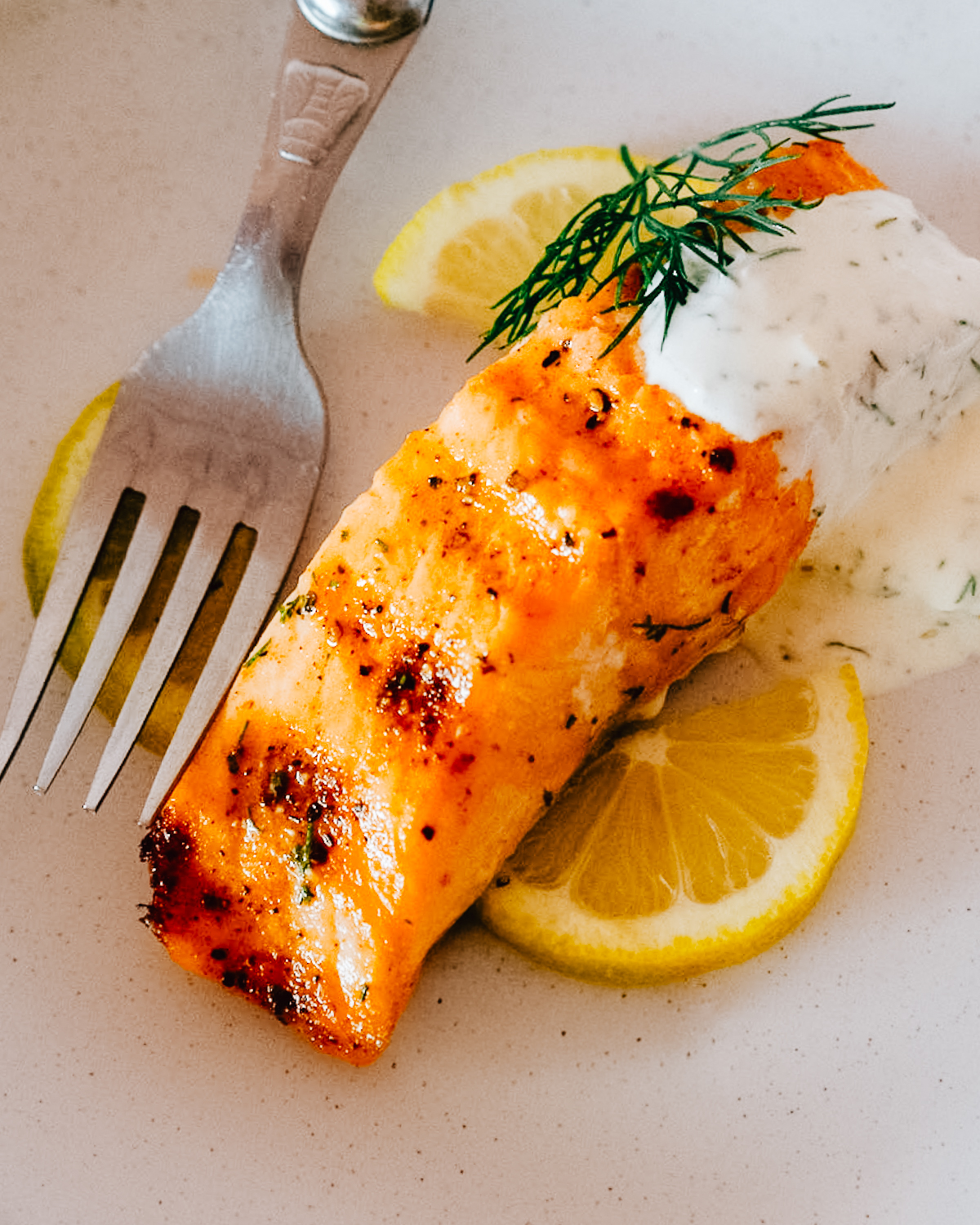
I gave a simple herb drizzle in the recipe card below, but you can also serve it with my avocado melon cucumber salsa (like in the photo above), or with dill sauce for salmon in photos below. It’s endlessly versatile!
Full recipe quantities listed in the recipe card at the bottom of the article.
Variations and Substitutions
Here are some easy ways to customize this grilled salmon.
- Cajun style: Swap the garlic powder and paprika for Cajun seasoning, like in my Cajun Honey Butter Salmon.
- Asian twist: Skip the spice rub and brush with my teriyaki sauce recipe during the last minute of cooking.
- Mediterranean: Serve with tzatziki or Indian yogurt sauce.
- Herb butter: Top hot-off-the-grill salmon with a pat of compound butter mixed with garlic and herbs.
If you love salmon, check out my roundup of moist salmon recipes with food science tips for perfectly cooked fish every time!
Grab These Tools
You likely have everything you need already.
- Outdoor grill or grill pan for those beautiful grill marks and smoky flavor. (More grilling recipes here!)
- Tongs and paper towels for oiling the grates safely.
- Pastry brush for coating the salmon with oil.
- Small bowl for mixing the spice rub and herb drizzle.
- Instant-read thermometer optional, but takes the guesswork out of doneness.
- Fish spatula thin and flexible for easy lifting.
How to Make Grilled Salmon: An Easy Guide
This recipe is surprisingly hands-off. Most of the work happens before the salmon hits the grill.
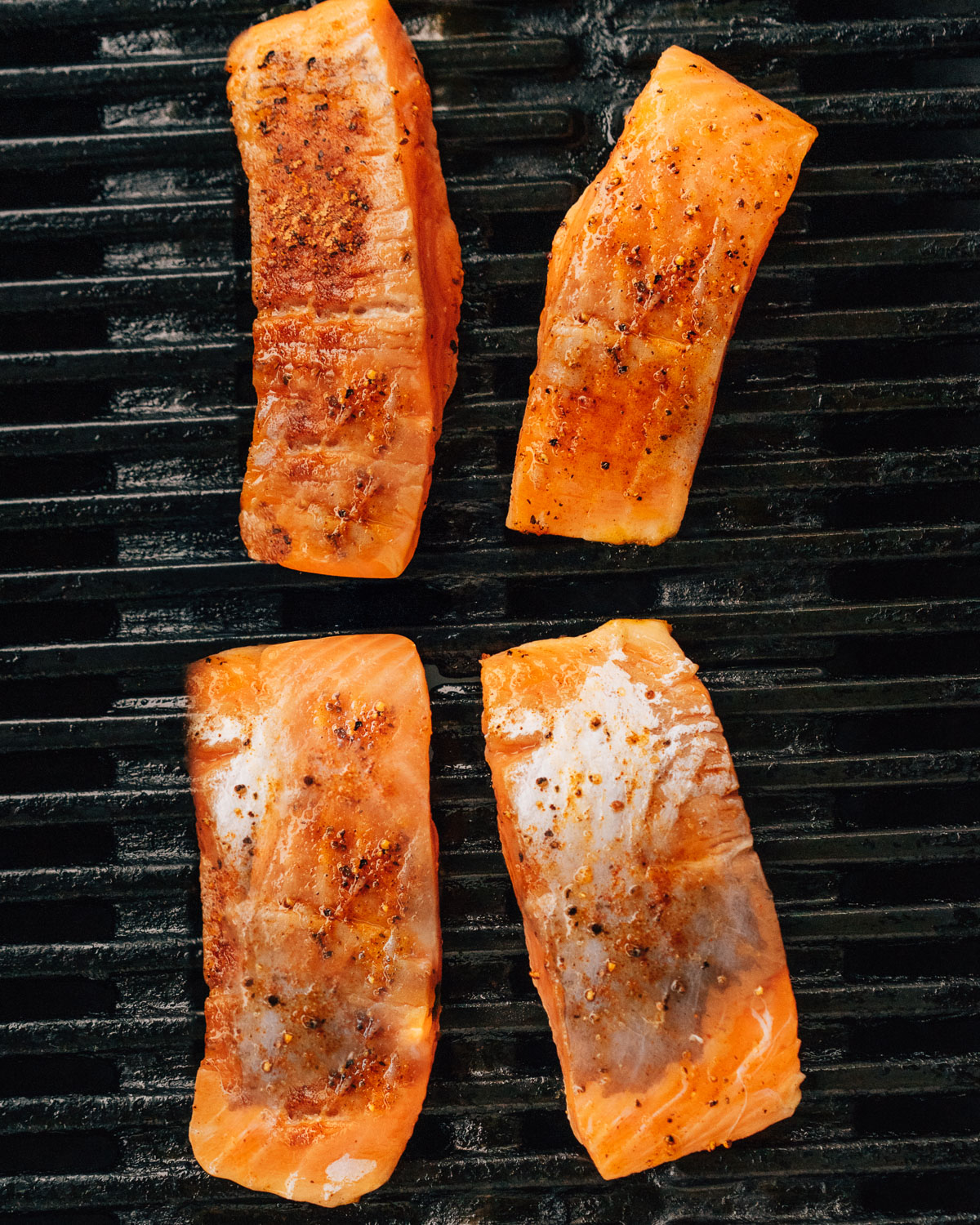
Preheat and Prep the Grill
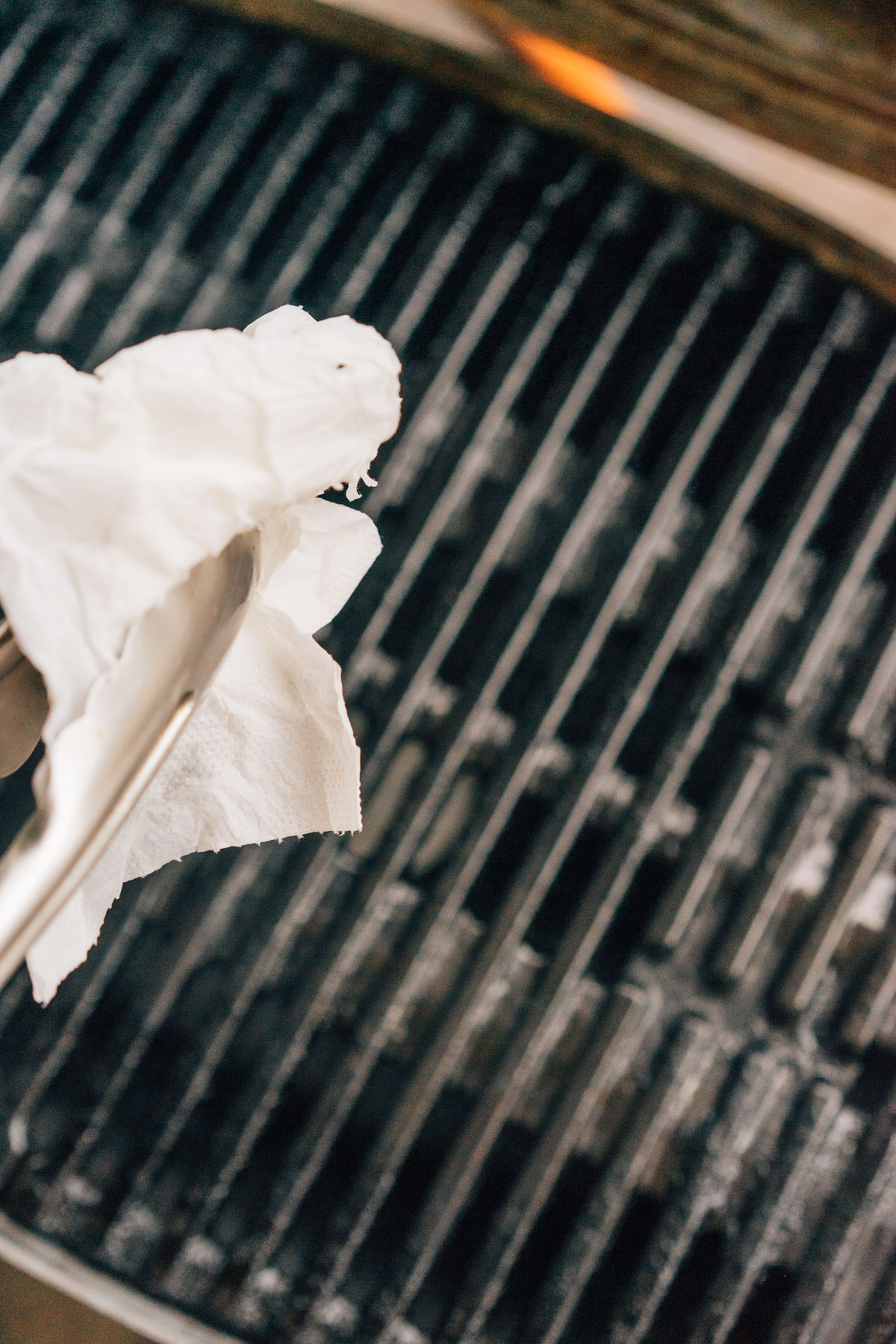
Preheat your grill or grill pan to medium-high heat for a full 10 minutes (this is KEY to avoid sticking).
Clean the grates well with a grill brush. Using tongs and a paper towel dipped in oil, grease the grates thoroughly.
Season the Salmon
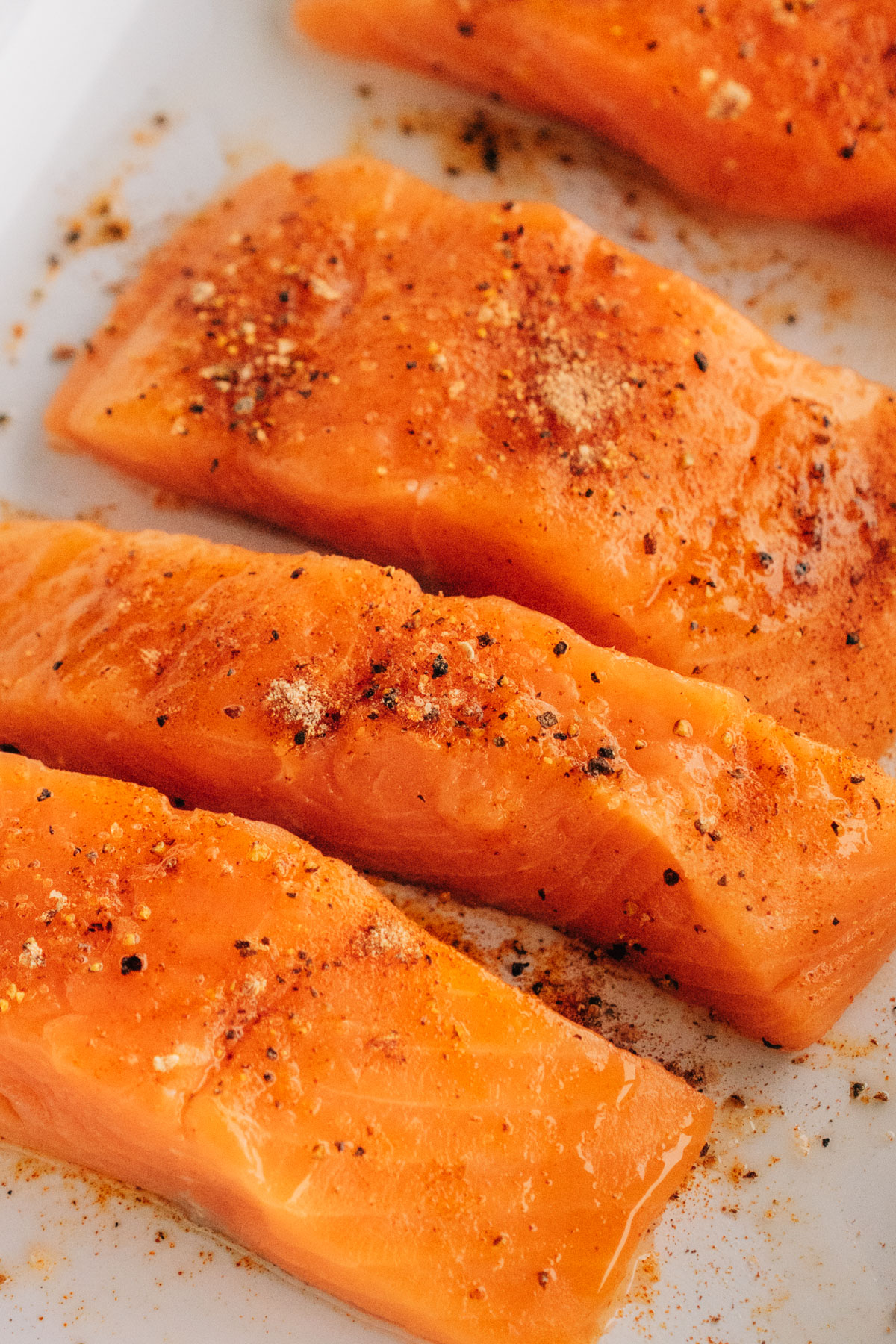
Pat the salmon fillets completely dry with paper towels. Brush all sides with olive oil. Combine the salt, pepper, garlic powder, and smoked paprika in a small bowl. Sprinkle the spice mixture evenly over each fillet.
Grill Without Flipping
Place the fillets skin-side down on the grill. Close the lid. Cook for 6 to 8 minutes without flipping until the thickest part reaches 125 to 130°F and the fish flakes easily.
Rest Before Serving
Transfer the salmon to a plate and let it rest for 2 minutes. This allows the juices to redistribute and the temperature to rise a few more degrees.
Make the Herb Drizzle (Optional)
Whisk together the olive oil, lemon juice, lemon zest, and salt in a small bowl. Stir in the chopped herbs. Drizzle over the grilled salmon just before serving (or try my easy dill sauce for salmon, pictured below!).
5 Common Mistakes When Making Grilled Salmon
Here are the most frequent mix-ups to avoid when grilling salmon:
- Not preheating the grill long enough: A hot grill prevents sticking and creates those gorgeous grill marks. Give it a full 10 minutes to heat up.
- Skipping the oil on the grates: Even on a hot grill, fish can stick. Oil the grates right before cooking for easy release.
- Flipping too soon or too often: With skin-on fillets, you don’t need to flip at all. If the fish sticks when you try to move it, it’s not ready.
- Overcooking: Salmon continues cooking off the heat. Pull it at 125°F for moist, flaky results.
- Not patting the fish dry: Surface moisture creates steam instead of sear. Dry salmon equals better browning and flavor.
Make Ahead and Storage
Grilled salmon is best served fresh, but here’s how to handle leftovers and prep ahead.
Storing Leftovers
- Refrigerate: Store cooked salmon in an airtight container for up to 3 days. Here’s my guide to how long salmon lasts in the fridge.
- Keep the drizzle separate: Store the herb sauce in a jar in the fridge for up to 5 days.
Freezing
- Cooked salmon: Wrap tightly and freeze for up to 2 months. Thaw overnight in the fridge.
Reheating Grilled Salmon
- Oven method: Warm at 275°F for 10 to 15 minutes. Cover loosely with foil to prevent drying.
- Enjoy it cold: Leftover grilled salmon is great flaked over salads or in grain bowls.
For more salmon storage tips, check out my guide on how long salmon lasts in the fridge.
How to Serve This Grilled Salmon Recipe
I love this salmon with the herb drizzle and a squeeze of fresh lemon. Here are more ways to round out your meal.
Grilled Salmon Toppings and Sauces
- The lemon herb drizzle in this recipe.
- A summery avocado melon cucumber salsa.
- Peanut sauce like I use with my grilled salmon skewers.
- A dollop of creamy Asian dressing.
- Simple lemon wedges and fresh herbs.
Side Dishes for Grilled Salmon
- Easy basmati rice is a classic pairing.
- Couscous salad with lemon dressing adds brightness.
- Pan-fried asparagus is simple and elegant.
- Mexican street corn salad is perfect for summer.
- Strawberry spinach salad adds a fresh, fruity contrast.
- Creamy mashed potatoes for comfort food vibes.
Check out my full roundup of side dishes for salmon for even more ideas!
Final Notes, Pro Tips + Science-Based Secrets
Here are my best tips for grilled salmon that turns out perfect every time.
- Use skin-on fillets: The skin acts as a protective barrier between the delicate flesh and the hot grill. It prevents sticking and overcooking.
- Bring salmon to room temperature: Let it sit out for 15 to 20 minutes before grilling. Cold fish cooks unevenly.
- Aim for 125°F internal temperature: This gives you moist, flaky salmon. The residual heat will bring it up a few more degrees as it rests.
- Don’t walk away: Fish cooks fast. Stay close and check early to avoid overcooking.
- For skinless fillets: Use medium heat instead of medium-high. Oil the fish generously and plan to flip once, cooking 3 to 4 minutes per side.
- If it sticks, wait: When salmon is properly seared, it releases from the grill on its own. If it resists, give it another 30 seconds.
FAQs About Grilled Salmon
Just skimming through? Here are some quick answers to the commonly-asked questions.
Grill salmon skin-side down and don’t flip it. The skin protects the flesh from overcooking and prevents sticking. If your salmon is skinless, use medium heat and flip once halfway through cooking.
Grilled salmon is done when it reaches 125 to 130°F in the thickest part and flakes easily with a fork. The flesh should look opaque throughout but still moist. It will continue cooking slightly as it rests.
Salmon fillets about 1 inch thick take 6 to 8 minutes on a preheated grill at medium-high heat. Thinner fillets cook faster, so start checking at 5 minutes. Use a thermometer for best results.
Salmon sticks when the grill isn’t hot enough or the grates aren’t oiled. Preheat for at least 10 minutes, clean the grates, and oil them right before cooking. Also make sure the fish is dry and lightly oiled.
Yes, you can grill skinless salmon. Use medium heat instead of medium-high and oil the fillets generously on both sides. Cook 3 to 4 minutes per side. A fish basket or grill mat can also help prevent sticking.
Set your grill to medium-high heat, around 400 to 450°F. This creates a nice sear without burning the outside before the inside cooks through. For skinless fillets, use medium heat around 375°F.
If using skin-on fillets, you don’t need to flip at all. The skin acts as a barrier between the fish and the heat. For skinless salmon, flip once halfway through cooking for even browning on both sides.
It’s best to thaw salmon before grilling for even cooking. Thaw overnight in the refrigerator or in a bowl of cold water for about an hour. Pat it very dry before seasoning and grilling. I do have a great recipe for Air Fryer Frozen Salmon that doesn’t require thawing.
Other Salmon Recipes You’ll Love
- Cajun Honey Butter Salmon
- Honey Teriyaki Glazed Salmon
- Baked Salmon with Mayonnaise
- Spicy Salmon Rice Muffins
- Moist and Flaky Salmon Burgers
Check out all my salmon recipes here!
Foolproof Grilled Salmon (Moist + Flaky!)
Ingredients
For the Salmon
- 4 salmon fillets 5 to 6 oz each, skin on or off
- 1½ tbsp olive oil
- 1¼ tsp kosher salt
- ¼ tsp black pepper
- ½ tsp garlic powder
- ½ tsp smoked paprika
Optional Herb Drizzle
- 3 tbsp extra virgin olive oil
- 1 tbsp lemon juice
- 1 tsp lemon zest
- 2 tbsp finely chopped fresh dill and/or parsley
- ⅛ tsp kosher salt
Instructions
- Preheat grill to medium-high heat. Clean the grates well, then oil them using tongs and a paper towel dipped in oil.
- Pat salmon dry. Brush with olive oil on all sides. Combine salt, pepper, garlic powder, and paprika in a small bowl and sprinkle evenly over each fillet.
For Skin-On Fillets
- Place fillets skin-side down on the grill. Close lid and cook for 6 to 8 minutes, without flipping, until the thickest part reaches 125 to 130°F and flakes easily.
For Skinless Fillets
- Reduce grill to medium heat instead of medium-high. Spray or dab the fillets with oil on both sides generously (on top of the spices) and cook 3 to 4 minutes per side, flipping once, until the thickest part reaches 125 to 130°F and flakes easily. .Rest 2 minutes before serving.
Make the herb drizzle (optional):
- Whisk olive oil, lemon juice, lemon zest, and salt in a bowl. Stir in chopped herbs. Drizzle over grilled salmon just before serving.
Notes
Nutrition
Nutrition information is automatically calculated, so should only be used as an approximation.











Grilled salmon used to intimidate me but your method made it foolproof. The fillets came off the grill in big juicy flakes and the marinade gave such great flavor. Will be on heavy rotation this summer.