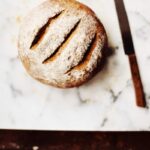
Oatmeal Brown Bread
A hearty, molasses-sweetened oatmeal yeast bread. This big batch makes four rustic loaves — perfect for slicing, toasting, and freezing extras.
Servings: 48 slices
Ingredients
- 2 cups milk
- ½ cup molasses
- ¼ cup butter
- 2 tbsp salt
- 2 cups old-fashioned rolled oats not quick or instant
- 2 tbsp active dry yeast
- ½ tsp granulated sugar
- 10 cups all-purpose flour approximate
Instructions
- Bring 3 cups of water to a boil in a medium saucepan. Add the milk and bring back to a near-boil; remove from heat when steaming and small bubbles begin to form at the edges. Add the molasses, butter and salt; stir until the molasses is dissolved and the butter is melted. Add the oats and let stand until only lukewarm.
- Meanwhile, combine the yeast and sugar with 1 cup lukewarm water in your largest mixing bowl; set aside 10 minutes to activate (it will become bubbly and grow).
- When the oatmeal mixture is cool, add it to the yeast mixture, beating well with a wooden spoon to combine. Beat in the flour a cup at a time until it's too difficult to stir, then turn out onto the counter and knead, adding more flour as needed, to create a smooth, workable ball of dough. Knead about 10 minutes total. Set aside to rise in a warm spot with a tea towel draped over top, about 1 hour, until doubled in size.
- Punch down, then divide into 4 equal pieces, forming each into a ball. Let rise again, about 1 hour.
- Meanwhile, preheat the oven to 350°F (175°C) and line a baking sheet with parchment. Dust the dough balls with additional flour for a rustic look, then use a sharp serrated knife to make a few 1/2-inch-deep slashes. Bake 1–2 loaves at a time (refrigerating the remaining dough balls in the meantime to prevent over-proofing) on the lowest rack, about 45 minutes, until well-browned and the bottom sounds hollow when tapped.
Notes
Big batch: This makes 4 loaves — freeze extras, or refrigerate shaped dough balls and bake over a couple of days.
Lukewarm matters: Cool the oat mixture to lukewarm before combining with the yeast so you don't kill it.
Proof the yeast: The yeast-sugar-water should turn bubbly within 10 minutes; if not, it's dead — start over.
Test for doneness: A well-browned loaf that sounds hollow when tapped on the bottom is done.
Nutrition
Calories: 130kcal | Carbohydrates: 25g | Protein: 3g | Fat: 1g | Saturated Fat: 1g | Cholesterol: 2mg | Sodium: 290mg | Potassium: 100mg | Fiber: 1g | Sugar: 3g | Vitamin A: 20IU | Calcium: 40mg | Iron: 2mg